Instagram Marketing for Beginners
Instagram marketing for beginners: which formats to use first, a simple weekly content plan, profile fixes, what to measure and a 30-day action plan.
 11 min read
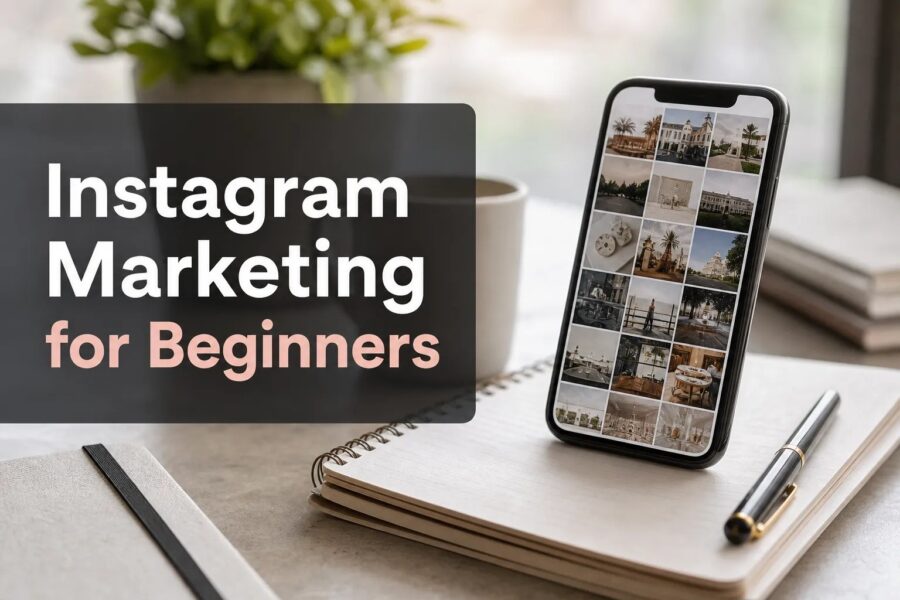
Instagram Marketing for Beginners
Instagram can feel deceptively simple. You open the app, see polished visuals, quick videos, and brand accounts that make growth look effortless. But for many small business owners, startup teams, and marketers, the real question is more practical: how do you actually use Instagram to support business goals without wasting time?
That is where a beginner-friendly strategy matters.
Instagram is not just a place to post nice images. It can support brand awareness, product discovery, trust-building, customer education, lead generation, and even sales conversations. The key is to treat it as part of your broader marketing system, not as a random content stream.
Treat Instagram as one piece of a larger growth system that also includes content, SEO, email, analytics and customer experience. It works best when each post has a job in that system.

What Instagram marketing means for a business
For a business, Instagram marketing means using the platform intentionally to:
attract the right audience
communicate brand value clearly
build familiarity and trust over time
encourage action, such as site visits, inquiries, bookings, or purchases
Beginners often assume success comes from posting constantly. In practice, success comes from posting useful, relevant, and well-positioned content consistently.
That means your instagram marketing approach should connect back to business objectives like:
increasing local visibility
introducing products or services
answering customer questions
nurturing interest before purchase
staying top-of-mind with current customers
A good instagram marketing page is not just active. It is clear, useful, and aligned with what the business wants people to do next.
Why Instagram still matters in the marketing mix
A lot of beginners ask whether Instagram is still worth the effort. The short answer is yes, but not for every purpose in the same way.
Instagram is especially useful for:
Business Goal | How Instagram Helps |
|---|---|
Brand awareness | Visual reach, discoverability, shares, reels |
Consideration | Product demos, FAQs, customer proof, behind-the-scenes |
Engagement | Stories, comments, DMs, polls, Q&As |
Conversion support | Link in bio, DMs, profile action buttons, shopping features |
Retention | Regular updates, education, announcements, community touchpoints |
It should not replace your website, SEO, email, or CRM. It should support them.
If you are building a broader digital presence, it helps to pair organic posting with a small paid budget once you know what resonates. Our guide to social media advertising for small businesses covers how to start.
Where Instagram fits in your funnel
Many businesses fail on Instagram because they expect every post to sell immediately. That is rarely how it works.
A more realistic model looks like this:
Top of funnel: discovery
This is where new people first encounter your brand.
Best formats:
reels
shareable posts
educational carousels
location-tagged content
collaborative posts
Middle of funnel: trust and evaluation
This is where someone starts asking, “Are these people credible? Do they understand my problem?”
Best formats:
testimonials
case snapshots
FAQs
product or service explainers
behind-the-scenes process content
stories with polls and Q&As
Bottom of funnel: action
This is where someone is closer to booking, buying, or contacting you.
Best formats:
offers
demos
pricing context
direct response stories
clear call-to-action posts
DMs and bio links
Instagram often plays its biggest role in the discovery and trust stages. That alone makes it worth using well.
What content formats beginners should use first
Instagram gives businesses several content types, but beginners do not need to master all of them at once.
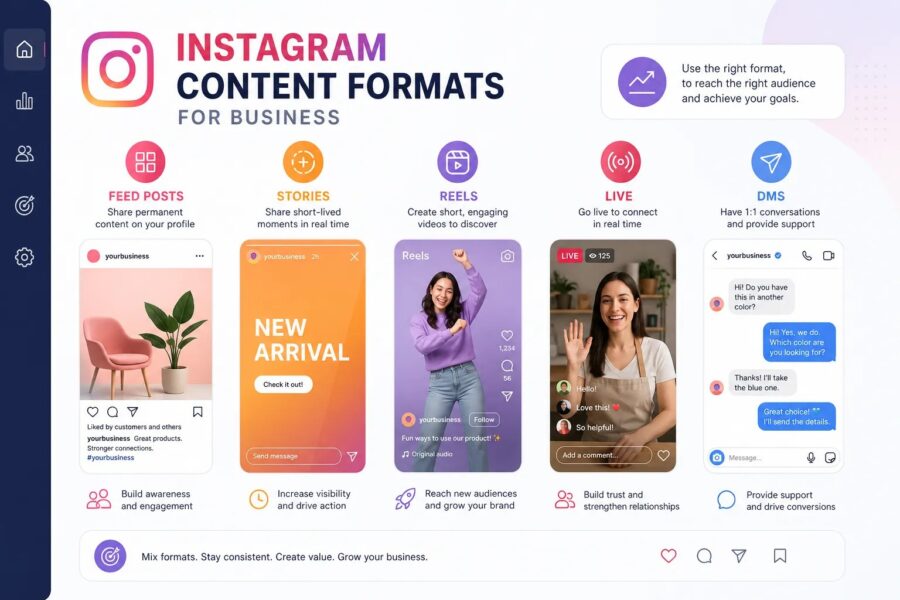
Feed posts
These include single-image posts, graphics, and carousels.
Best for:
educational content
product highlights
service explanations
customer proof
branded messaging
Why beginners should use them:
easier to plan
easier to keep on-brand
more evergreen than stories
good for building a solid profile
Carousels
These are swipeable multi-image posts.
Best for:
step-by-step tips
myths vs facts
before-and-after explanations
checklists
mini-guides
Why they matter: Carousels are one of the best beginner formats because they help you teach something clearly. For service businesses especially, this format works well for turning expertise into digestible content.
Stories
Stories disappear quickly, but they are excellent for day-to-day engagement.
Best for:
updates
limited-time offers
quick polls
FAQ stickers
behind-the-scenes moments
reminders and reposts
Why beginners should use them: Stories are often less polished and lower pressure. They help humanize the business.
Reels
Reels are short-form videos designed for reach and discovery.
Best for:
fast educational tips
product usage
transformations
myth-busting
trend-adapted brand content
Why they matter: If you want to reach people who do not already follow you, reels are often your best shot.
Live video
Live is not required for beginners, but it can work for:
launches
Q&As
interviews
demos
Most businesses can wait on live until they have a clearer rhythm.
DMs
Direct messages are underrated in business use.
Best for:
answering pre-sale questions
handling objections
booking consultations
moving interested viewers toward action
For many businesses, DMs are where Instagram becomes commercially useful.
The simplest content mix for a small business
If you are starting from scratch, keep the system manageable.
A good beginner mix for most businesses:
2 feed posts per week
1 reel per week
3 to 5 stories per week
daily or near-daily comment and DM responses
That is enough to build consistency without turning Instagram into a full-time job.
Example weekly posting plan
Day | Content |
|---|---|
Monday | Educational carousel |
Wednesday | Reel answering a common question |
Friday | Offer, case example, or testimonial post |
Ongoing | Stories with updates, polls, or reposts |
This structure gives you variety without confusion.
How to build a simple Instagram content plan
The biggest beginner mistake is creating content post by post with no system. A better approach is to work from a few repeating content pillars.
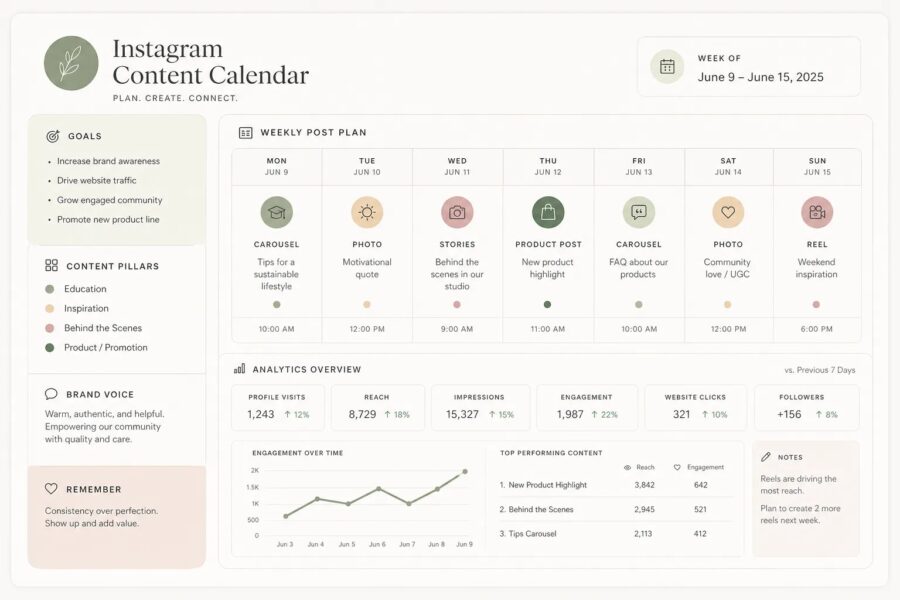
Step 1: Choose 3 to 4 content pillars
These are your recurring themes. For example:
education
proof
brand personality
offers
A local service business might use:
common customer questions
project or client examples
team/process content
seasonal offers
An ecommerce brand might use:
product benefits
use cases
customer feedback
promotions
Step 2: Match each pillar to a format
Not every message belongs in every format.
Content Pillar | Best Format |
|---|---|
Education | Carousel, reel |
Proof | Feed post, story, reel |
Personality | Story, reel |
Offer | Feed post, story |
Step 3: Create content in batches
Instead of deciding every day what to post:
draft 4 to 8 ideas at once
write captions together
film several short videos in one session
schedule what you can
Batching saves time and improves consistency.
Step 4: Add a clear call to action
Every post does not need to sell, but it should guide the next step.
Examples:
save this for later
send us a DM if this is your issue
visit the link in bio
comment with a question
share this with your team
What beginners should post about
A lot of businesses freeze because they think their industry is “not visual enough.” That is usually not true. Almost every business can create useful Instagram content if it shifts the focus from “what looks cool” to “what helps the customer.”
Here are strong beginner content types:
Answer common questions
Turn real customer questions into posts.
How long does this take?
What does pricing usually depend on?
What mistakes should buyers avoid?
What happens before or after purchase?
Show the process
People trust what they understand.
how your service works
what happens behind the scenes
how quality is maintained
how your team solves problems
Share proof
Proof reduces uncertainty.
reviews
customer wins
outcomes
before-and-after examples
short case snapshots
Educate without overcomplicating
You are not trying to lecture. You are trying to build confidence.
Highlight business personality
This can include:
team moments
values
workspace
local presence
founder perspective
If your operations are growing, simple content systems also pair well with better workflows. A good next step is setting up basic marketing automation so leads from Instagram get a follow-up.
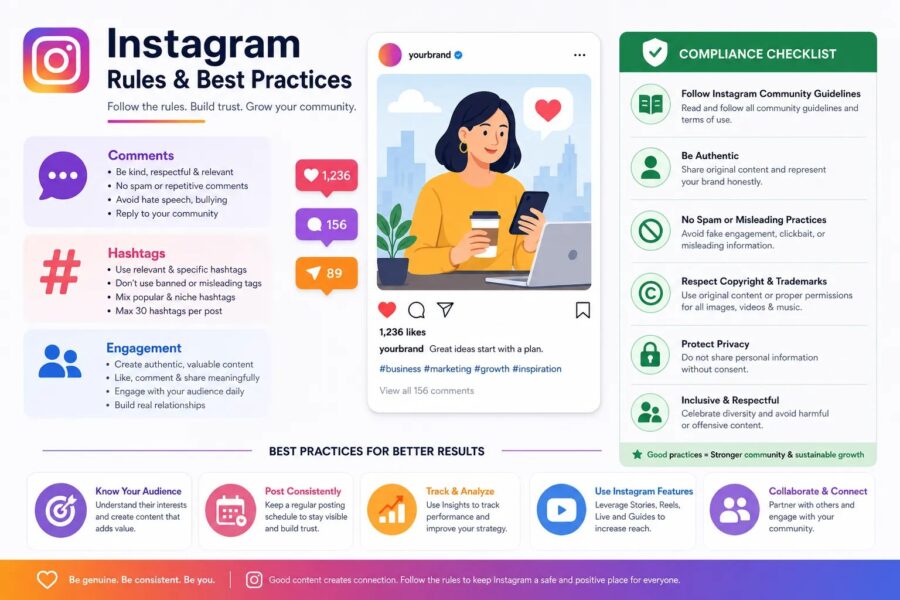
What the “Instagram rules” really mean in practice
Beginners constantly hear rules about hashtags, follower counts, reach, and formulas. Some are helpful. Many are oversimplified.
Rule: You must post every day
Not true.
Consistency matters more than frequency. A realistic posting cadence that you can sustain is better than an ambitious plan that collapses after two weeks.
Rule: Hashtags guarantee reach
Not exactly.
Hashtags can help categorize content, but they are not a growth shortcut. Relevance, watch time, saves, shares, and audience fit matter more.
Rule: You need thousands of followers first
No.
A small but relevant audience can produce business results if your content attracts the right people and gives them a clear next step.
Rule: Reels are the only thing that works
Also false.
Reels are powerful for reach, but stories, carousels, and DMs still matter. Different formats support different stages of the customer journey.
Rule: The algorithm is the whole game
The algorithm matters, but businesses often use it as an excuse.
Clarity of message, value of content, quality of offer, and consistency of publishing usually matter more than obsessing over every platform update.
A practical approach to captions, hashtags, and visuals
Captions
Good captions do one or more of these:
hook attention quickly
clarify the value of the post
address a pain point
tell the reader what to do next
You do not need long captions every time. You need useful ones.
Hashtags
Use a modest set of relevant hashtags tied to:
your niche
your location if local
your service or product category
the exact topic of the post
Avoid spammy or irrelevant tags.
Visuals
Your content does not need a luxury aesthetic. It does need:
readable design
strong contrast
clean formatting
recognizable branding
a focus on clarity
Beginners often do better with simple, repeatable templates than with constantly reinventing design.
What to optimize on your profile first
Before posting heavily, clean up your profile basics.
Your profile photo
Use a recognizable brand mark or clear headshot.
Your bio
A strong bio tells people:
who you help
what you do
why it matters
what they should do next
Your link
Use the bio link intentionally:
homepage
booking page
product collection
lead magnet
contact page
Story highlights
Highlights help visitors understand the business quickly.
Good highlight categories:
services
results
FAQs
reviews
about
contact
How to measure whether Instagram is working
Beginners often track only follower count. That is not enough.
Useful metrics depend on your goal.
Goal | Better Metrics |
|---|---|
Awareness | Reach, profile visits, reel views |
Engagement | Saves, shares, replies, comments |
Consideration | DMs, link clicks, story taps |
Conversion support | Leads, bookings, purchases influenced |
Follower growth can matter, but only if the audience is relevant.
Watch especially for:
which topics get saves
which reels get shared
which stories generate replies
which posts send people to your profile or link
Those are stronger signals of business value.
Common beginner mistakes to avoid
Posting only promotions
If every post asks for a sale, people tune out.
Copying creators instead of building a business strategy
Many viral creator tactics do not translate directly to business goals.
Ignoring comments and DMs
Responsiveness matters. Social is still social.
Changing strategy too often
Give your approach enough time to produce patterns before overreacting.
Making the content about the business instead of the customer
The customer cares most about their problem, their goals, and whether you can help.
A 30-day beginner Instagram action plan
If you want a clean starting point, use this:
Week 1
switch to or optimize your business profile
clarify bio and link
define 3 to 4 content pillars
identify 10 customer questions
Week 2
create 4 feed posts
create 2 short reels
set up highlights
engage with relevant accounts in your space
Week 3
publish consistently
use stories for quick updates and interaction
reply to every comment and DM
review which topics get the best response
Week 4
refine based on actual engagement
repeat top-performing themes
create one offer-oriented post
connect Instagram activity to website or lead results
To keep learning without drowning in advice, pick two or three trusted sources. Our list of the best social media marketing blogs for small teams is a good place to start.
Final thoughts
Instagram marketing for beginners does not have to be overwhelming. You do not need a huge team, a perfect video setup, or daily viral content. You need a clear business goal, a manageable content system, and the discipline to show up consistently with content that helps the right audience.
Start small. Keep it practical. Focus on useful posts, clear positioning, and real customer interaction.
Start this week: fix your bio and link, pick three content pillars, and plan your first seven posts. Then review profile visits, DMs and link clicks every Friday and adjust one thing at a time.
FAQ
What is the 5-3-1 rule on Instagram?
The 5-3-1 rule is a simple content balance idea: share a mix of helpful outside content, brand-building content, and direct promotional content so your feed does not feel sales-heavy. For businesses, the practical lesson is to keep most of your posts focused on value, trust, and relevance, not constant selling.
How many followers on Instagram do you need to make $1000 per month?
There is no fixed follower number that guarantees revenue, because business results depend more on audience fit, offer quality, pricing, and conversion path than raw reach. A smaller, targeted audience can outperform a large but unfocused one if your Instagram content leads people toward inquiries, bookings, or purchases.
How to start marketing on Instagram?
Start by setting up a business profile, clarifying your bio and link, and choosing 3 to 4 content pillars tied to customer needs. Then publish consistently using a simple mix of feed posts, reels, and stories while tracking what drives profile visits, DMs, and conversions.
Does Instagram pay you for 1000 views?
For most businesses, Instagram does not directly pay you for views. The platform is more valuable as a marketing channel that helps generate awareness, trust, leads, and sales rather than as a built-in payout system for normal business content.
How to successfully sell on Instagram?
To sell successfully, use Instagram to educate, build trust, and guide action rather than just post promotions. Strong results usually come from clear profile positioning, proof-driven content, useful stories and reels, and an easy next step such as a DM, booking link, or product page.