Social Media Advertising for Small Businesses
Learn when advertising on social media makes sense for a small business, how to budget a first test, and how to measure leads and sales.
 10 min read
Advertising on social media can bring a small business in front of potential customers while organic posts take time to find an audience. You still need an offer, a way to measure responses, and a budget you can afford to lose. Work out what a lead or sale is worth before you pay for clicks.
With paid social, you buy distribution for an ad. Organic social depends on people seeing and sharing your unpaid posts. Both can support your business, though each paid campaign needs its own goal, tracking, and spending limit.
When advertising on social media makes sense for a small business
Paid ads make sense once you can give someone a specific offer and respond when they inquire. A local service firm might want appointment requests; an online shop might want purchases. If your team replies slowly or sends visitors to a confusing page, the ad spend may bring little business.
Hold off if you have not settled on a customer, have no process for taking inquiries, or cannot fulfill more orders. Unpaid posts can help you learn which questions customers ask before you spend money promoting an offer. They also suit routine updates and customer conversations. For planning beyond ads, see MikeGingerich.com’s small business growth advice.
|
Question |
Organic posting |
Paid social campaign |
|---|---|---|
|
What drives reach? |
People who see and share your posts |
An audience you pay to reach |
|
What should you plan for? |
Regular content and community attention |
An offer, budget, destination, and measurement |
|
What tells you it worked? |
Useful conversations and audience response |
Qualified inquiries, purchases, or another chosen business outcome |
Likes tell you that someone noticed the post. Before paying to show it to more people, ask whether those people are likely to book or buy.
Pick one platform and one goal
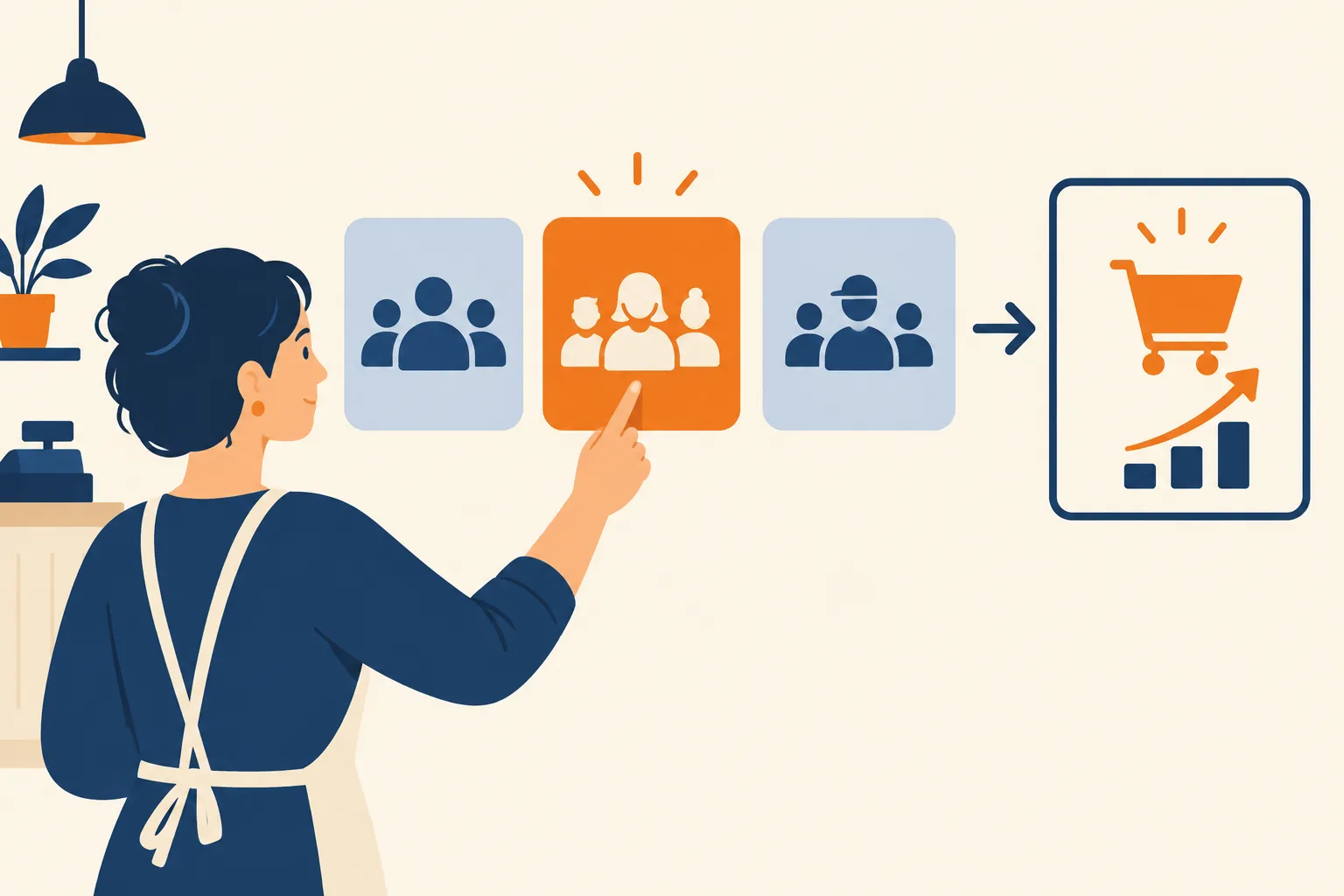
Start with where your customers spend time and how they decide to buy. Instagram may suit a consumer product you can show in a photo or video. LinkedIn may suit a business service sold to a narrow professional audience; Facebook may suit a local business serving a broad consumer audience. Treat these as hypotheses, since costs and results vary across platforms.
Ask current customers how they found businesses like yours, and listen to the questions prospects ask before buying. Test one platform first. You will have a clearer read on the result, especially if your audience is narrow or your offer needs a conversation before anyone buys.
Match the campaign goal to an action that matters:
|
If you need… |
Set up the campaign around… |
Judge it by… |
|---|---|---|
|
Sales from an online checkout |
A purchase path |
Orders and cost per order |
|
Bookings or service inquiries |
A form, call, or booking request |
Qualified leads and cost per qualified lead |
|
Interest in a new offer |
A clear next step, such as a signup |
Signups that progress toward a sale |
If you are introducing a new business or product, awareness may be a sensible goal. Report reach and video views as awareness results, then measure leads or sales separately. Set the goal before writing the ad.
How objectives and ad formats shape the test
In Meta Ads Manager, you choose a campaign objective for Facebook and Instagram ads. Meta’s campaign objectives training recommends matching that choice to your business goal and measuring the result. If you want consultation requests, choose an objective suited to generating leads rather than brand awareness. The setting will not rescue an offer customers do not want.
You can show the same offer through a photo, a short-form video, or a multi-image ad. A photo might explain a service in one glance; a video might show a product in use. Pick the ad format that helps a customer decide, then compare qualified results. On Instagram, adapt the ad creative to its placement and give viewers an obvious next step.
One per-click price cannot describe what LinkedIn will cost every small business. If your buyers are there, set a test limit from your allowable cost per qualified lead. A generic price claim tells you little about whether your own offer will pay off.
Work backward to a social media advertising test budget
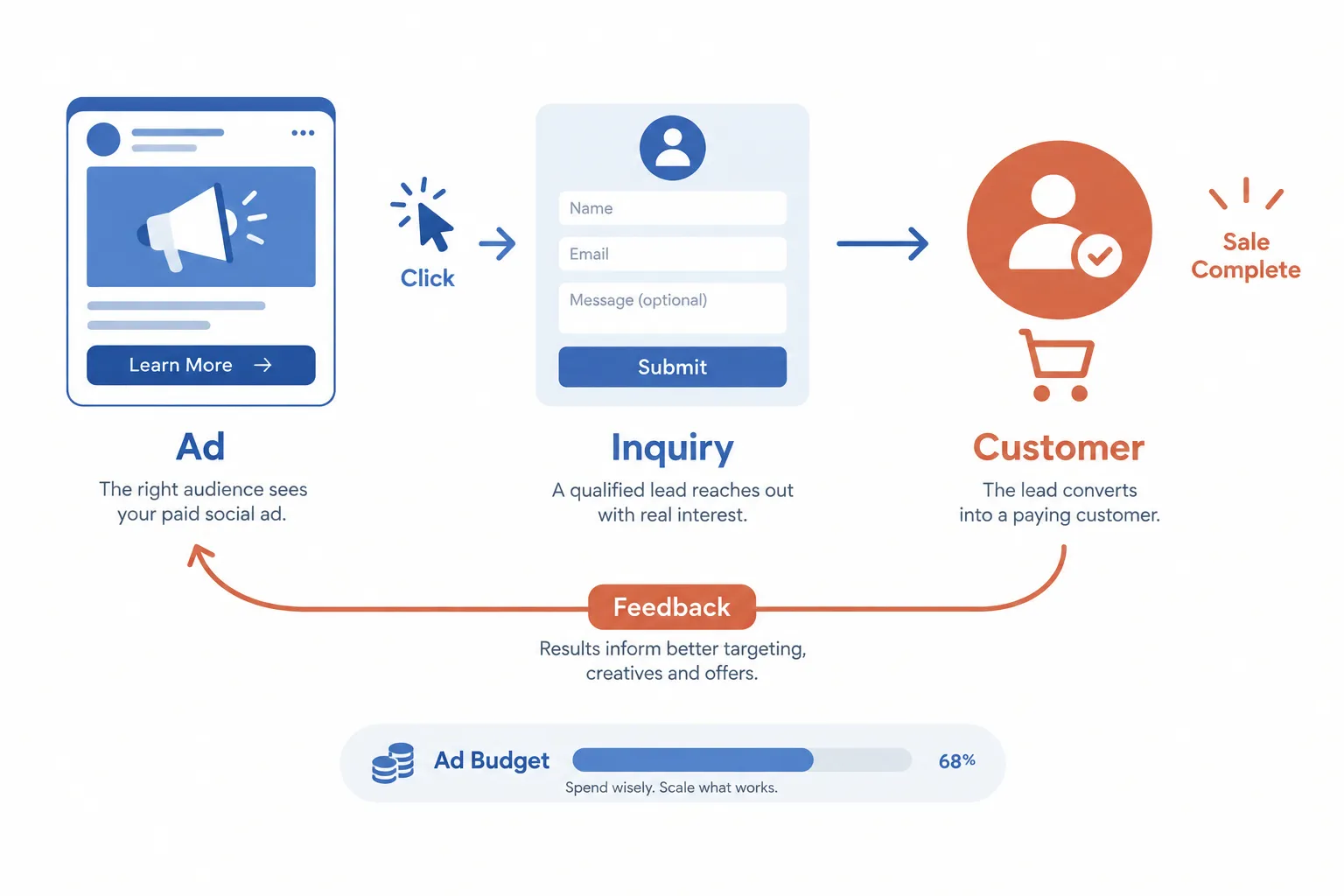
There is no universal price for advertising on social media. Your audience, offer, competition, ad creative, and post-click experience all affect what you spend to win a customer. Set a budget that lets you make a decision from the results.
First calculate your allowable acquisition cost: the most you can spend to win a customer and still keep the margin you need. Base it on contribution after variable costs rather than the full sale price. For a lead campaign, estimate the share of qualified leads who become paying customers:
Maximum affordable cost per qualified lead = allowable customer acquisition cost × lead-to-customer rate.
Suppose you can afford to spend $120 to acquire a customer and expect 1 in 4 qualified leads to buy. Your working ceiling is $30 per qualified lead ($120 × 0.25). These are hypothetical figures; your actual close rate will change the ceiling.
Decide how many qualified leads you would need before you can choose to continue, revise, or stop. Using the figures above, a test aiming for 10 leads has a planning figure of $300 (10 × $30). That risk limit comes from the business’s own economics; $300 does not guarantee 10 leads. Include creative or agency costs if you incur them, and spend only what you can afford to lose.
If you do not know your close rate, start with a conservative estimate and record how many leads buy. Even a small spend can reveal interest in an offer. You need more than a handful of clicks to judge acquisition cost with confidence.
Set up a first campaign you can measure
Write down your buyer, offer, and next step before you open an ad manager. A kitchen remodeler might say, “Homeowners seeking a kitchen estimate can request a consultation.” Keep that promise consistent from the ad through the destination.
-
Send visitors to a relevant product page, booking page, or lead form instead of a generic home page. Make the offer and the next step clear.
-
Show the product, a service outcome, or a customer problem in the ad. If you make a second version, change one meaningful element, such as the opening message, so you can tell what made a difference.
-
Define whom you can serve and cap the spend. Splitting a modest test across several platforms and tiny audience groups makes the results harder to read.
-
Tag links where appropriate, set up purchase or lead tracking, and record inquiries. Ask which leads were qualified and which became customers; platform totals alone may not answer either question.
-
Assign someone to reply to forms, calls, or messages. Count a booking once it happens, not when someone clicks “book.”
Make the mobile handoff easy

Open the ad and destination on a phone before launch. Can someone find the offer and submit a request without pinching the screen, digging through navigation, or completing a long form? If you promise a quote in the ad, take visitors to a page where they can ask for one.
Ad format can affect what you pay for a result. Meta’s Reels-only experiments found a difference between video and image ads; your campaign may perform differently:
“In a Meta analysis of 15 Reels-only split tests that included small and medium businesses, 9:16 video ads with sound and key messages in the safe zone had 34.5% lower cost per result than image ads in the tested campaigns.” – Meta for Business
If tracking is incomplete, use a dedicated form or ask every new prospect the same question about how they found you. That will not capture every influence on a sale, but it can help you connect inquiries to ad spend. MikeGingerich.com’s inbound lead generation advice goes deeper on turning those inquiries into customers.
Judge leads and sales, not likes
Use your spending limit to gather responses you can judge, rather than reacting to each day’s clicks or likes. Follow inquiries through to closed business.
|
Measure |
How to calculate it |
Why it matters |
|---|---|---|
|
Cost per qualified lead |
Ad spend ÷ qualified leads |
Compares the test with your affordable lead ceiling |
|
Lead-to-customer rate |
Customers ÷ qualified leads |
Shows whether the inquiries fit your business |
|
Customer acquisition cost |
Ad spend ÷ customers acquired |
Shows what it took to win a customer from the test |
|
Return on ad spend |
Revenue attributed to ads ÷ ad spend |
Shows revenue per dollar of ad spend, but not profit |
Say you spend $300 and get 12 inquiries, but only six fit your customer criteria. You paid $50 per qualified lead, even though each inquiry cost $25. If two of those six buy, the ad spend worked out to $150 per customer. Compare that hypothetical result with your allowable acquisition cost, and include other campaign costs when you assess profit.
When results disappoint, locate the weak step before changing the budget:
-
Few relevant clicks: Rework the offer, message, or audience fit.
-
Clicks but few inquiries or orders: Improve the page, form, or match between ad and destination.
-
Many inquiries but few qualified buyers: Tighten the offer or qualifying language.
-
Good leads but few sales: Review response time and sales follow-up before blaming the ad.
An ad with high engagement can still lose money. Keep the version that brings in qualified customers at an affordable cost; revise or stop the version that does not.
The decision after the first test
Keep advertising on social media if it brings in customers you can serve at a cost your margins can support. If the first test falls short, find the weak step, whether that is the audience, offer, page, or follow-up. Spend more only once you can measure what happens after the ad.
For the unpaid side of the plan, use MikeGingerich.com’s social media marketing resources to build a steadier publishing routine. Its wider practical library, including advice on why marketing campaigns underperform, can help you connect ad decisions with the sales and operations work that turns interest into revenue.
FAQ
Is $10 a day enough for Facebook ads?
It may be enough to learn whether an offer gets a response, but a daily amount alone cannot tell you whether the test will produce enough qualified leads to judge profitability. Work backward from your affordable cost per lead and decide how much you can risk for the full test.
Does social media advertising work?
It can work when the audience, offer, destination, and follow-up fit together. Judge it by qualified leads, customers, and acquisition cost, not by impressions or likes.
What is the best social media campaign?
For a small business, the best campaign is one built for a specific customer action you can measure and afford. Start with one relevant platform and an offer that leads to a booking, qualified inquiry, or sale; keep it only if its customer acquisition cost fits your margins.
What are the disadvantages of social media advertising?
You can spend money without gaining customers, and attractive engagement figures can hide poor lead quality. Ads also need a working destination, reliable follow-up, and enough measurement to show whether the spend is sustainable.