What Is Digital Marketing for a Small Business?
Learn why digital marketing is what helps small businesses get found through search, email and social, and how to measure results without an ad budget.
 8 min read
Digital marketing is what a business does to reach and serve customers through search engines, its website, email, social media and online ads. For a small business, that could mean helping a neighbor find your hours on Google, showing today’s special on Instagram and emailing customers when their favorite item returns. You can begin without buying ads. Give people useful information and pay attention to whether their visits lead to business.
What digital marketing is for a small business
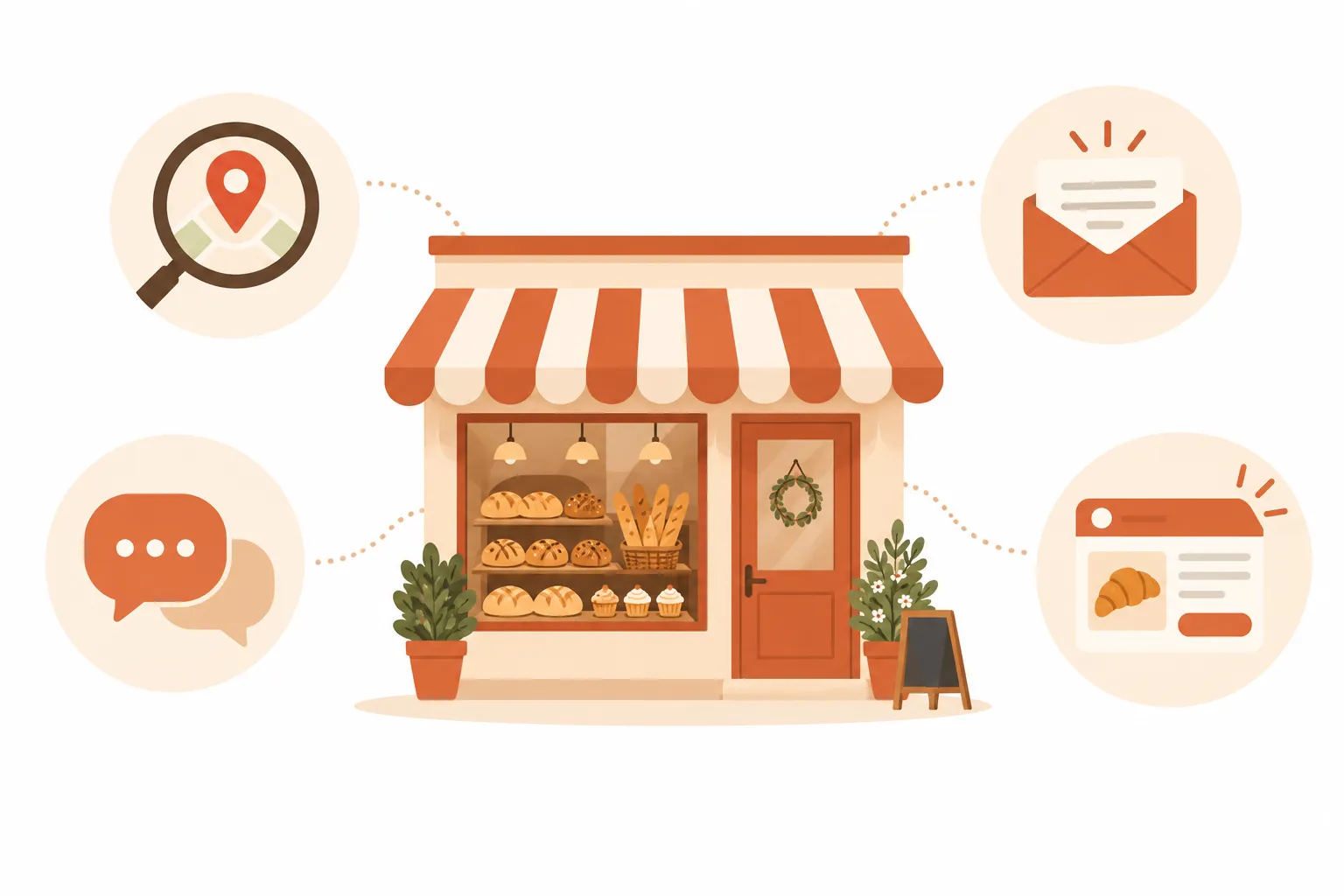
A customer searches for “bakery near me,” finds a neighborhood bakery’s listing, opens its menu and calls about a cake. After visiting, they join the email list. A note about holiday orders gives them a reason to return.
The website and business listing give customers details. Search and social help them find the shop, email keeps the conversation going, and ads can spread a timely offer. Customers still need to decide whether to visit or order.
The customer may first hear about the bakery from a neighbor, then check its menu online before visiting. Posting on social media is only one part of digital marketing, alongside the storefront, recommendations and the service customers receive in person.
What are the different types of digital marketing?
Search, email, social media and paid advertising are the main digital marketing channels a small business will encounter. The bakery may use each one at a different point in a customer’s decision.
|
Channel |
What it does |
Bakery example |
Useful signal |
|---|---|---|---|
|
Search and website |
Answers an existing question or need |
A customer finds hours, directions and cake options |
Calls, direction requests, inquiries |
|
|
Reaches people who chose to hear from you |
A subscriber gets a holiday ordering reminder |
Orders or inquiries from the email |
|
Social media |
Shows your work and starts conversations |
A short post shows today’s pastries |
Messages, profile visits, visits attributed to posts |
|
Paid ads |
Buys placement to reach a chosen audience |
A local ad promotes a preorder deadline |
Orders or qualified inquiries per dollar spent |
Search engine optimization (SEO): be useful when someone is looking
Someone searching for a cake wants to know what the bakery sells and how to order. Clear page titles, a readable menu, accurate hours and contact details help them decide. A business profile helps local customers find the shop; the website has room for a fuller menu and ordering details.
Search engine optimization (SEO) means improving pages so people can understand and use them when they appear in search results. Improving an ordinary page does not buy its position, as a search ad does. For a closer explanation, see how SEO differs from digital marketing. Search can bring visitors who want to buy, but the bakery still has to earn their business.
Email marketing: keep permission-based contact
Customers who sign up for seasonal updates give the bakery permission to email them. A useful message gives the preorder date, available items and a way to order. Keep sign-up voluntary and include a way to unsubscribe.
The bakery can email its subscribers directly. A social platform, by contrast, decides who sees a post. Inquiries and orders tell the bakery more about its emails than the number of addresses on the list.
Social media marketing: show people what you do
The bakery can post its daily selection, show a cake being decorated or answer a pickup question on social media. Those exchanges let someone see what the shop does before they search for a bakery.
Use a platform your customers use and that you can maintain. Followers and likes show attention; messages, inquiries and visits give you a better sense of business impact. Keep essential details on your own site as well as on social platforms.
Search engine marketing and paid social ads: purchase reach with a purpose
Paid search and social ads let the bakery reach potential customers beyond its existing audience. It might advertise a holiday preorder deadline or a new location. The bakery pays to show the ad, even if no one orders.
Give the ad a clear offer and a page where customers can act on it. An out-of-date menu will frustrate someone who clicks an ad for holiday cakes. Decide what a worthwhile inquiry or order is before spending, then compare results with the ad cost. For more on this channel, see social media advertising for small businesses.
Where content, inbound and other tactics fit
Some names describe the material you make; others describe how you use a channel:
-
Content marketing is useful material, such as the bakery’s cake-size guide, that answers customers’ questions. The bakery can share that guide in search, social posts and email. Photos and short videos can also show customers what a product looks like.
-
Inbound marketing means attracting customers with information they want. The bakery’s menu page does that when someone searches for a cake. Digital marketing also includes ads that reach people before they search.
-
Affiliate marketing means paying a partner for a referred action under an agreed arrangement. Some online sellers use it; a local bakery can explain its hours and take cake orders without it.
-
Marketing automation lets a tool send or organize messages, such as a welcome email after someone subscribes. It saves repetitive work once the bakery has permission to contact people. The bakery still needs to write something worth reading.
You can attract customers without running an affiliate program, filming videos or buying automation software. Use these digital marketing tactics when they help answer a question or make an order easier.
Can you start without paying for ads?
Yes. Start with accurate business information and a useful website or landing page. Add social posts and an optional email sign-up if you can keep them up. The work takes time, and website or email services may cost money even when you buy no ads.
“A Business Profile lets a business manage how it appears on Google Search and Maps at no charge.” – Google Business Profile Help
For the bakery, that means showing its hours, menu, contact method and ordering details where customers can find them. Updates to followers and email subscribers give the shop another way to reach people without buying ad space. Later, an offer worth promoting may justify ads if the bakery can track inquiries or orders from that spending.
What results should you measure?
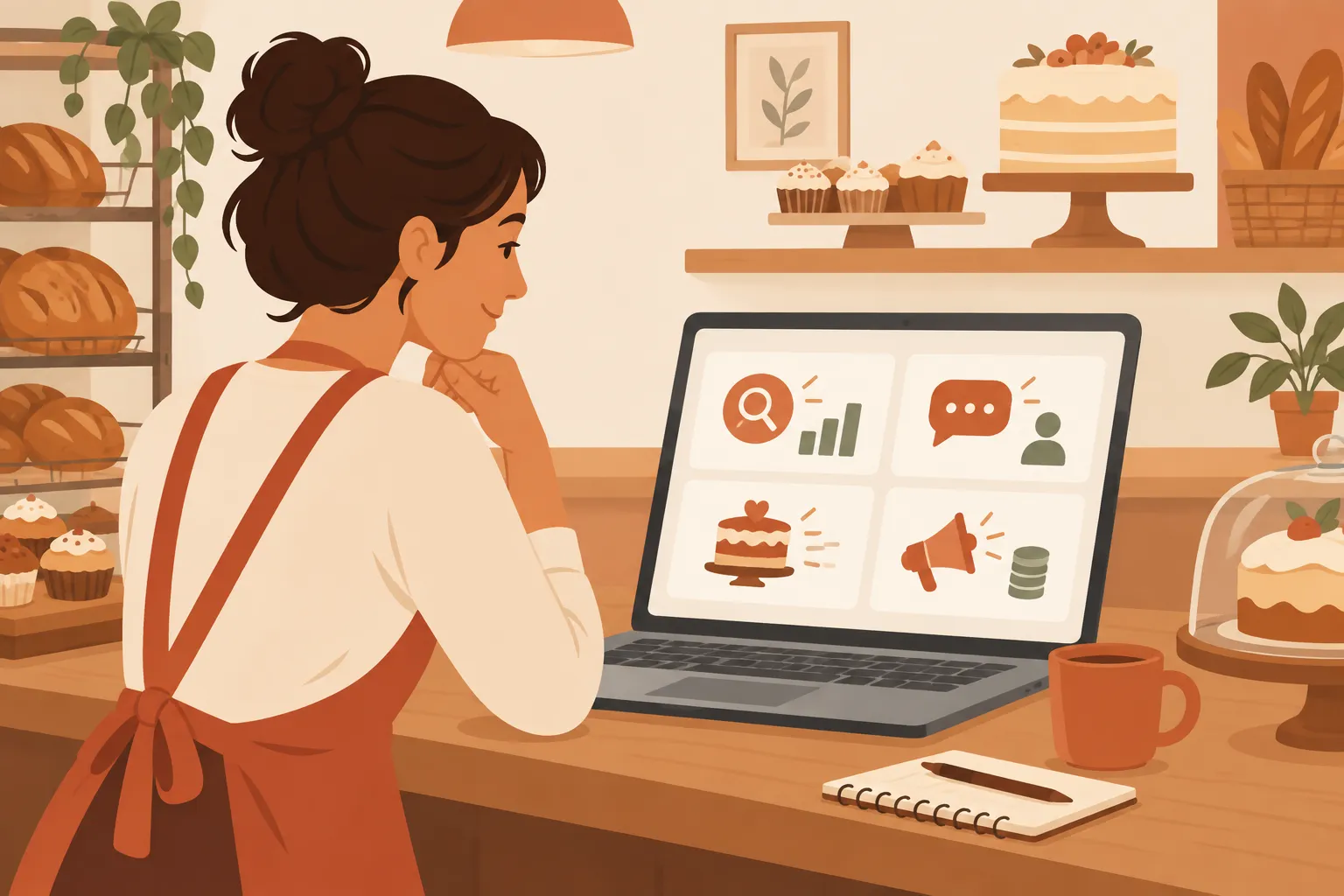
Pick the action the business needs: cake inquiries, online orders, booked appointments or store visits. A bakery can ask callers how they found the shop and use distinct links in emails and social posts. Neither method captures every sale, but both reveal more than a count of views.
|
Question |
What to look at |
What it can tell you |
|---|---|---|
|
Can people find us? |
Search visits, profile interactions, relevant site visits |
Whether the business is being discovered |
|
Are they interested? |
Menu views, inquiries, messages, email clicks |
Whether the information moves people toward contact |
|
Do they buy or book? |
Orders, bookings, qualified leads |
Whether activity produces a business outcome |
|
Is paid reach worth its cost? |
Ad spend alongside attributable orders or inquiries |
Whether spending is producing enough value to continue |
A click is not a sale. Someone might see a post, ask a friend and visit a week later. Record the same outcomes over time so you can spot patterns, even when you cannot trace each purchase to a single channel.
How digital and traditional marketing differ
Flyers, local events and referrals can reach customers who never search for the business. Online, you can update details and observe actions such as link clicks and orders. You will still miss parts of the customer’s decision in either case.
|
Consideration |
Digital example |
Traditional example |
|---|---|---|
|
Customer contact |
Someone taps a menu link or replies to an email |
Someone reads a flyer or hears a recommendation |
|
Changes |
Update a page or post |
Reprint a flyer or replace a sign |
|
Measurement |
Track online actions, while accounting for offline gaps |
Ask customers what brought them in |
|
Tradeoff |
Platforms change and attention is competitive |
Reach can be harder to attribute |
Good information takes time to produce. Social platforms can change who sees a post, and ads can cost money without bringing in sales. Click counts may draw attention away from customers who call or walk in. Keep the offline methods that work for your business while you learn what your online activity contributes.
Where to go next
Digital marketing helps a small business get found, answer questions and stay in touch online. Make your basic information useful, then watch for inquiries and sales. When you are ready to set goals and choose a budget, MikeGingerich.com’s Digital Marketing Strategy for Small Business addresses that next decision. The site’s business library also has practical advice on growth and operations.
FAQ
What is digital marketing and its characteristics?
Digital marketing is promotion and customer communication through digital channels such as search, websites, email, social media and online ads. Its practical characteristics include searchable information, direct interactions and measurable online actions, although those measurements cannot capture every offline sale.
What are the key differences between traditional marketing and digital marketing?
Traditional marketing can include flyers, events and word of mouth; digital marketing uses channels such as websites, search and email. Digital information can be updated quickly and some responses can be tracked, but both approaches can influence the same purchase.
What are the cons of digital marketing?
It takes time to create useful material and respond to customers, platforms can change, and paid ads can cost money without generating enough sales. Online metrics also miss some offline decisions, so measure inquiries and orders where you can rather than relying only on clicks.
What skills are needed in digital marketing?
A small business owner needs to explain the offer clearly, keep business information accurate, communicate with customers and recognize which activities lead to inquiries or sales. Advanced ad or technical skills can help later, but they are not required to begin with clear pages and useful updates.