Warning Signs Your Home Appliances Need Attention Before They Fail
Mike Gingerich
13 min read
 13 min read
Why Warning Signs Get Missed
Appliances wear out slowly, and people adapt to slow change without realizing it. A washing machine that has become gradually louder over six months does not seem noisy to someone who hears it every week, and a room that takes a little longer to cool each summer simply feels normal. The brain treats the new level as the baseline, so the problem only becomes obvious when it becomes severe. Habits can also hide faults. Running a second wash cycle, turning the thermostat lower, or moving food to a different shelf are small workarounds that solve the immediate annoyance while the underlying fault keeps developing. Busy households tend to fix the symptom and move on, which is understandable but costly. The best defense is to pay attention to change itself, so that a new sound, smell, or habit prompts a closer look and not a workaround.Strange Noises and Vibrations
Every appliance makes some noise, and learning what normal sounds like is the first step to noticing when something changes. A new rattle, grinding, squealing, or clicking usually means a part is loose, worn, or struggling. In a washing machine, a thumping or grinding sound during the spin cycle can point to worn bearings or an unbalanced drum. In a refrigerator, a loud buzz or a constant rattle may mean a fan or compressor is under strain. In an air conditioner, squealing can suggest a failing fan motor or belt. Excessive vibration deserves the same attention. A washing machine that shakes or walks across the floor is putting stress on its own components as well as on hoses and cables. Changes in sound are often the earliest warning an appliance gives, and they are worth acting on while the cost of repair is still low.Leaks, Moisture, and Frost
Water where it should not be is almost always a sign that something has failed. Puddles under a washing machine or dishwasher can come from worn hoses, loose connections, or damaged door seals. Water pooling around a refrigerator may come from a blocked defrost drain. A leaking air conditioner usually has a blocked condensate line or a dirty coil. Even a small, slow leak can damage flooring, cabinets, and electrical parts, so it is best dealt with promptly. Frost and ice are another signal, particularly in refrigerators and freezers. A thin layer of frost is normal, but frost that keeps thickening or spreads across the walls often indicates a worn door seal or a fault in the defrost system. Condensation that appears where it never used to is also worth investigating, since it can point to a seal that is no longer doing its job.Rising Energy Bills
When an appliance begins to struggle, it usually draws more power to do the same job. A sudden increase in the electricity bill with no change in how the home is used is one of the most reliable early warnings, and it is also one of the easiest to overlook. An air conditioner with dirty coils, a refrigerator with a worn seal, or a washing machine with scale on its heating element can all cost noticeably more to run before they show any other symptom. Comparing bills from one month to the next, especially during the hottest part of the year, is a simple way to spot a problem. If the increase has no obvious cause, one of the large appliances is a likely suspect.Poorer Performance
A decline in performance is usually gradual, which makes it easy to get used to. Clothes that come out damp or still dirty, dishes that are no longer clean, food that spoils sooner than before, a room that takes much longer to cool, or an oven that no longer reaches the right temperature are all signs that the appliance is no longer doing what it was built to do. People often adjust their habits instead of investigating, for example by running a second cycle or lowering the thermostat, which hides the problem while it keeps getting worse. If you find yourself working around an appliance, it is worth treating that as a signal. The workaround costs time and energy every day, and the underlying fault is still developing.Strange Smells and Signs of Overheating
Some smells need immediate attention. A burning or hot-plastic smell from any appliance can indicate overheating or an electrical fault, and the appliance should be switched off and unplugged until it has been checked. A musty or sour odor, on the other hand, usually points to trapped moisture and mold in a washing machine drum, a dishwasher filter, or a refrigerator seal, and it is typically a cleaning or drainage problem. Heat that feels excessive is also a warning. An appliance casing or power plug that is unusually hot to the touch, or a refrigerator that feels very warm at the back and sides, suggests that something is not working as it should. If a gas appliance gives off a gas smell, the supply should be turned off and the area ventilated at once, and the appliance should not be used until a qualified technician has inspected it.Some overheating risks can be reduced with simple upkeep. The U.S. Consumer Product Safety Commission notes, for example, that overheated clothes dryers can cause fires and that cleaning the vent, exhaust duct, and lint filter regularly helps prevent them. It also advises checking the gas connectors on appliances, since older brass connectors can fail. The CPSC’s safety alerts for household appliances are a useful reference for these and other precautions.Error Codes, Tripping Breakers, and Erratic Behavior
Modern appliances carry sensors and control boards that detect faults and report them, usually as an error code or a flashing light. A code that appears once and clears after restarting may be a temporary glitch. A code that keeps returning means the appliance has found a real fault, and the manual will usually give a starting point for what it means. A circuit breaker that trips whenever an appliance runs is a more serious signal. It means the appliance is leaking current or drawing more than the circuit can supply, and resetting it repeatedly is not a safe solution. Other erratic behavior, such as cycles that stop halfway, buttons that respond inconsistently, doors that will not lock, or settings that change on their own, often points to a control board, sensor, or wiring problem that is likely to get worse.What Each Major Appliance Is Usually Telling You
The same general signs show up differently depending on the appliance, and knowing the typical pattern for each makes it easier to interpret what you notice. In a refrigerator or freezer, the key signs are food spoiling sooner than expected, a motor that runs almost constantly, heavy frost, water pooling inside or underneath, and warmth at the back or sides of the cabinet. These usually point to a worn door seal, a defrost fault, or a cooling system under strain. In a washing machine, the common signals are water left in the drum, clothes that come out wet or soapy, drums that shake violently, leaks around the door, and error codes during the spin or drain stage. These tend to come from drainage blockages, worn bearings, or faulty pumps and seals. An air conditioner announces trouble through weak airflow, warm air, ice on the indoor unit, water dripping from the wrong place, and a noticeably higher bill. The cause is often a dirty filter or coil, low refrigerant, or a failing fan or capacitor. A dishwasher shows its problems through cloudy glassware, leftover food on plates, standing water, and a musty smell, which commonly trace back to blocked filters, clogged spray arms, scale, or a weak pump. Ovens and cooking ranges tend to show uneven heating, long preheat times, burners that are slow to light, or doors that no longer close tightly. These usually come from worn heating elements, thermostats, ignition parts, or seals.What Happens When the Signs Are Ignored
The cost of ignoring a warning sign rarely stays the same. A worn seal that lets warm air into a freezer makes the compressor run longer, and a compressor that runs long enough fails, turning an inexpensive repair into an expensive one. A small leak from a washing machine hose can soak flooring and cabinetry over weeks, and the water damage often costs far more than the hose ever would have. A dirty air conditioner coil forces the whole system to work harder, wearing out the compressor and raising the electricity bill every month until something finally breaks. There is a safety side as well. Electrical faults, overheating, and gas leaks are rare, but when they do occur the consequences are serious. Treating warning signs as useful information, and not as inconveniences, protects both the household and the budget. An appliance that is repaired early also tends to last longer overall, because the fault is dealt with before it can stress other parts.Which Signs Are Urgent and Which Can Wait
Not every sign calls for the same speed of response. Signs that need immediate action are those involving safety: a burning smell, sparks, smoke, a gas smell, a breaker that trips repeatedly, an appliance that gives an electric shock, or a large leak near electrical parts. In each case the appliance should be switched off, unplugged if it is safe to do so, and left unused until it has been inspected. Signs that can wait a short while, but should not be ignored, include new noises, slightly poorer performance, minor leaks, thicker frost, and gradually rising bills. These usually mean a part is wearing out, and a booking within a few days or weeks will usually avoid a bigger repair. Signs that are mostly about cleanliness, such as a musty smell or residue in a dispenser, can often be handled with regular cleaning, but if they return quickly they may point to a drainage or ventilation fault.A Simple Monthly Check
A short routine once a month is enough to catch most problems early. It takes only a few minutes and does not need any tools. Listen to each major appliance while it runs and note anything unusual. Look underneath and behind washing machines, dishwashers, and refrigerators for moisture or stains. Check the door seals for cracks, gaps, or mold. Clean filters in air conditioners, dryers, and dishwashers. Look at the power cords and plugs for damage or discoloration. Glance at the electricity bill and compare it with the previous month. Writing down what you notice, even in a phone note, makes it easier to see changes over time.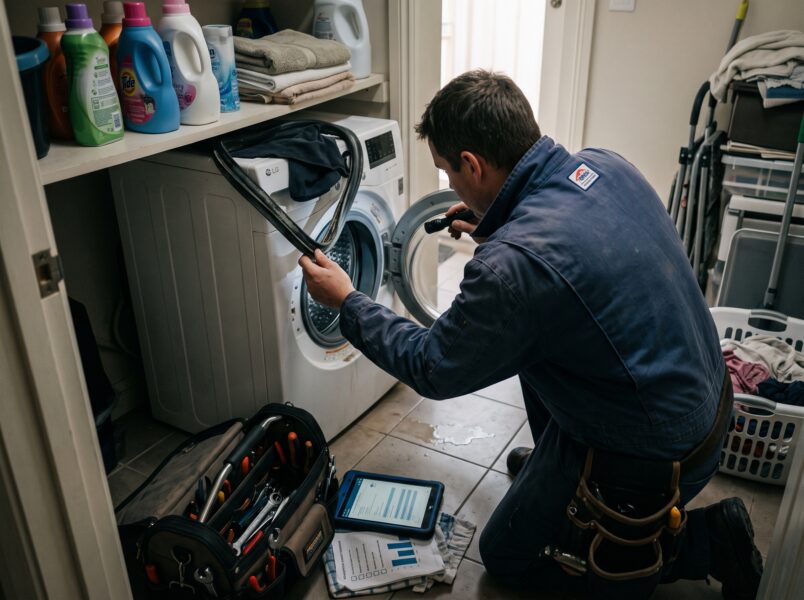
When to Call a Professional
Cleaning filters, wiping seals, and clearing obvious blockages are jobs most people can safely do at home. Anything involving electrical components, gas supply, compressors, refrigerant, or control boards should be left to a trained technician, because opening these appliances without the right tools and knowledge risks injury and can turn a small fault into a major one. When a repair is needed, the choice of provider matters as much as the timing. Choosing the best appliance repair company available to you is less about finding the lowest price and more about finding trained technicians, genuine parts, a clear written quote, and a warranty on the work. A provider who explains the fault plainly, and who is honest about whether a repair makes sense for the age of the appliance, is much more likely to give a result that lasts.Conclusion
Appliances rarely fail without warning. Noises, leaks, frost, rising bills, weaker performance, strange smells, and error codes are all early signals that something is wearing out, and each one is cheaper to deal with now than after a breakdown. Learning what normal looks and sounds like, carrying out a short monthly check, and acting quickly on anything involving safety will prevent most of the sudden failures that disrupt a household. A small repair made at the right moment often protects both the appliance and the budget.