How to Start a Business Step by Step
How to start a business step by step: test the idea, research buyers, plan costs, register, pick funding and win your first customers in a practical order.
 11 min read
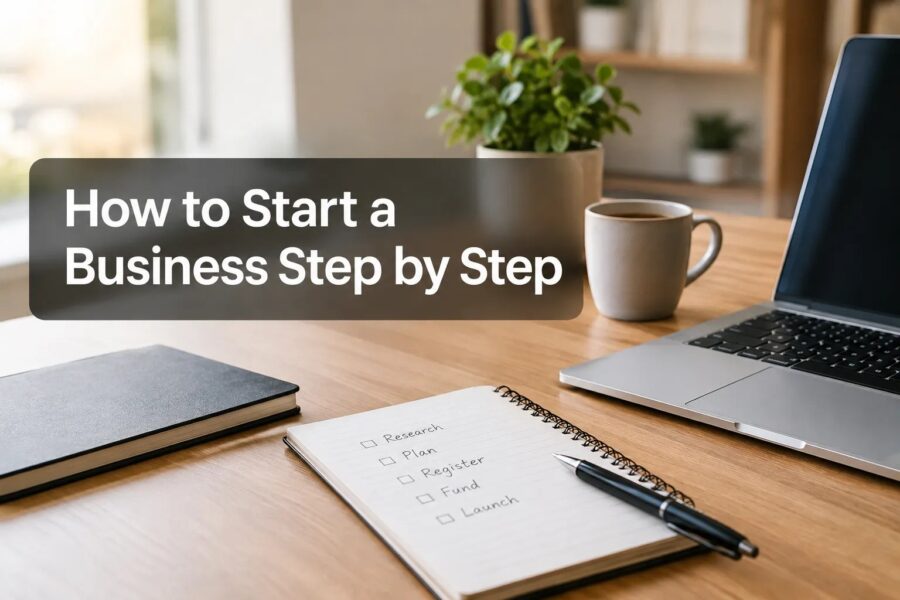
If you need help starting a business, begin by identifying a customer and a problem you can solve. Test whether someone will pay for your offer, work out the costs, then handle registration and launch. You can save the logo and loan application until you know what customers want.
The steps below are written for someone starting a small business in the United States. State and local requirements vary, and a shop, a freelance service and a food business will not have identical setups.
This short video shows how to begin local market research without buying a report:
Start with a sequence you can actually follow
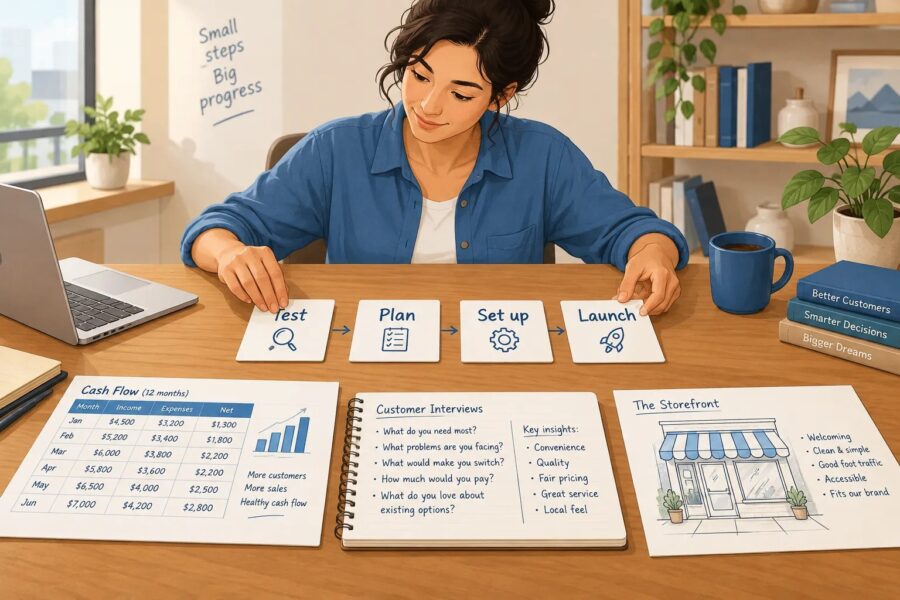
Stage | Your immediate job | Move on when you have… |
|---|---|---|
Test | Describe an offer and speak with likely buyers | Evidence of a real problem and a plausible way to sell |
Plan | Research alternatives, pricing and costs | A short plan and a cash requirement |
Set up | Choose a structure and complete applicable paperwork | Permission and a workable way to take payment |
Launch | Deliver to a few customers and learn from the numbers | Feedback, actual costs and a repeatable next step |
Write down whom you serve, what they need and what you would sell them. For example: “I offer weekly bookkeeping support to independent contractors who struggle to keep their records current.” You can test that offer with buyers; a desire to be your own boss gives you no offer to test.
1. First steps to starting a business: test the idea
Name a narrow first customer group and the problem they face. Then speak with people who fit it. Ask what they do today, what the problem costs them in time or money, and what they have already tried. Avoid asking only, “Would you buy this?” People may be encouraging without becoming customers. If you are still choosing an idea, start with these small business ideas you can test now.
Choose a small test that matches the offer:
Service: Describe a limited-scope paid job and ask prospective customers to book it.
Product: Show a prototype or sample, explain the price and seek a legitimate order or preorder you can fulfill.
Local business: Ask nearby buyers how they currently solve the problem, then trial the service on a small scale where allowed.
Keep a record of whom you asked, what they use now, their objections and whether anyone committed money. A purchase tells you more than a compliment. If the response is lukewarm, adjust the customer, offer or price before investing in a full launch. Obtain any required permit or approval before taking orders or delivering the work.
Output: A one-sentence offer, a named customer group and notes from real buyer conversations.
2. Research the market and set a starting price
Find businesses your customers already buy from, including substitutes that solve the same problem in another way. Review their offer, delivery method, visible prices and customer feedback. Look for an opening you can serve, such as a narrower service area, clearer scheduling or a better fit for one type of buyer.
Talk to buyers alongside your competitor scan. Ask how often they purchase, what would prompt them to switch and what would rule out a new provider. Search trends and busy competitors show interest in a category, while a paid order tests your offer.
Then build a price from costs rather than copying a rival. List direct costs for each sale, a share of recurring overhead, the time needed to fulfill the order and a margin for the owner. Suppose a service sells for $120 and uses $30 of direct costs. That leaves $90 per sale to cover overhead and owner income. If monthly overhead is $900, ten sales cover that overhead, but not the owner’s pay, taxes or any additional variable costs. This is a planning example, not a recommended price.
Ask | Write down |
|---|---|
Who pays? | A specific buyer, not “everyone” |
What do they compare you with? | Named alternatives and the reason to switch |
What does each sale cost? | Materials, fees, delivery and labor |
What volume is plausible? | Orders you can find and fulfill, not just capacity |
Output: A competitor snapshot, an initial price and a rough per-sale contribution.
3. Write a short business plan and cash forecast
A first business plan can fit on one page. Note the offer, customer, reason to buy, sales route, delivery process and cash needed before sales begin. Include one milestone and a reason you might change course. A lender or investor may ask you to expand that plan with financial projections.
Separate startup costs from monthly operating costs. Equipment, deposits, registration and a launch website belong on the startup list; rent, software, insurance and supplies go on the monthly list. Include enough cash to cover the wait between opening and receiving customer payments.
Build three rows in a spreadsheet: expected sales, cash going out and cash on hand at month-end. Allow for fewer sales than you hope for and late customer payments. If the balance turns negative, reduce expenses, delay the launch, increase the cash reserve or change the model. Your forecast should show whether you can pay bills before customers pay you.
Output: A one-page plan, a startup cost list and a monthly cash forecast.
4. Choose a structure, name and location
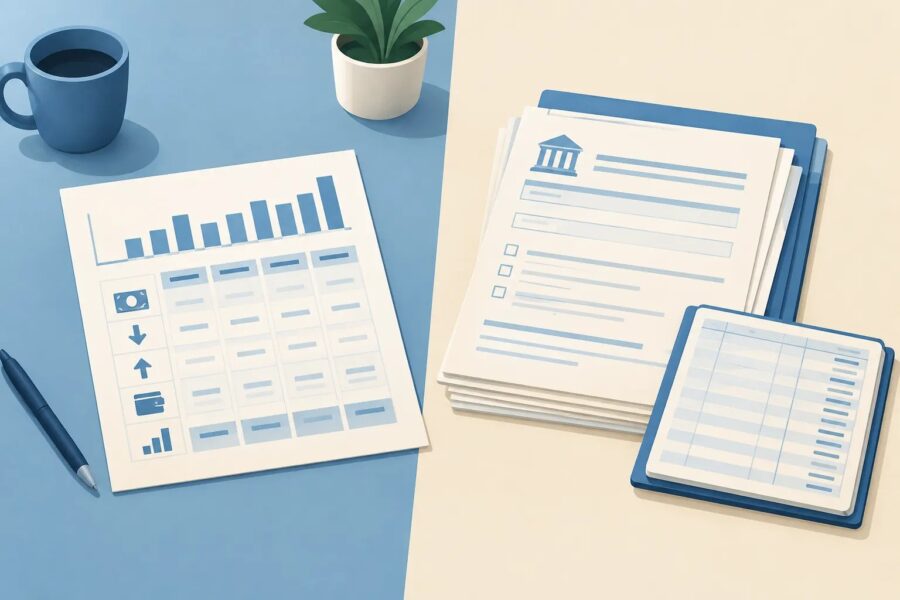
In the U.S., your business structure affects liability, tax treatment and paperwork. A sole proprietorship may be simpler for one owner, but it does not create the same legal separation between owner and business as an LLC or corporation. An LLC can offer liability protection, but its tax treatment and filing requirements depend on the situation. With partners, put ownership, responsibilities and exit terms in writing before money or work becomes disputed. A qualified accountant or attorney can help where the risk or tax consequences are substantial. Record the decision in your startup business plan so partners and lenders see the same facts.
Once you understand the offer, pick a name and search your state business registry, relevant trademarks and available domain names. An available domain does not settle your right to use the name. A trade name different from your legal name may also need a “doing business as” filing.
Location also changes costs and rules. A home office, mobile service, storefront and online shop have different zoning, lease, licensing and insurance implications. Choose based on how customers will buy and how you will deliver, not because a physical location feels more established.
Output: Your chosen structure, a workable name and a location or delivery model.
5. Register, get tax IDs and meet local requirements
Once the model is clear, complete the setup that applies before you operate. In practical terms:
Register the entity with your state if your chosen structure requires it, and register a trade name where required.
Obtain an employer identification number (EIN) if your business needs one. Apply through the IRS rather than paying a third-party service to submit the application.
Identify federal, state and local licenses or permits tied to what you sell and where you operate. Food handling, construction and some professional services involve requirements beyond basic business registration.
Work out applicable tax registrations and a process for collecting and setting aside taxes.
Arrange insurance suited to the work, such as general liability, professional liability or property coverage where relevant.
Business formation and permission to operate are separate. You might register an entity and still need a local permit. If you will hire, plan for employer payroll, reporting and worker-classification obligations before the first worker starts.
Output: Filed documents, applicable approvals, a tax process and the insurance you need.
Funding your small business
6. Choose financing that matches your costs
Use your cost forecast to decide how much funding you need. A small service with little equipment might begin with savings and early customer revenue. A shop with inventory, deposits and payroll may need outside financing. Match any loan payments to the cash the business can generate, including slower months.
Source of money | Useful when | Trade-off |
|---|---|---|
Personal savings and early revenue | You can start small and limit fixed costs | Your own cash is at risk; growth may be slower |
Loan | You have a defined use for funds and a repayment plan | Payments are due even when sales disappoint |
Investors or partners | The business needs capital and can support shared ownership | You give up some control or future return |
Eligible grants | A specific program fits your business and its purpose | Narrow eligibility, competition and application work |
There is no general federal grant that pays anyone to start an ordinary business. Budget with funding you can access; pursue specialized grants if your project qualifies. For example, America’s Seed Fund is aimed at technology-focused businesses rather than a typical new storefront or freelance service. State economic development offices and community development lenders may list local business funding or financial assistance programs; eligibility and location matter.
Small Business Development Centers and other U.S. Small Business Administration (SBA) resource partners offer free or low-cost help starting a business, including planning and financing guidance for small business owners. Industry associations may know of training or contacts in your trade. Business owners pursuing government contracting opportunities with local governments should allow for bidding and payment timing rather than count on a contract to finance opening day.
“SBA and our network of partners offer free or low-cost counseling and resources, targeted support and export assistance.” – U.S. Small Business Administration
Set up the money and delivery systems
Open a dedicated business bank account when your structure and bank require or allow it, and keep business transactions separate. Set up a basic bookkeeping system that records each sale, expense, invoice and tax obligation. Define how you will accept payment, deliver the product or service, handle complaints and replace a supplier if needed. A business with an appealing offer still fails customers when delivery is unreliable.
Output: A funding decision, clean financial records and a simple order-to-delivery process.
7. Find your first customers and adjust
Pick one route to buyers to start. A local service might rely on introductions and a clear local web presence; a B2B provider can reach out to a short list of suitable businesses. For a product, try a small online storefront and show samples to the people you interviewed. Once you have initial traffic, go back to your market research notes and keep only the channels that bring paying customers before you spend more on them.
Write a message that states who the offer is for, the problem it solves, the starting price or way to get a quote, and the next step. Put that message on a simple page with contact information. Make the buying process easy to understand before spending on ads.
Each week, record leads, conversations, orders, revenue, direct costs and cash left. If inquiries do not turn into orders, look at the offer, price and checkout or sales conversation. If orders arrive but delivery takes longer than planned, improve the process or reprice. Ask early customers what nearly stopped them from buying and what would bring them back.
Aim for a repeatable sale you can deliver at a sustainable cost. A polished launch can wait while you learn from early orders.
Output: A live offer, a first acquisition channel and a short record of results.
What to do this week
If you are thinking, “I want to start my own business,” keep the first week manageable:
Write the customer, problem and proposed offer in one sentence.
Speak with prospective buyers and note their current alternatives.
Estimate the price, direct cost and startup cash needed.
Decide which small test would produce a real commitment.
Set a date to review the evidence and either proceed, revise or stop.
If your test supports the offer, you can commit to the full launch setup and larger fixed expenses with a clearer view of demand. You still need to know whether the sales cover costs, the operation meets legal requirements and you can deliver what you promised. MikeGingerich.com has practical business, marketing, finance and technology guidance as those questions arise. Start with the customer test and let the results shape your next expense.
FAQ
How do I get money to start my own business?
First calculate startup costs and the cash you will need until customers pay. Depending on the model, you can use savings, early sales, a loan or investors. Choose funding that fits the amount needed and the business’s ability to repay or share ownership.
How do I start my first business with no money?
Start with an offer that needs little equipment or inventory, such as a skill-based service, and test demand with prospective customers. You may still face registration, insurance, tools or other costs before operating. Plan those expenses rather than assuming a business can launch for literally nothing.
Can I get free money to start a business?
There is no general federal grant for starting a business. Some targeted programs fund eligible projects or business groups, but they have conditions and are not a dependable substitute for a startup budget. Free or low-cost business counseling is a more accessible place to begin.
Will the government pay me to start a business?
Not through a general federal startup grant. Specific programs may support eligible businesses, while government-backed counseling can help you plan and explore financing. Build your launch budget around money you can actually access.