GEO: The New Way Brands Win AI Search Visibility

As artificial intelligence reshapes how consumers discover information online, a new marketing discipline has emerged to help businesses maintain visibility in an AI-dominated search landscape. Generative engine optimization, or GEO, is the practice of structuring content and digital presence so that AI-powered search platforms including ChatGPT, Google AI Overviews, Perplexity, Claude, and Copilot can retrieve, cite, and recommend brands when answering user questions. The term was introduced by Princeton researchers in 2023, and by 2026, GEO has become essential for businesses seeking visibility in an AI-first information landscape.

The Shift from Traditional Search to AI-Generated Answers
When a prospective customer asks Google a question, they may see an AI-generated answer before they’re given a list of websites, and they might even choose to use an AI platform like ChatGPT to get answers or perform tasks. This fundamental change in how people access information has created urgency around understanding and implementing GEO strategies.
If traditional SEO was about earning a spot among 10 blue links, GEO is about earning a place among the two to seven domains large language models typically cite in a single response. The competition for visibility has intensified dramatically, as AI systems consolidate information from multiple sources into synthesized answers rather than presenting users with a ranked list of options.

Research from GEO firm Brandlight suggests that the overlap between top Google links and AI-cited sources has dropped from 70% to below 20%. This divergence indicates that the strategies that worked for traditional search engine rankings may not translate to AI visibility, requiring marketers to develop parallel optimization approaches.

How GEO Differs from Traditional SEO
Unlike traditional SEO that focuses on ranking in search results, GEO focuses on being cited and synthesized by AI systems when they generate responses. The fundamental mechanics of how AI systems retrieve and process information differ significantly from traditional search engine algorithms.
The AI does not paste the full prompt into a search engine but instead breaks the question into smaller sub-queries and searches for each one separately. This “query fan-out” approach means content must be optimized to answer specific components of broader questions, not just target primary keywords.
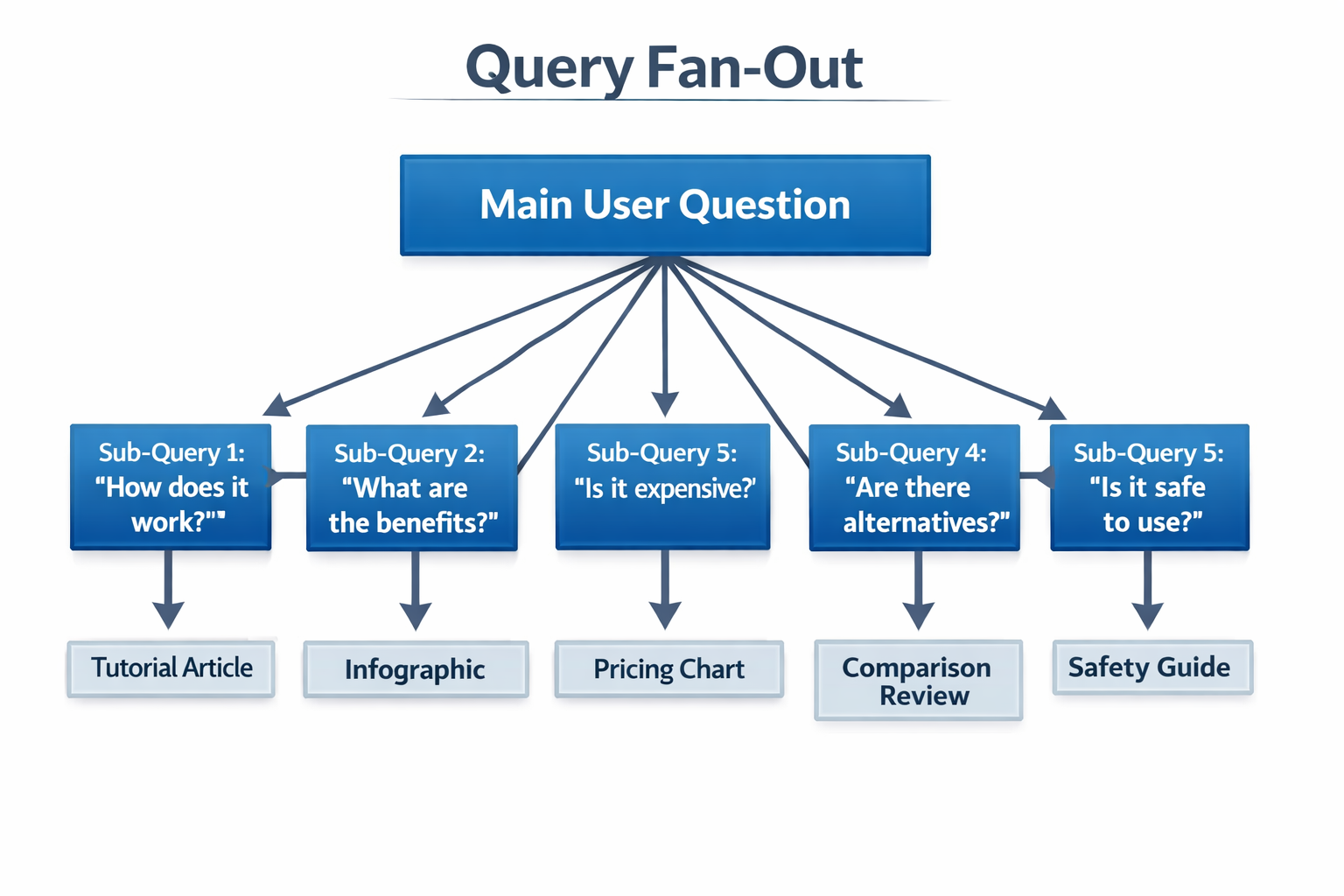
Success now depends on treating AI as a branding channel, managing generative engine optimization separately from SEO, and adapting fast as AI models evolve. However, traditional SEO remains as the base, as AI engines scan and index the same web as everyone else, so if SEO isn’t done well, neither will GEO, meaning they’re not in competition but stacked.
Key Strategies for Optimizing Content for AI
According to Princeton research on GEO, the top optimization methods, which include citing sources, adding statistics, and including quotations, can improve AI visibility by 30-40% compared to unoptimized content. These evidence-based elements help AI systems identify content as authoritative and worth citing in generated responses.
If you publish something no one else has, such as a benchmark study, a unique dataset, or a framework built from experience, AI engines have a reason to cite you over a dozen lookalike alternatives. Originality and unique data have become premium assets in the GEO landscape.

Content structure also plays a critical role. Best practices for 2026 include verifying AI crawlers are not blocked in robots.txt files, ensuring important content is server-side rendered rather than hidden behind JavaScript, implementing schema markup for FAQs and product information, and using clear heading hierarchies with one topic per section.
The Evolution of GEO as a Marketing Discipline
By early 2026, the focus of GEO practitioners shifted from simple keyword placement to “semantic relevance,” a metric driven by the integration of advertising into conversational AI. This evolution reflects the maturing understanding of how AI systems interpret and prioritize content.
The GEO platform landscape has evolved rapidly over the past two years, with millions in venture capital flowing into the category, and today’s platforms range from simple monitoring tools that track brand mentions across a few AI engines to comprehensive optimization platforms that provide deep source influence analytics and strategic guidance.
Generative engine optimization isn’t just the content team’s job but lives at the intersection of content marketing, SEO, digital PR, and product marketing. This cross-functional nature requires organizational alignment and collaboration across traditionally siloed departments.
Measurement and Analytics Challenges
Measurement is the biggest gap in most GEO strategies today, as marketers who’ve spent years refining Google Analytics dashboards often have no comparable visibility into AI search performance. The lack of standardized metrics and tracking tools has made it difficult for organizations to assess the effectiveness of their GEO investments.
Key metrics emerging in the field include AI citation frequency, which measures how often a brand appears in AI-generated answers, and “Share of Model” tracking, which evaluates a brand’s relative visibility compared to competitors across different AI platforms. Platforms like Geoptie bring audit reports, competitor intelligence, citation analytics, and content optimization into one dashboard, making it practical to manage the entire cycle in one place instead of stitching together multiple tools.
Terminology and Industry Standards
GEO (Generative Engine Optimization), AEO (AI Engine Optimization), and AI Search Optimization are all terms used interchangeably to describe the practice of optimizing online presence and content to improve how brands appear in AI-generated responses. The industry has not settled on a single term yet. Despite this nomenclature variance, all approaches share the same fundamental goal: ensuring content gets cited by AI systems.
Key Facts
- The term “generative engine optimization” was introduced by Princeton researchers in 2023 and has become essential for businesses by 2026.
- The overlap between top Google links and AI-cited sources has dropped from 70% to below 20%, according to GEO firm Brandlight.
- Top GEO optimization methods can improve AI visibility by 30-40% compared to unoptimized content, according to Princeton research.
- Large language models typically cite two to seven domains in a single response.
- Millions in venture capital have flowed into the GEO platform category over the past two years.
Sources
- Search Engine Land: Mastering Generative Engine Optimization in 2026
- Semrush: Generative Engine Optimization (GEO): A Practical Guide
- Digital Applied: GEO Guide 2026: Generative Engine Optimization Explained
- Business.com: What is Generative Engine Optimization?
Sources
- Mastering generative engine optimization in 2026: Full guide
- GEO Guide 2026: Generative Engine Optimization Explained
- Generative Engine Optimization (GEO): A Practical Guide
- Generative Engine Optimization (GEO): The 2026 Guide to AI Search Visibility – LLMrefs
- Generative Engine Optimization in 2026
- Is Generative Engine optimization (GEO) replacing traditional SEO in 2026? – Quora
- Generative engine optimization
- Top 15 Generative Engine Optimization (GEO) Platforms for 2026