Car Accident in Palm Beach Gardens: Insurance Layers, PIP and Your Claim
Mike Gingerich
7 min read
 7 min read
Layer One: Personal Injury Protection (PIP)
Florida remains a no-fault state, and Florida’s PIP requirement is still in place in 2026 after repeal bills again failed in the Legislature. Every vehicle owner must carry at least $10,000 in PIP and $10,000 in property damage liability. After a crash, your own PIP coverage pays first, regardless of fault — generally 80% of reasonable medical expenses and 60% of lost income up to the policy limit. Two rules are critical: The 14-day rule. You must receive initial medical treatment within 14 days of the crash, or your insurer can deny PIP medical benefits. The emergency medical condition rule. Without a qualified provider’s determination that you had an emergency medical condition, PIP medical benefits may be limited to $2,500. For a high earner, PIP’s 60% wage benefit within a $10,000 cap covers only a sliver of real losses — which is why the next layers matter so much.Layer Two: The At-Fault Driver’s Bodily Injury Coverage
To recover for pain and suffering and the losses PIP doesn’t cover, you generally pursue the at-fault driver. Under Florida Statute 627.737, non-economic damages require meeting the permanent injury threshold — significant and permanent loss of an important bodily function, permanent injury within a reasonable degree of medical probability, significant and permanent scarring or disfigurement, or death. The problem: bodily injury (BI) liability coverage is not mandatory for most Florida drivers. Many carry none, and those who do often carry low limits. Even if fault is clear and your injuries are severe, the at-fault driver’s coverage may be exhausted quickly or absent entirely.Layer Three: Your Own Uninsured/Underinsured Motorist Coverage
Uninsured/underinsured motorist (UM/UIM) coverage pays when the at-fault driver has no insurance, not enough insurance, or leaves the scene. In Florida, it is frequently the most important coverage in a serious crash. Two details matter: Stacked vs. non-stacked. Stacked UM allows you to combine UM limits across multiple vehicles on your policy, increasing the total available. Non-stacked coverage is cheaper but limits you to a single vehicle’s coverage. Many households with several vehicles don’t realize which they have. Umbrella policies don’t always include UM. Many people assume their $1 million or $2 million umbrella policy protects them if they are hit by an uninsured driver. Often it does not — umbrella policies primarily cover your liability to others, and UM coverage under an umbrella must frequently be specifically purchased. Reviewing your policies with your agent before a crash is time well spent.Other Layers That May Apply
Medical payments (MedPay) coverage can pay a portion of medical expenses that PIP does not cover, including the 20% PIP doesn’t pay. Commercial and employer policies apply when the at-fault driver was working, driving a company vehicle, or making deliveries. Rideshare coverage from Uber and Lyft provides substantial limits when a driver is transporting a passenger or en route to a pickup, and lower contingent coverage when the driver is simply logged in and waiting. Vehicle owner liability under Florida’s dangerous instrumentality doctrine can make the owner of a car responsible when someone else was driving it with permission, subject to statutory limits for some owners.Where Crashes Happen in Palm Beach Gardens
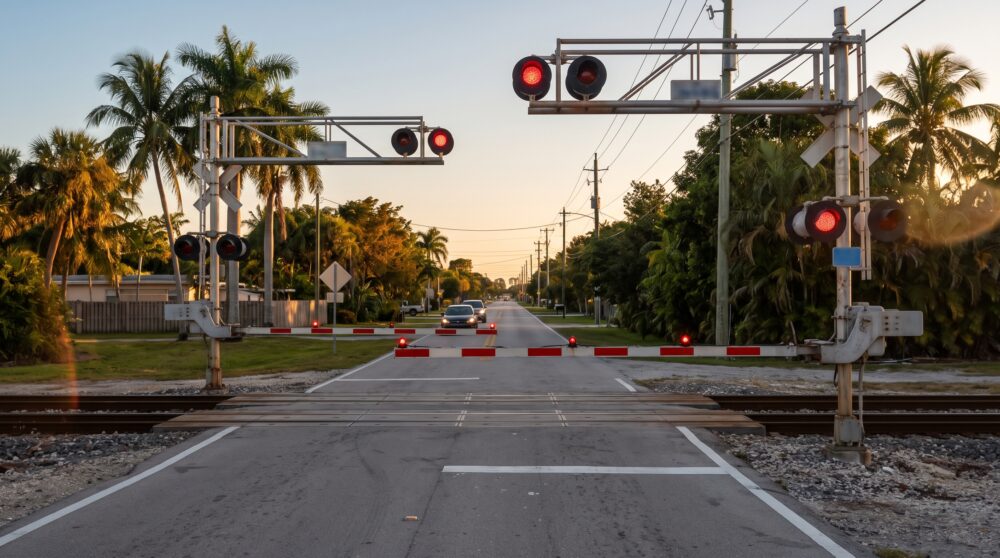
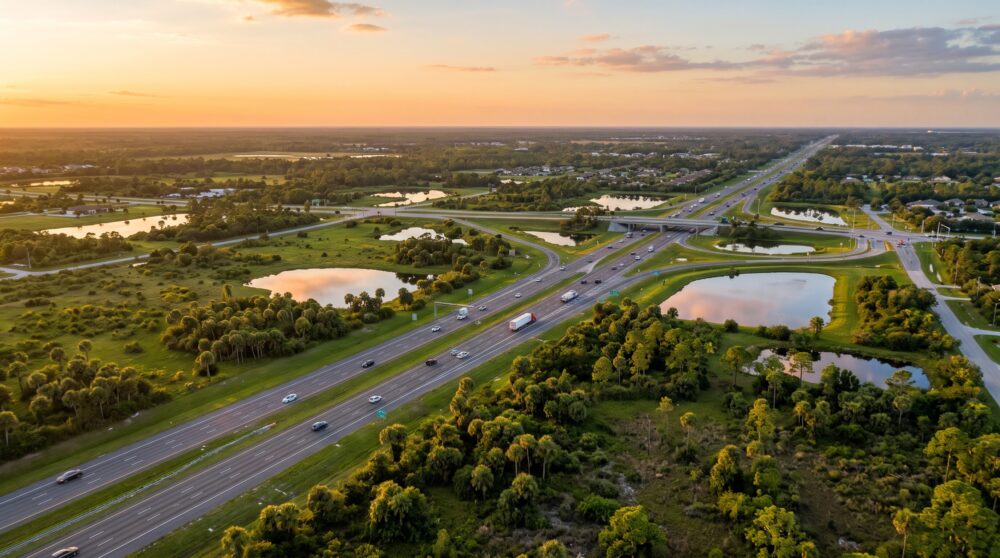
I-95 and Florida’s Turnpike carry heavy commuter and through traffic. The interchanges at PGA Boulevard and Northlake Boulevard are recurring locations for merge, lane-change and rear-end crashes, especially at rush hour and in season. PGA Boulevard — the city’s main commercial artery — combines high traffic volume, multiple lanes, frequent turning traffic into shopping centers and resorts, and pedestrians. Side-impact and left-turn crashes are common. Northlake Boulevard, Military Trail and Donald Ross Road carry heavy local traffic through busy intersections where red-light running and distracted driving cause serious collisions. Alternate A1A and US-1 see a mix of local traffic, cyclists and visitors heading toward Juno Beach and Jupiter. Rail crossings along the Florida East Coast corridor in northern Palm Beach County now carry Brightline high-speed passenger trains alongside freight. Crossing collisions involve complex questions about signals, gates, road design and operator conduct, and multiple parties may share responsibility. Golf carts on community roads and shared paths add another risk. In a collision with a car, golf cart occupants have almost no protection.Steps to Take After a Palm Beach Gardens Crash
- Call 911 and make sure law enforcement documents the crash.
- Get medical care right away, and never later than 14 days after the accident.
- Photograph vehicles, the scene, traffic signals and your injuries.
- Collect information from all drivers and witnesses, including the other driver’s insurer.
- Open a PIP claim with your own insurer.
- Gather your policies — auto, umbrella and any other coverage in your household.
- Decline recorded statements to the other driver’s insurer until you have advice.
Deadlines and Fault After the 2023 Reforms
Florida’s 2023 tort reform law reduced the time to file a negligence lawsuit to two years for most crashes occurring after March 24, 2023. Wrongful death claims also carry a two-year deadline. Florida now uses modified comparative negligence: if you’re found more than 50% at fault, you recover nothing from the other driver, and if you’re 50% or less at fault, your recovery is reduced by your percentage of fault. In complex intersection and multi-vehicle crashes, insurers work hard to shift fault — making early evidence collection essential.