Claude Design Sparks Web Design Uniformity
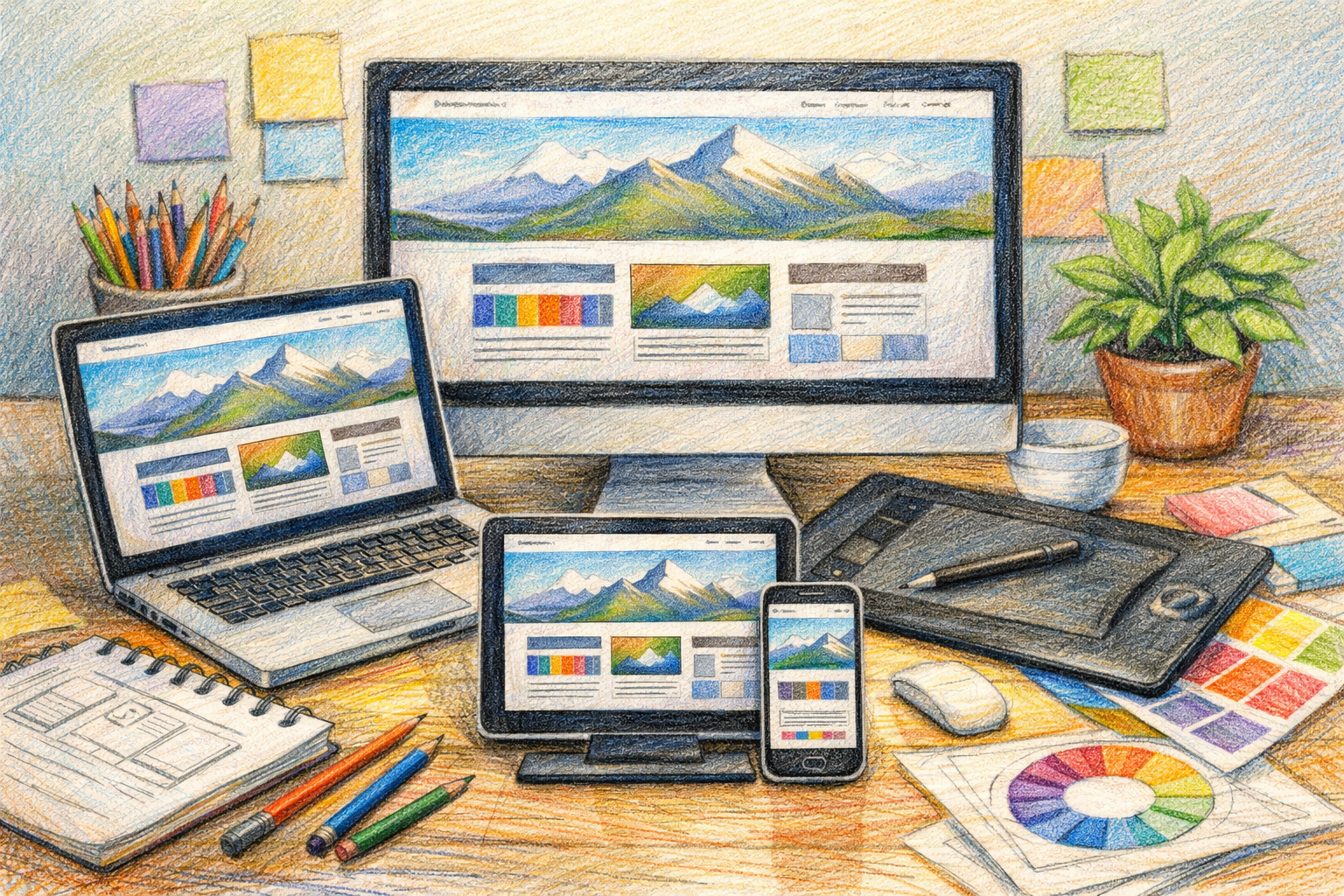
Anthropic’s Claude Design tool is driving a new wave of aesthetic sameness across the web, as developers and non-designers alike turn to the AI-powered platform to generate websites, apps, and digital content at unprecedented speed. Launched on April 17, 2026, Claude Design lets users collaborate with Claude to create polished visual work like designs, prototypes, slides, one-pagers, and more. The tool’s widespread adoption has created what observers are calling an emerging “AI design aesthetic” characterized by similar visual patterns and design choices.

The Rise of AI-Generated Design Uniformity
The uniformity in Claude Design outputs stems from the tool’s reliance on text-based prompts and open-source code libraries, which tend to produce similar results across different users and projects. When thousands of users describe their desired websites or applications using natural language, the AI draws from the same training data and design patterns, resulting in a recognizable aesthetic that is beginning to dominate certain corners of the internet.
Claude Design drew more than one million users in its first week, demonstrating the massive appetite for accessible design tools that require no coding knowledge. The platform transforms text descriptions into fully functional HTML, CSS, and JavaScript, allowing anyone to create professional-looking digital products within minutes.
Claude Design is powered by Claude Opus 4.7, Anthropic’s most capable vision model, and is available in research preview for Claude Pro, Max, Team, and Enterprise subscribers. The tool goes beyond static mockups by generating interactive, deployable code that users can immediately publish or refine.
Market Impact and Industry Response
The launch had immediate market consequences. Anthropic made Figma lose 7% in one day following Claude Design’s release, signaling investor concerns about competition in the design tool space. Google Trends search interest for Claude reached an all-time high in the weeks following the launch.
Claude Design was launched on April 17, 2026, three days after Mike Krieger, Anthropic’s CPO, left the board of Figma. However, Anthropic told TechCrunch that Claude Design is intended to complement Canva and similar tools rather than replace them, built for people who aren’t starting from a design tool and need to get from an idea to something visual quickly.
Real-World Applications and Economics
The commercial viability of Claude Design has been demonstrated by early adopters who are monetizing AI-generated work. One developer reported building a website in just two hours using Claude Code’s capabilities and selling it for $4,700, showcasing the economic potential of rapid AI-assisted development.
The tool enables creation of various design outputs including pitch decks, landing pages, interactive prototypes, data dashboards, and full applications. Users can start projects from text prompts, uploaded documents, or by pointing Claude at existing codebases. When given access, Claude can apply a team’s design system to every project automatically, so the output is consistent with the rest of a company’s designs.
June 2026 Updates Address Early Limitations
Early adoption revealed significant challenges. One PCWorld reviewer burned through 80 percent of a weekly Claude Pro allowance in about 25 minutes, and got just three variations of a single webpage out of it. The high token consumption made the tool impractical for many users.
Anthropic shipped a new update on June 17 to address these issues. Claude Design now shares usage limits with chat, Claude Cowork, and Claude Code, making the platform more economical for repeated use. The company says Claude Design is now better at adhering to design systems and has more finely-tuned editing controls, and users can also do more with fewer tokens.
The June update also introduced bidirectional integration with Claude Code. Developers can run /design-sync in Claude Code to import their local codebase’s design system into Claude Design, ensuring prototypes start from real components rather than approximations. When a design is ready to ship, it hands off to Claude Code, which picks up exactly where the designer left off.
Expanded Integration Ecosystem
Claude Design gained nine new export destinations: Adobe, Base44, Canva, Gamma, Lovable, Miro, Replit, Vercel, and Wix, plus PDF and PowerPoint. This hub-and-spoke approach positions Claude Design as an origination point rather than a complete design solution, with partner platforms handling refinement, collaboration, and deployment.
Users can share designs as an internal URL within their organization, save as a folder, or export to Canva, PDF, PPTX, or standalone HTML files. The Canva integration is particularly significant, as exported designs become fully editable within Canva’s collaborative environment.
Key Facts
- Claude Design launched April 17, 2026, attracting over one million users in its first week
- Figma’s stock dropped 7% following the Claude Design announcement
- Initial version consumed tokens rapidly, with one reviewer using 80% of weekly allowance in 25 minutes
- June 17, 2026 update addressed token efficiency and added bidirectional Claude Code integration
- Tool now exports to nine platforms including Adobe, Canva, Vercel, and Wix
- Available exclusively to Claude Pro, Max, Team, and Enterprise subscribers
Sources
- The New Yorker: The A.I.-Design Aesthetic That’s Taking Over the Internet
- Anthropic: Introducing Claude Design
- TechCrunch: Anthropic launches Claude Design
- Fast Company: Anthropic’s updated Claude Design gives vibe coders more control
Sources
- Introducing Claude Design by Anthropic Labs \ Anthropic
- Anthropic Is Turning Claude Design Into More Than an AI Design Generator – Memeburn
- Claude Design (Anthropic): The Complete 2026 Guide
- Claude Design by Anthropic Labs: Everything You Need to Know
- Anthropic launches Claude Design, a new product for creating quick visuals | TechCrunch
- Anthropic’s updated Claude Design gives vibe coders—and their design overlords—more control – Fast Company
- Anthropic Launches Claude Design Update with Direct Pipeline to Claude Code | Technobezz