Anthropic’s Claude Code adds self-review skills

Anthropic has introduced a major shift in how its Claude Code agentic coding tool handles quality control, implementing self-review capabilities through a new “Skills” workflow that allows the AI to inspect and refine its own output before presenting it to developers. The announcement on July 21, 2026 marks a significant evolution in AI-assisted software development, particularly as the company simultaneously published context-engineering guidance on July 24, 2026 that reduces system prompts by more than 80%.
The update includes four specialized self-check commands that developers can invoke to have Claude review its own work: /code-review, /simplify, /verify, and /design. These skills represent Anthropic’s response to a growing bottleneck in the software development lifecycle, where AI tools that make developers significantly more productive have created a corresponding review capacity crisis.
New Skills Transform the Review Process
The /code-review skill, which Anthropic ships as a bundled skill, has emerged as the flagship capability in this new workflow. The command reviews the current diff for correctness bugs and cleanup opportunities, and it can optionally apply fixes. According to recent analysis, if developers only install or learn one Claude Code skill deeply, /code-review is the recommended choice.
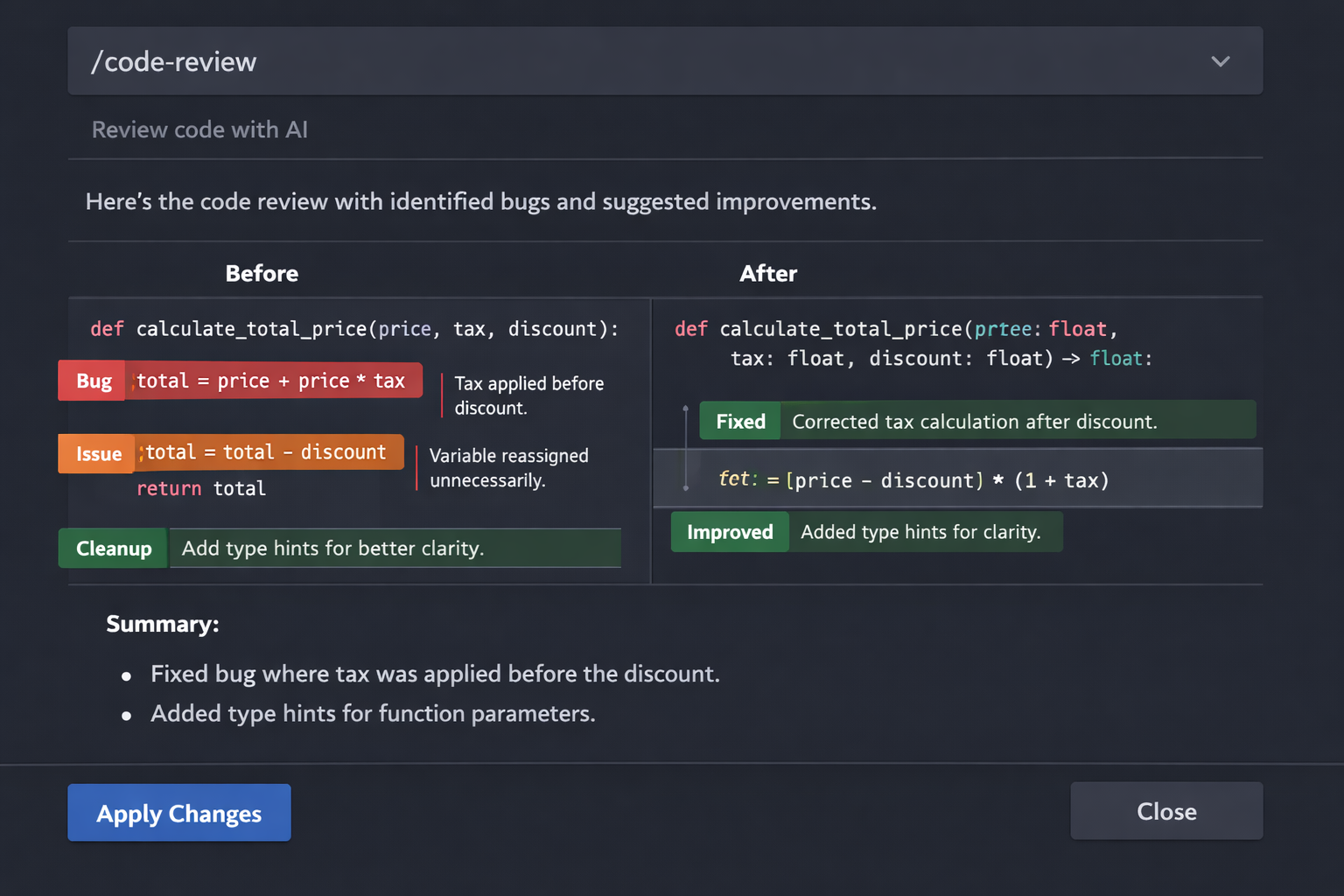
The /simplify skill addresses code quality at a different level. The official Anthropic simplify skill covers the core of this: it reviews changed code for reuse, quality, and efficiency, then fixes what it finds. The skill works best when paired with project-specific review checklists in CLAUDE.md files.
Meanwhile, the /verify and /design skills handle runtime and interface validation respectively. Claude Code recently changed /verify and /code-review to run only when invoked directly, meaning Claude no longer runs these skills on its own. This gives developers explicit control over when intensive verification runs occur.
The 80% Prompt Reduction Strategy
Alongside the skills announcement, Anthropic published new context-engineering guidelines that fundamentally change how teams should configure Claude Code. The guidance demonstrates how to cut more than 80% of the system prompt previously required for Claude 5 models by moving instructions out of prompts and into lightweight CLAUDE.md files and skills.
This architectural shift reflects Anthropic’s belief that context management, not just raw model capability, determines real-world performance. By encoding preferences and workflows in reusable skill files rather than repeated prompt instructions, teams can maintain consistency across sessions while dramatically reducing token overhead.
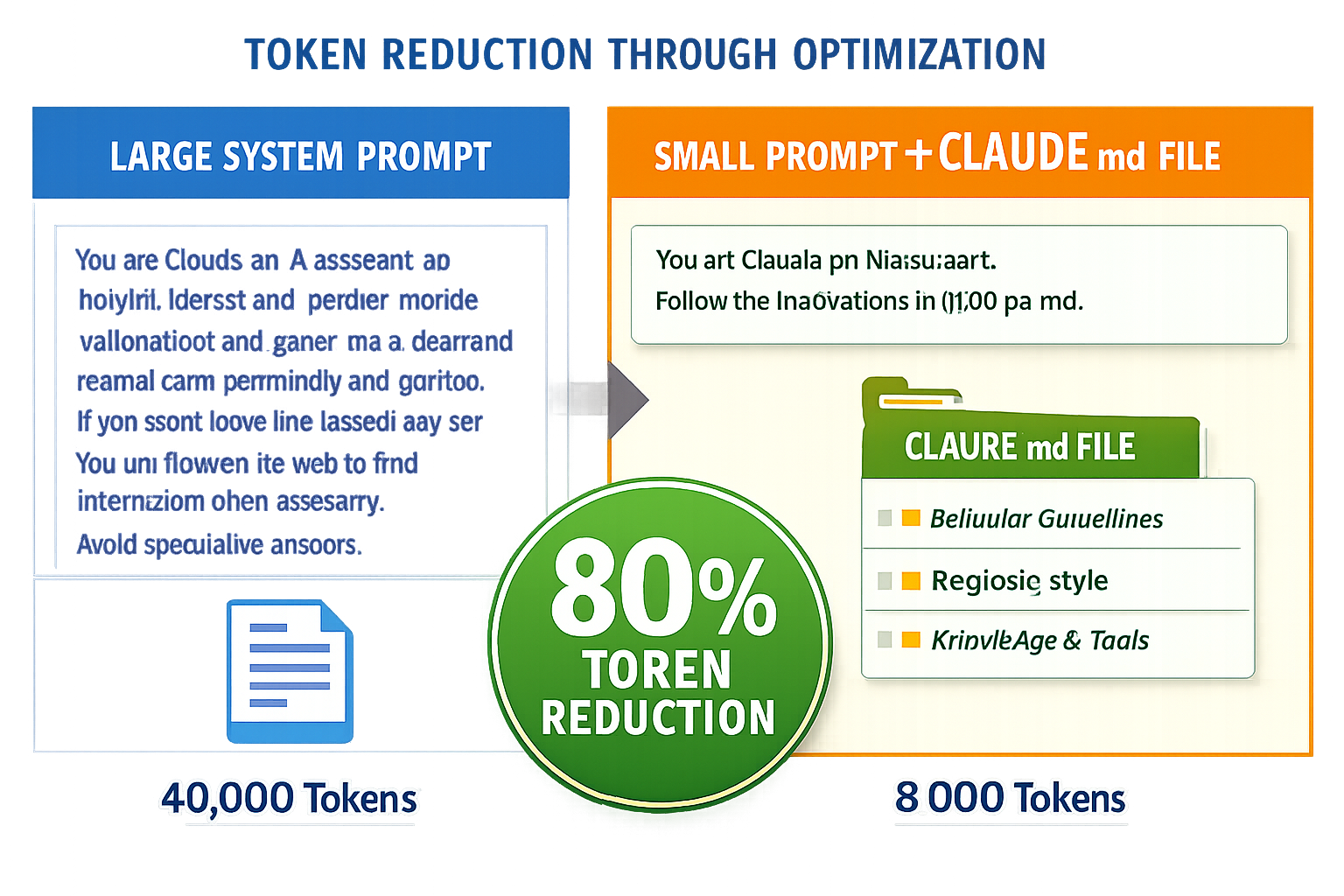
Developers are advised to pair official skills with project-specific review checklists in CLAUDE.md for maximum effect. This hybrid approach balances standardization with customization, allowing teams to benefit from Anthropic’s tested workflows while encoding their own domain requirements.
Multi-Agent Code Review System
The skills feature builds on Anthropic’s broader Code Review product, which the company launched on March 9, 2026. Claude Code Review is a multi-agent automated PR review system built directly into Claude Code, and when a pull request opens on GitHub, the system automatically dispatches multiple specialized AI agents to analyze the code simultaneously.
Each agent targets a different class of issue: logic errors, boundary conditions, API misuse, authentication flaws, and compliance with project-specific conventions. Critically, a verification step then attempts to disprove each finding before results are posted, a deliberate false positive filter.
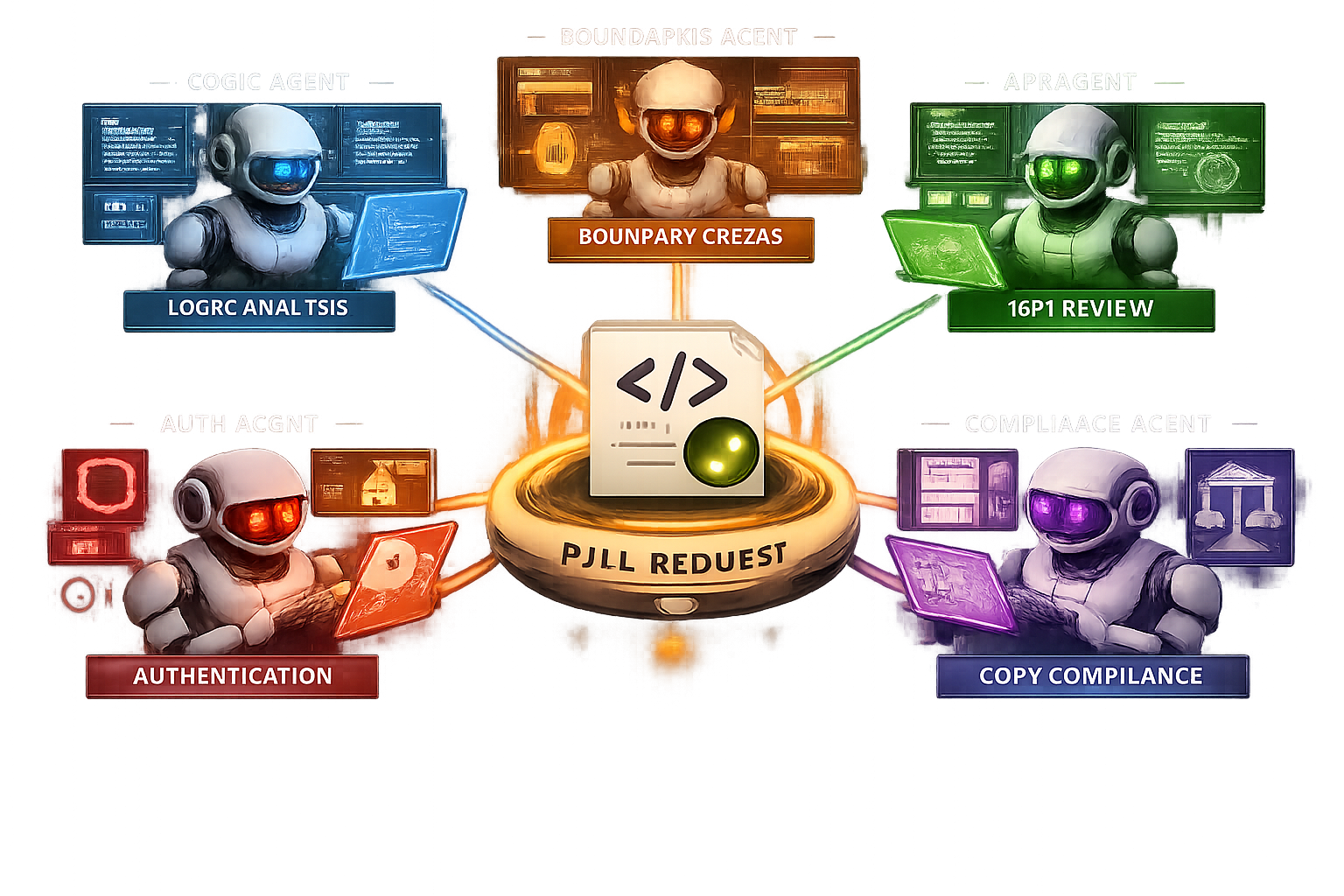
This falsification approach distinguishes Claude Code Review from traditional static analysis tools. Rather than reporting every potential issue, the system actively tries to prove itself wrong, reducing noise and improving signal quality for human reviewers.
Ecosystem Growth and Compatibility
As of March 2026, the Claude Code skill ecosystem includes official Anthropic skills, verified third-party skills, and thousands of community-contributed skills compatible with the universal SKILL.md format. The same skill files work across Claude Code, Cursor, Gemini CLI, Codex CLI, and Antigravity IDE.
The Frontend Design skill, one of Anthropic’s most popular official releases, illustrates the platform’s reach. With 117k weekly installs, it’s one of the most widely used official skills in the ecosystem. The Frontend Design skill, maintained officially by Anthropic, pushes Claude to make deliberate aesthetic choices before writing any code and explicitly bans a list of overused fonts while pushing Claude to commit to a specific visual direction.
Recent Updates and Platform Improvements
Beyond the skills workflow, Anthropic has shipped several incremental improvements to Claude Code in recent weeks. Claude Code added emoji shortcode autocomplete, clearer transcript write warnings, and tighter controls for subagents, budgets, and background sessions, and it also brought a wave of fixes for updates, security, accessibility, resume flows, telemetry settings, and Windows stability.
The platform also introduced a diagnostic tool to help teams optimize their Claude Code configurations. It checks installation health, finds unused skills, MCP servers, and plugins versus their context cost, deduplicates local CLAUDE.md files against checked-in ones, proposes trimming CLAUDE.md content Claude could derive from the codebase, and flags slow hooks, and it reports findings first and asks for confirmation before changing anything.
Broader Product Context
These Claude Code updates arrive alongside other significant Anthropic product announcements in July 2026. The company recently released Claude Opus 4.7, now available through Claude AI, the API, and partners including Microsoft Foundry. Separately, Anthropic shipped improvements to Claude voice mode, including expanded model access and integration with connected apps like Gmail, Calendar, and Slack.
The convergence of these releases suggests Anthropic is systematically expanding Claude’s capabilities across multiple interaction modes, from text-based coding assistance to voice-driven productivity workflows.
Key Facts
- Anthropic announced self-review “Skills” workflow for Claude Code on July 21, 2026, featuring /code-review, /simplify, /verify, and /design commands
- New context-engineering guidance published July 24, 2026 enables 80%+ reduction in system prompts for Claude 5 models
- /verify and /code-review skills now run only when explicitly invoked, giving developers direct control
- Frontend Design skill has reached 117,000 weekly installs as of July 2026
- SKILL.md format is compatible across Claude Code, Cursor, Gemini CLI, Codex CLI, and Antigravity IDE
- Claude Code Review launched March 9, 2026 as multi-agent PR analysis system with built-in falsification step
Sources
- NetEase – Anthropic’s Claude Code introduces self-review “Skills” workflow
- AI Pricing Guru – Claude 5 Context Engineering: 80% Less Prompt
- Anthropic – Building verification loops in Claude Code with skills
- CodeAnt AI – Anthropic Claude Code Review: What It Is, How It Works, and How It Compares
Sources
- Building verification loops in Claude Code with skills | Claude by Anthropic
- Anthropic Claude Code Review: What It Is, How It Works, and How It Compares
- Best Claude Code Skills in 2026 (Ranked) | Nimbalyst
- 10 Must-Have Skills for Claude (and Any Coding Agent) in 2026 | by unicodeveloper | Medium
- Claude Code Updates by Anthropic – July 2026 – Releasebot
- Best Claude Code Skills to Try in 2026