Anthropic’s Claude Design Ensures Consistent AI Branding
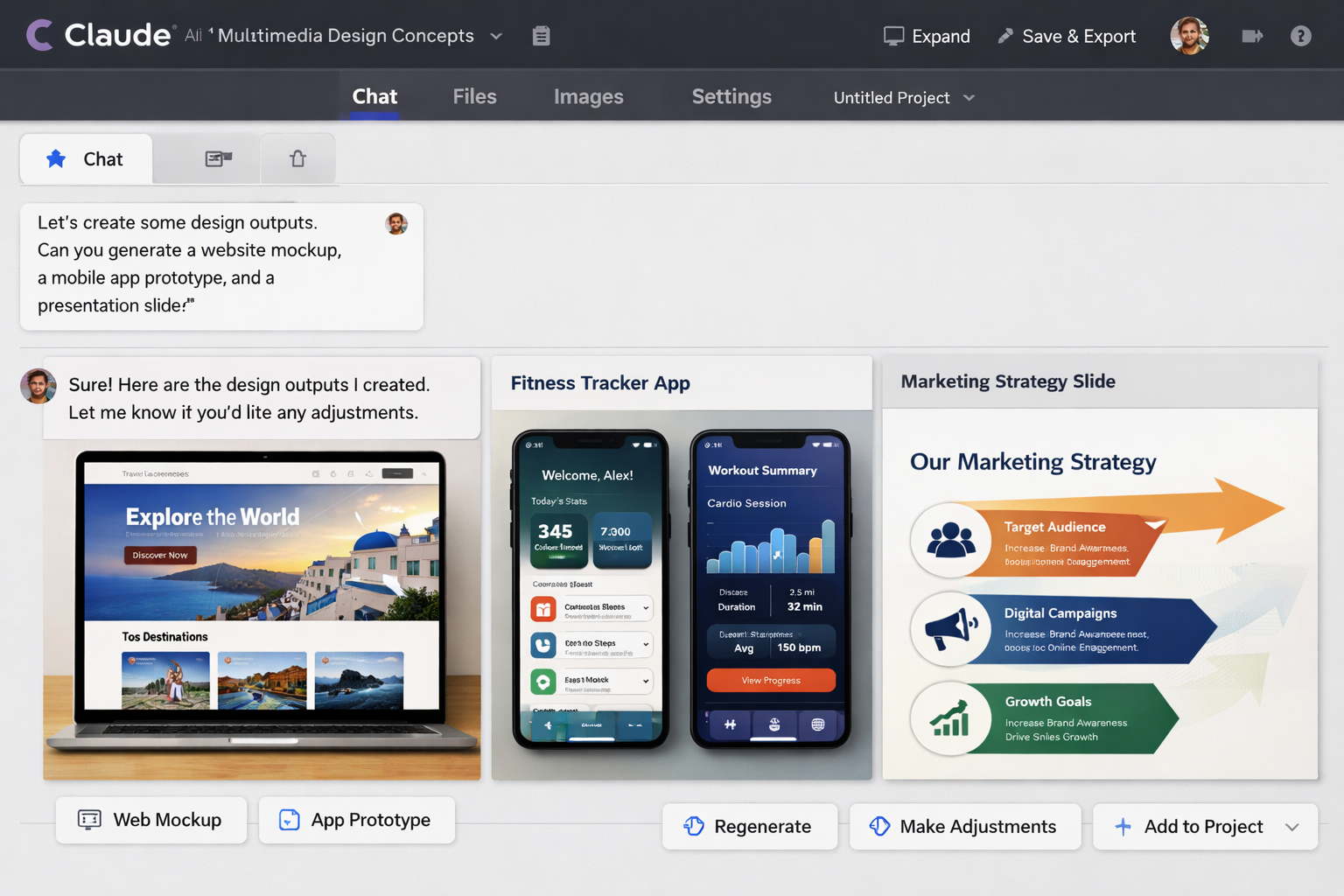
A demonstration video showing how Claude Design can generate cohesive creative assets across multiple formats, including websites, advertisements, presentations, and contracts, is gaining attention for addressing a persistent challenge in AI-generated design work: inconsistent visual branding across different outputs.
The video, posted to YouTube and titled “AI做的网站为什么全都长得不一样?” (Why do AI-generated websites all look different?), showcases Claude Design, Anthropic Labs’ product that lets users collaborate with Claude to create polished visual work like designs, prototypes, slides, one-pagers, and more. The demonstration highlights the platform’s ability to maintain design consistency when generating multiple creative materials simultaneously, a feature that sets it apart from other AI design tools that often produce visually disconnected results.
Solving the Consistency Problem in AI Design
The video addresses a common frustration among users of AI design tools: when generating multiple assets for a brand or project, each output often looks dramatically different in style, typography, color scheme, and visual language. This forces users to spend significant time manually harmonizing designs or accepting a fragmented brand identity.
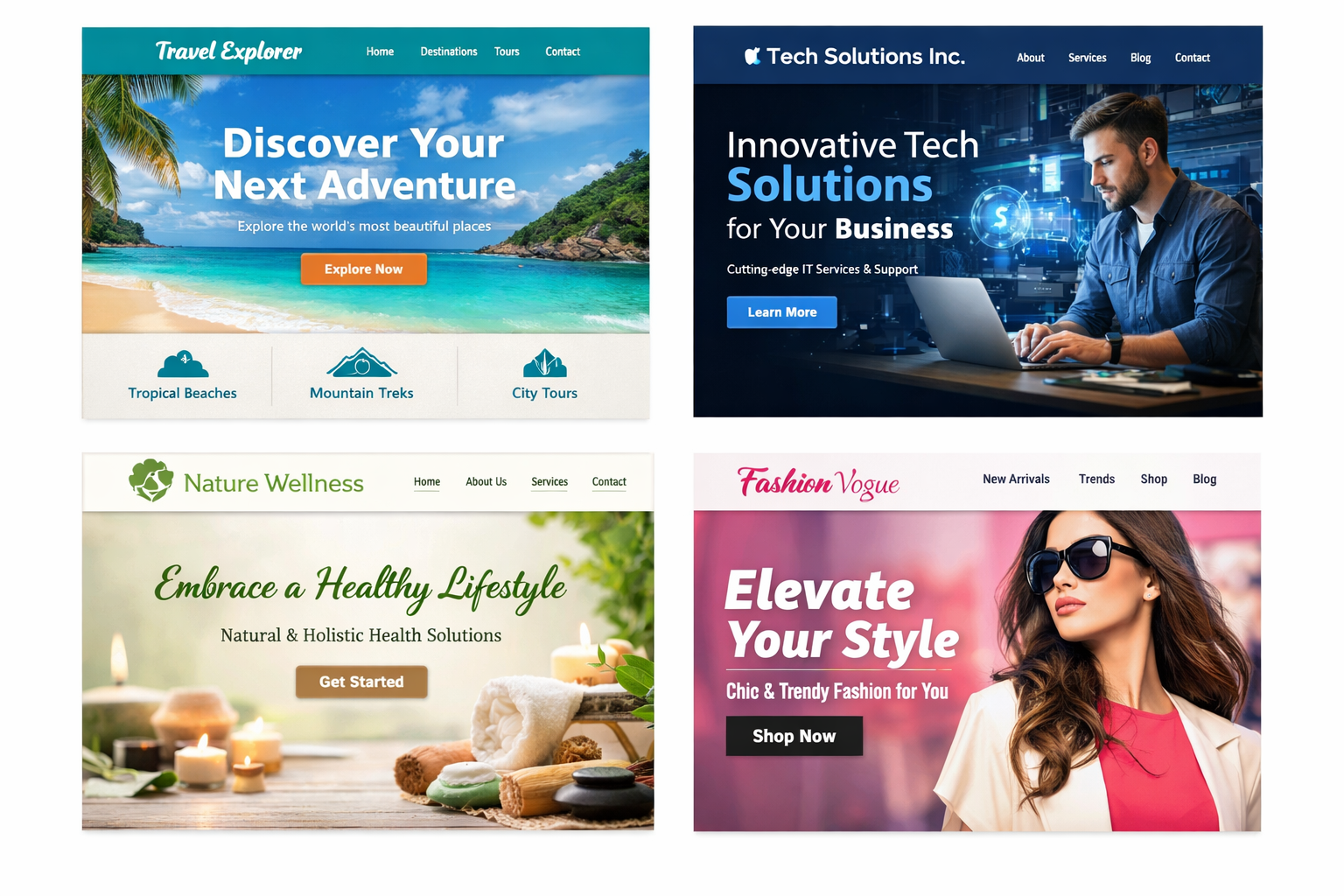
During onboarding, Claude builds a design system for your team by reading your codebase and design files, which then applies automatically to all future projects. That brand layer is what stops the output from looking like every other AI-generated landing page on the internet, and it is the single biggest quality lever in the whole tool.
Multi-Format Creative Output
The demonstration shows Claude Design simultaneously producing a website, advertising materials, PowerPoint presentations, and contracts, all maintaining visual coherence. Claude Design is powered by Claude Opus 4.7 and is available in research preview for Claude Pro, Max, Team, and Enterprise subscribers.
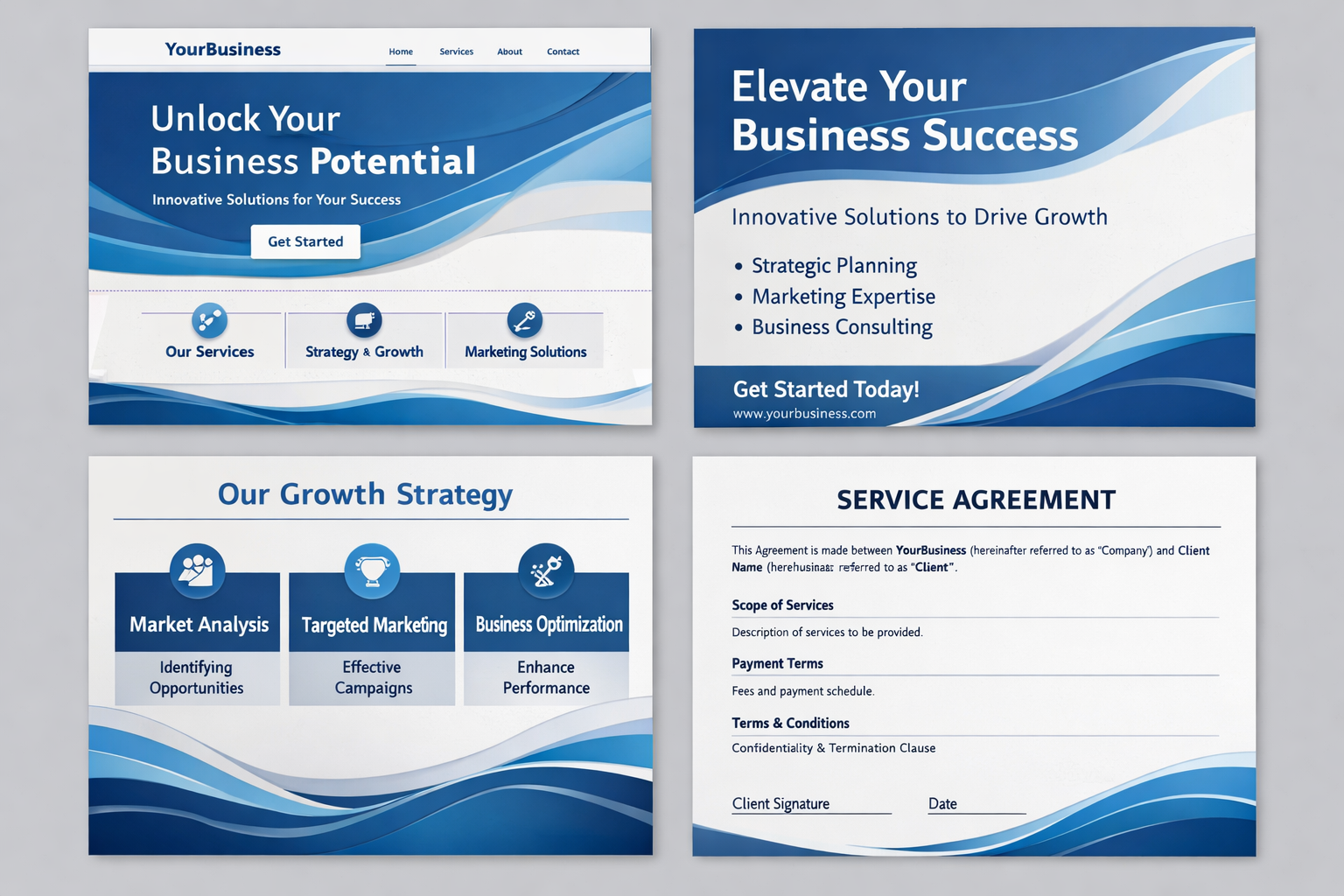
Users can access the tool at claude.ai/design or through the Claude Desktop sidebar. Export options include sharing designs as an internal URL within your organization, saving as a folder, or exporting to Canva, PDF, PPTX, or standalone HTML files.
Integration with Claude Code
The video also highlights the seamless handoff between design and development workflows. When a design is ready to build, Claude packages everything into a handoff bundle that you can pass to Claude Code with a single instruction. This integration eliminates the typical friction between design prototyping and production implementation.
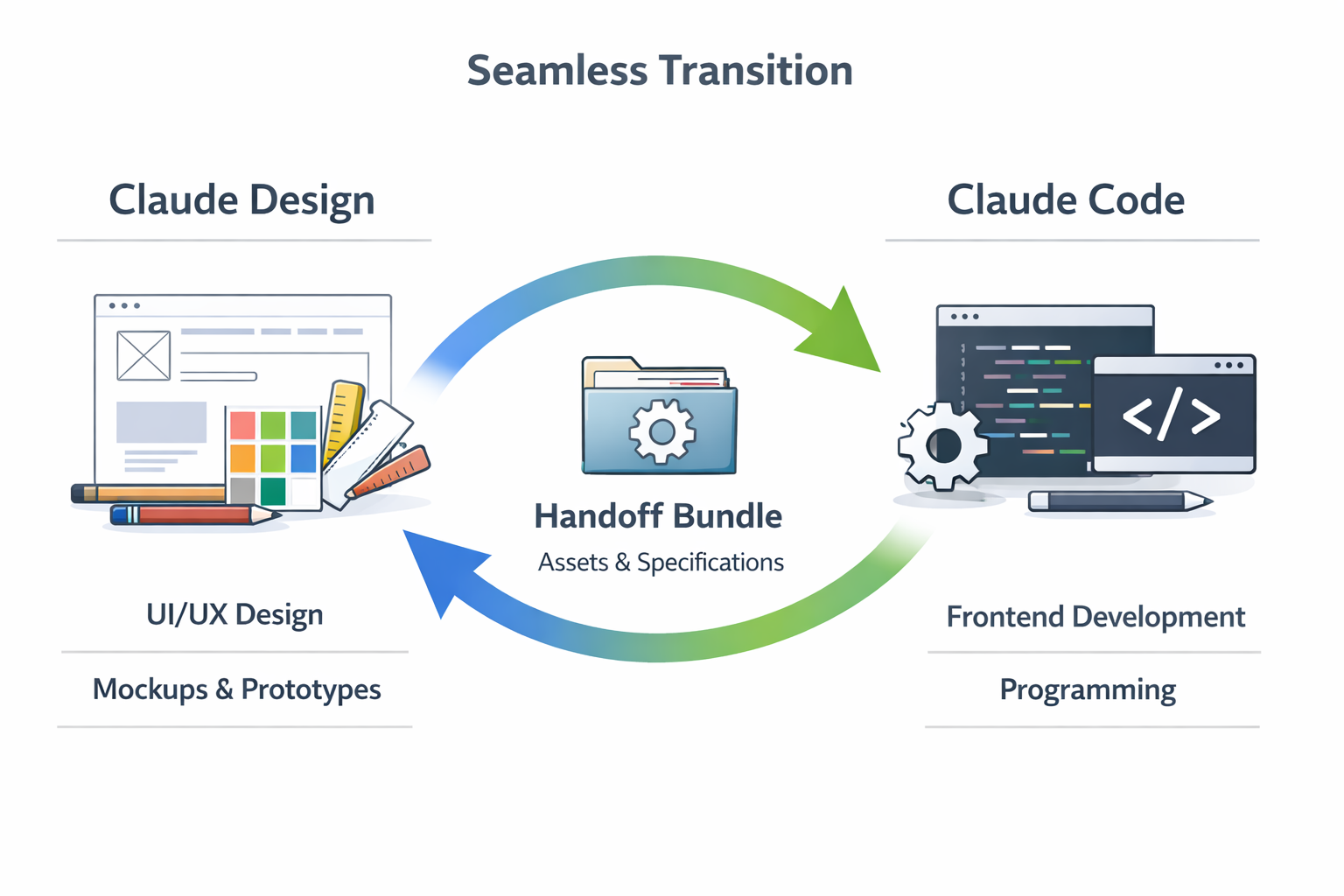
When a design is ready to become software, you can hand it off to Claude Code, which continues from your existing work instead of starting over from a screenshot. For teams using both tools, the /design-sync command pulls in your design system, so everything you build in Claude Design starts from your existing components.
Design System Capabilities
The platform’s design system functionality extends beyond simple color and font matching. Claude generates full design systems based on existing documents: GitHub or local codebases, Figma files, design style guides, fonts, logos, and other assets. The platform will use the generated design system across all future projects: super useful to build on-brand layouts, minimize post-generation editing times, and avoid generic aesthetics.
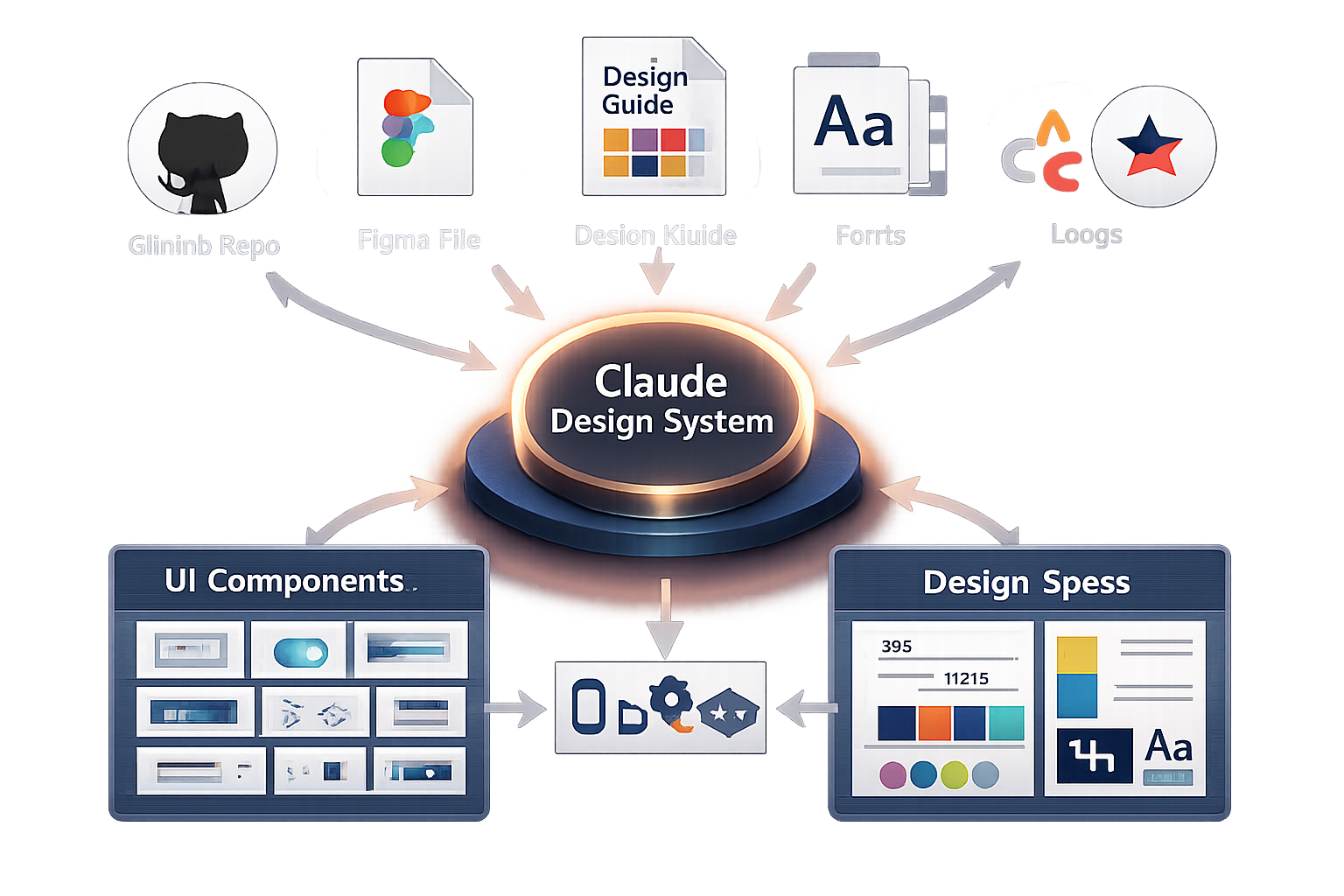
Claude builds with your real design system components, checks its own output against your design system, and makes corrections before you see them. For organizations with multiple brands, teams can hold more than one design system, which is important when you operate across product brands or audience segments.
Target Users and Use Cases
Anthropic’s official positioning is straightforward: the target is not the confirmed Figma designer, but founders, PMs, marketers and anyone else who has a visual idea but neither the time nor the skills to execute it in a traditional design tool.
The tool supports multiple creative workflows including pitch decks and presentations where founders and Account Executives can go from a rough outline to a complete, on-brand deck in minutes, and marketing collateral where marketers can create landing pages, social media assets, and campaign visuals, then loop in designers to polish.
Current Limitations and Status
While the video demonstrates impressive capabilities, Claude Design remains in research preview status. The “research preview” status is not a communication formula; Anthropic’s documentation states in black and white that weekly limits and quotas are subject to change. It has separate weekly usage limits that do not count against your existing chat or Claude Code quotas.
The HTML/CSS code produced “works in demo” but requires the same review as any other AI-generated code, in terms of security, scaling and testing. Additional limitations include the lack of photorealistic image generation capabilities and a tendency toward recognizable AI aesthetics without strong artistic direction.
Market Impact
The launch of Claude Design on April 17, 2026, generated significant industry attention. Figma stock fell after this announcement, though Figma holds an estimated 80-90% of the UI/UX design market and remains the tool of choice for teams running design systems at scale.
The launch of Claude Design came three days after Mike Krieger, Anthropic’s CPO, resigned from Figma’s Board of Directors, adding another layer of context to the competitive dynamics between the two platforms.
Key Facts
- Claude Design launched April 17, 2026, as a research preview from Anthropic Labs
- Available to Claude Pro, Max, Team, and Enterprise subscribers at claude.ai/design
- Powered by Claude Opus 4.7 vision model
- Can generate websites, ads, presentations, and contracts with consistent branding
- Integrates with Claude Code via handoff bundles for production implementation
- Builds design systems from codebases, Figma files, and brand assets
- Export options include HTML, PDF, PPTX, and Canva formats
Sources
- AI做的网站为什么全都长得不一样?我用Claude Design一次搞定网站+广告+PPT+合同
- Introducing Claude Design by Anthropic Labs
- Get started with Claude Design | Claude Help Center
- Claude Design: Complete Guide for Non-Designers (2026)
Sources
- Introducing Claude Design by Anthropic Labs \ Anthropic
- Claude Design: Starter Guide and Examples – Claudia + AI
- Get started with Claude Design | Claude Help Center
- Claude Design Review: Features, Pricing, and Real Limitations
- Claude Design 2026: we’ve tested it, here’s our full review | Salesdorado
- Claude Design: Complete Guide for Non-Designers (2026)
- Claude Design Beats Every AI Design Tool! | by Punit Chawla | Bootcamp | Medium