Anthropic Claude Unveils Built-In Browser, Design-to-Code
Anthropic has rolled out a series of major updates to its Claude Code and Claude Design platforms in July 2026, creating an integrated ecosystem that allows AI agents to browse the web, coordinate multi-agent teams, and hand off visual prototypes directly to production code. The developments include a built-in browser for Claude Code Desktop released on July 10, 2026, new VS Code extensions for managing teams of specialized AI agents, and enhanced control settings for complex development tasks.
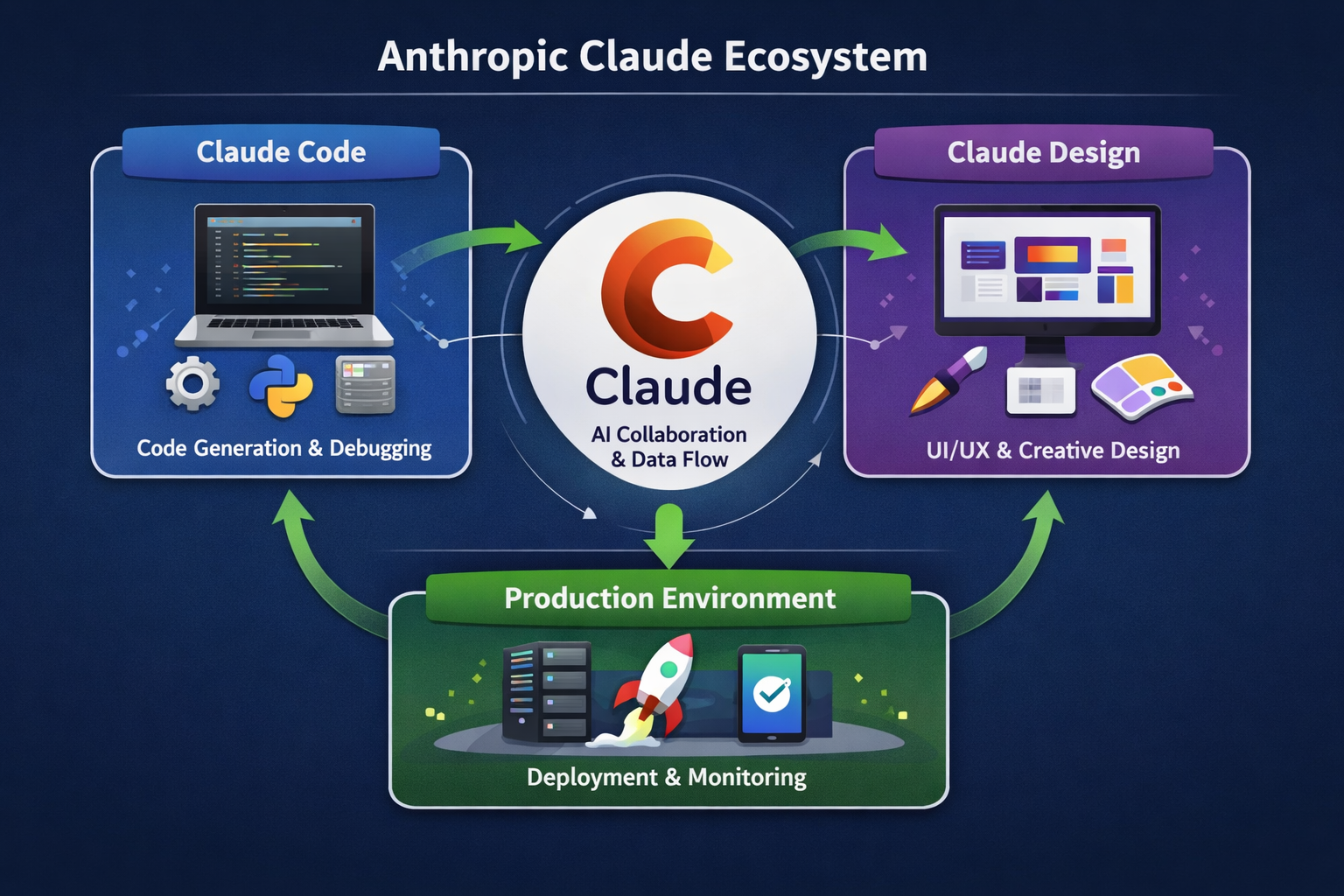
These updates mark a significant shift in AI-assisted development workflows, offering developers unprecedented automation capabilities for web design, coding, and testing within a single integrated platform.
Built-In Browser Enables Direct Web Automation
On July 10, 2026, Anthropic released a built-in browser feature for Claude Code Desktop, enabling AI agents to browse documents, manipulate DOM elements, fill forms, and capture screenshots directly within the app to automate web tasks. This update significantly enhances Claude Code’s ability to perform real-time web interactions and testing without external browser dependencies.
The integrated browser functionality allows developers to automate complex workflows that previously required switching between multiple tools. AI agents can now navigate web pages, interact with interface elements, and verify changes in real-time, streamlining the development and testing process.
Claude Design Creates Visual Prototypes Through Conversation
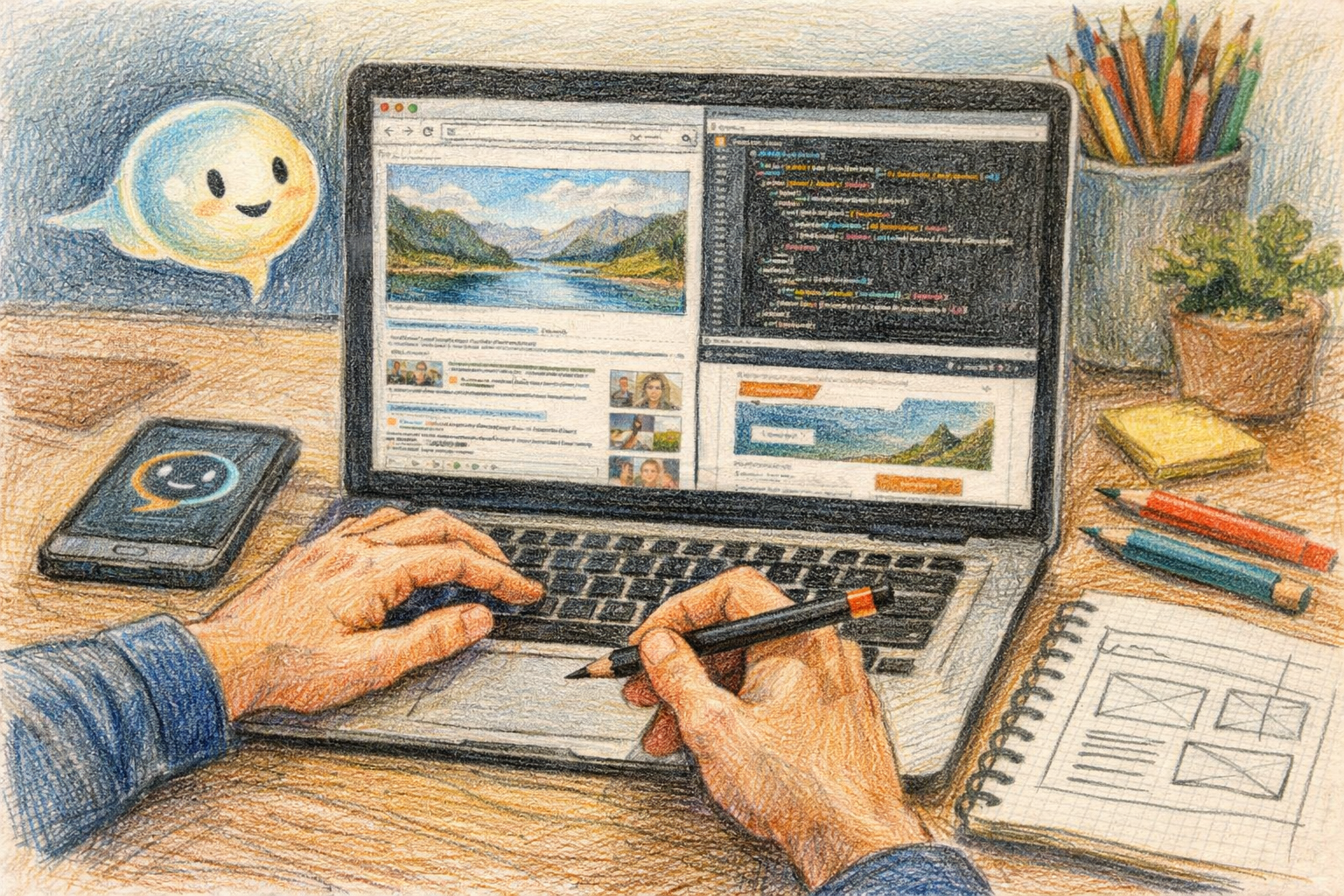
A new tool called Claude Design allows users to create websites, prototypes, and landing pages by describing visual features in plain English, with the design appearing and updating in real-time on a collaborative canvas. The interface splits into a chat panel for conversation and a canvas panel for instant visual refinement, supporting mockups and visual assets in a single workspace.
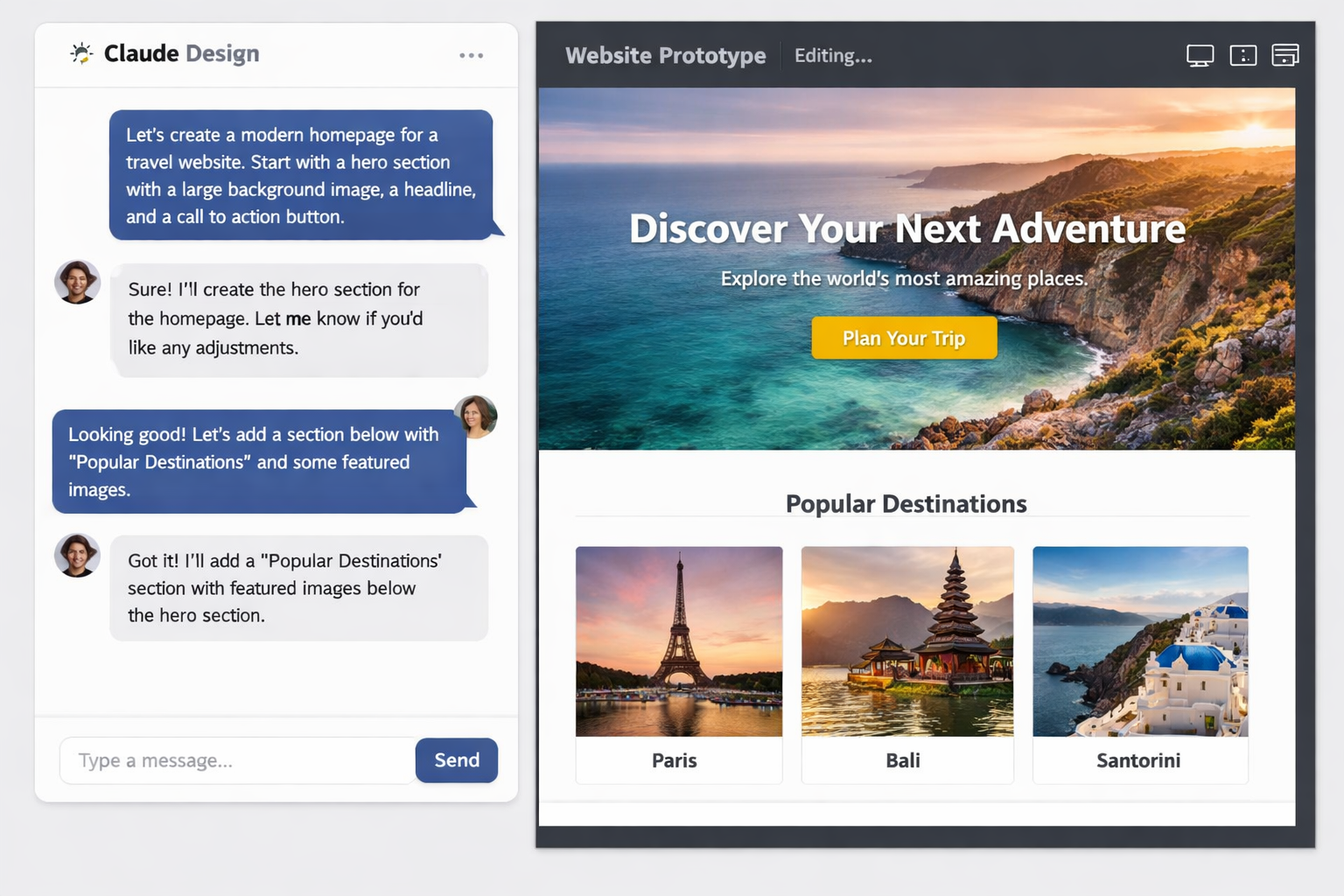
This conversational approach to web design eliminates the need for manual wireframing tools or design software for initial prototyping. Developers and designers can iterate on visual concepts simply by describing changes, with the AI agent updating the canvas immediately to reflect the requested modifications.
Closed Loop From Design to Production Code
Anthropic introduced a closed “design-to-production” loop where Claude Design hands off prototypes directly to Claude Code via a one-click “Export” button, creating a handoff bundle the coding agent can immediately use to write features. This makes it the only AI design tool with a fully integrated pipeline from visual prototype to functional code generation.
The seamless handoff between design and development represents a major workflow innovation. Instead of manually translating design specifications into code or exporting static files, the export function packages all relevant design context and specifications in a format optimized for Claude Code’s understanding, allowing immediate code generation that matches the visual prototype.
Figma Integration Through MCP Servers
Developers can connect MCP (Model Context Protocol) servers for Figma to give Claude Code agents direct access to design files, eliminating the need to copy-paste context manually. This integration allows agents to retrieve design specifications and tickets directly, streamlining the workflow between Figma AI designs and code implementation.
The MCP server approach provides a standardized method for connecting external design tools to Claude Code. Teams already using Figma for design work can now grant their AI coding agents direct access to design specifications, maintaining a single source of truth while automating the translation from design to implementation.
Multi-Agent Coordination With New Extensions
New extensions like David are launching to coordinate a “team” of Claude Code agents (Overseer, Workers, QA) within VS Code, automating complex multi-step development tasks. Additionally, users are setting up sub-agents like Kimi K3 within Claude Code to run specialized AI workflows, such as injecting prompts into wireflow templates.
This multi-agent architecture allows developers to delegate different aspects of a project to specialized AI agents. An overseer agent can coordinate overall project direction, worker agents can handle specific coding tasks in parallel, and QA agents can verify functionality, creating an automated development pipeline that mimics human team structures.
Enhanced Control With Effort Setting
A new “effort” setting was introduced to control how many tokens Claude Code dedicates to a single response, allowing users to toggle between “fast/budget” and “deep/exhaustive” modes for complex tasks like SEO analysis or code refactoring. The API now offers five levels (low to max), affecting reasoning depth and tool call accuracy, which is critical for thorough SEO and GEO AI audits.
The effort control gives developers fine-grained management over the balance between speed and thoroughness. For quick iterations or simple tasks, lower effort settings provide faster responses with reduced token consumption. For complex challenges requiring deep analysis, such as comprehensive SEO optimization or intricate code refactoring, maximum effort settings ensure the AI agent explores all relevant considerations.
Key Facts
- Claude Code Desktop received a built-in browser on July 10, 2026, enabling direct web automation and DOM manipulation
- Claude Design offers one-click export to Claude Code, creating the first fully integrated AI design-to-production pipeline
- MCP servers now support Figma integration, allowing agents direct access to design specifications
- New VS Code extensions coordinate teams of specialized agents (Overseer, Workers, QA) for complex development tasks
- Five-level “effort” setting controls token allocation for balancing speed versus thoroughness in AI responses