Small Business Ideas You Can Start Now
Small business ideas you can start now, sorted by skills and budget, plus how to test demand and profit with a paid pilot before buying equipment.
 10 min read

To find profitable business ideas, start with a customer problem you can solve more than once and calculate what each sale costs you. Short on cash? Sell a skill you already have. With money for equipment, you can pursue repeat local work. For a digital product, plan how you will find buyers.
No single idea earns the most for everyone. Your skills, available hours, sales channel and local demand determine what you can make work. The six options below are realistic starting points; use the cost and demand test before you spend much.
This video shows how to talk to potential customers before you build an offer:
How to choose profitable business ideas by model
Your starting point | Ideas worth exploring | Main advantage | Main constraint |
|---|---|---|---|
Existing professional skill, little equipment | Bookkeeping or tutoring | Can sell your time without buying inventory | Income initially depends on your availability |
Digital skills and a portfolio | Website maintenance or digital templates | Work can be delivered remotely | Finding and retaining buyers takes sustained effort |
Transport, physical stamina and room for equipment | Mobile detailing or lawn care | Clear local need and potential repeat bookings | Travel, weather and equipment affect margins |
Pick one audience and a narrow offer before building a website or buying supplies. “Monthly bookkeeping for independent contractors” gives a prospective client more to go on than “business services.” Choose work you can deliver consistently to customers you can reach.
Compare startup costs, including the time to win a customer, with the skills required and how you will earn. A one-page business plan can record the buyer, offer, price, sales channel and expected costs. Even without a detailed forecast, those entries can expose a poor fit.
Low-cost services built on skills you already have
You can start these services with a small set of tools. Track the hours you spend delivering and selling them; your time is the main cost.
1. Bookkeeping for a specific type of client

For local tradespeople or independent consultants, you could bundle transaction categorization, reconciliations and a simple monthly report. You’ll need to be comfortable with financial records, deadlines and confidentiality. Spell out the tasks you handle, set up a secure way to receive records, then ask your professional contacts for an introduction to a first client.
Monthly clients make income easier to plan than one-off projects. Set a separate price for cleaning up years of records; routine bookkeeping does not cover it. Leave tax filing and regulated accounting advice out of your offer unless you hold the required qualifications.
2. Tutoring with a narrow outcome

Choose a subject and student level you know well. A fixed series of lessons on an exam topic, software skill or workplace competency is easier for a buyer to understand than “all-subject tutoring.” Make a sample lesson, choose online or in-person sessions, and ask your first clients what they learned.
Teachers and subject specialists who enjoy one-to-one instruction have a head start. Set a price that covers prep and follow-up, and decide how you will handle cancellations. If you work with minors, understand the relevant safeguarding and local requirements first.
Digital businesses for people who can produce and sell online
You can deliver these offers without traveling, though you still need to find customers. Decide whether you prefer monthly client work or marketing a product after you make it.
3. Website maintenance for small organizations

Small organizations need help with content updates, backups and repairs when a site breaks. Specify the platforms you support, what a monthly request includes and how you handle urgent fixes. Show a demonstration site or work you have permission to share, then approach businesses whose sites you understand.
Platform knowledge and a knack for explaining technical issues will help you here. Avoid promising unlimited support for a fixed fee. Define response windows, excluded development work and account ownership, and use a secure process for access. If you are deciding whether to build sites yourself, see this WordPress site-building tutorial.
4. Digital templates for a specific workflow

A freelance designer might pay for a project intake form that spares them from rebuilding one for every client. A small events team might want a planning sheet. Make a template you would use, let a few potential buyers try it, then fix any confusing instructions. Sell it where that audience already spends time.
You can sell the same file to multiple buyers, provided you can reach them. A polished template without a clear buyer or use case may sit unsold. Allow time for support, updates and explaining what the purchase includes.
Local businesses with equipment and repeat-job potential
Both services require gear and travel. Before buying equipment, try to sell a job you can complete within a workable distance.
5. Mobile car detailing
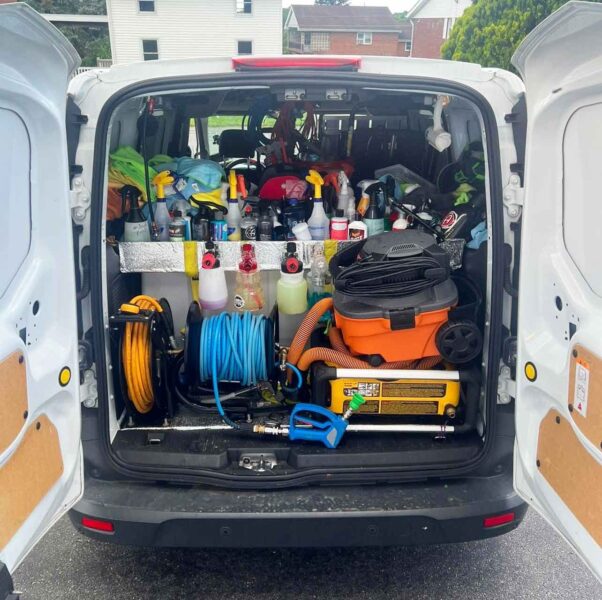
With mobile detailing, you go to the customer’s home or workplace. Start with one package, perhaps interior cleaning. List the supplies and time needed for setup, cleaning and travel, then book a few paid jobs close together before buying a larger setup.
If you enjoy hands-on work, detailing gives you a concrete service to sell. Drive time, water or power access, and weather can eat into the margin. Check local rules on runoff and work on customers’ premises, and ask permission before photographing results.
6. Lawn care for a compact service area

Regular mowing and basic yard upkeep may bring customers back on a schedule. Offer only work you can do safely with the equipment you have, and group bookings by neighborhood. Factor in time on site, travel and disposal when quoting, not just yard size.
The model suits someone who prefers physical work and can maintain equipment. Seasonal demand and breakdowns make cash flow uneven. Know which tasks require specialist training, and do not add hazardous tree work merely because a client asks. A small, dense route is often more useful than a long list of scattered jobs.
Other business models worth considering
If none of the six suits you, compare these alternatives by the skills and customer access you already have. For a margin-first view, see the most profitable small businesses.
Idea | Who it fits and a small first offer | Main cost or risk |
|---|---|---|
Social media management | A marketer who can offer one month of posts and reporting to local business owners | Approvals and content production can exceed the hours quoted |
Residential cleaning business | An operator able to sell a recurring clean in one neighborhood | Supplies, travel, staffing and access arrangements affect delivery |
Event planning | An organizer who can coordinate one small event with a clear scope | Deposits, vendors and last-minute changes create cash-flow pressure |
Online courses | A specialist who has taught a topic and can presell a focused lesson | Filming an entire course before finding buyers ties up time |
Affiliate marketing | A creator with an audience that trusts relevant product recommendations | Income depends on distribution and third-party terms |
Vending machines | Someone with capital and access to a viable location | Machines, inventory, restocking and location agreements add overhead |
Dropshipping spares you from storing stock, while leaving customer service and supplier performance in your hands. Experienced app builders can start with a specific buyer, but they still have to find users and maintain the app. A franchise provides an established model with fees and operating rules. Real estate and self-storage demand more capital and operations work than a one-person service.
How do you determine the best small business idea?
Before taking on fixed costs, consider this finding from the SBA Office of Advocacy:
“An average of 49.2% of new U.S. employer establishments survived at least five years in 1994-2022.” – SBA Office of Advocacy
The statistic covers employer establishments, not every solo business, and cannot predict whether yours will survive. Limit upfront commitments while you test whether customers will pay.

Sales alone cannot tell you whether a job pays off. Account for supplies, travel, platform fees, subcontractors and your own time. Start with this calculation:
Price per sale − direct costs per sale = contribution per sale.
Next, work out how many sales cover recurring costs such as insurance, software and equipment maintenance. At $300 a month in recurring costs and $75 contribution per job, four jobs cover those costs. You have not yet paid yourself or accounted for taxes. This is an illustration, not a forecast for any idea on the list.
Test demand with a paid pilot
Test demand in this order:
Name the buyer and problem. Write down who faces it, how they handle it now and why they might pay for your offer.
Discuss your offer with potential customers. Ask about their current process and costs, and distinguish polite interest from a willingness to buy.
Sell a limited pilot with a deliverable, price and date. A paid booking tells you more than a list of people who say the idea sounds good.
Measure everything the job takes: finding the customer, delivery, direct expenses and follow-up. Revise your price or scope before the next one.
Decide whether you can keep serving customers at a sustainable workload and contribution per sale. Otherwise, change the offer or audience.
Your available hours limit how many service jobs you can take, even if each pays well. With a digital product, account for how buyers discover it and what you spend to acquire them.
“Passive” income still takes work. Templates, courses and affiliate marketing require updates, buyer support or a steady flow of visitors. Include that work when assessing long-term income.
Avoid the common early mistakes
Hold off on buying equipment. Hire or borrow it where practical until paid demand justifies ownership.
Price the work customers do not see: messages, travel, revisions, admin and the time spent finding them.
Keep the package specific. “Whatever comes up” is hard to quote or deliver.
Budget for registrations, insurance, permissions or specialist credentials that apply to your location and service before accepting jobs.
Agree on account and deliverable ownership, as well as what happens when a client cancels.
Track what remains after direct costs and how long it takes to earn it. A full calendar alone tells you little.
Pick one idea and run a small test
Start with an offer you can explain in one sentence, deliver well and validate with a paid customer. If money is tight, use an existing skill. Test demand before buying equipment or inventory; for a digital product, settle on a narrow workflow problem and a way to reach buyers.
Your first paid pilot will give you something concrete to improve, whether that’s pricing, delivery or how you find customers. MikeGingerich.com covers those business, marketing and technology decisions; its collection of startup advice resources can help with the next step. Keep working from paid demand and the numbers behind it.
FAQ
What is the most successful small business?
There is no single type that succeeds for everyone. A business is more promising when you can reach a specific buyer, deliver consistently and charge enough to cover costs and your time. Compare ideas by demand, contribution per sale and the number of jobs you can realistically complete.
What business has a 90% success rate?
No business type here can be promised a 90% success rate. The SBA Office of Advocacy’s figure above concerns five-year survival of new employer establishments overall, not the success rate for any particular idea. Test paid demand and your costs instead of choosing a category based on a claimed guarantee.
What business makes $10,000 a month?
Many models can reach that revenue, but none guarantees it. For example, $10,000 in monthly sales could mean ten $1,000 projects or 100 $100 sales, before costs and taxes. Work backward from your price, capacity and customer acquisition plan rather than assuming a category will produce the income.
What is the cheapest business to start with?
A service based on a skill and tools you already have, such as tutoring or a narrowly scoped digital service, can require less upfront spending than an equipment-heavy business. It still has costs, including your time, customer acquisition and any applicable business requirements. Sell a small pilot before spending on extras.