Tech Startup Ideas to Validate in 2026
Explore tech startup ideas for 2026 with clear buyers, build costs, data risks, cheap demand tests, and stop signals before you build.
 11 min read
The most useful tech startup ideas for a first-time founder solve a task a business already pays someone to handle. In 2026, start with a narrow workflow, find the person who owns its budget, and try to sell a manual pilot before writing software. A buyer’s commitment matters more than an impressive demo.
These four ideas call for different buyers and different kinds of access. Each includes a small test and a reason to walk away.
For a practical demonstration of how to ask potential customers about their work, watch this Startup School session:
Choose a problem before a product
Ask a prospective customer to show you the last time the problem occurred. Find out who noticed it, what they did, and what happened when they did nothing. A vague account leaves you with a vague product idea.
The cost labels below describe build effort, not prices. “Low” means you can test the work through interviews and a manual service. “Medium” means a working product will likely need integrations, permissions, or industry-specific setup. A cheap test may still lead to an expensive product to run.
|
Idea and recurring pain |
Likely buyer |
Initial build commitment |
Main data or regulatory exposure |
Cheap test before building |
|---|---|---|---|---|
|
Accounts payable exception queue: invoices stall when information does not match |
Finance operations lead at a company with recurring invoice volume |
Medium |
Supplier details, payment fraud, and access to financial records |
Manually sort redacted exception cases and propose resolutions |
|
Ecommerce returns triage: staff spend time sorting avoidable return tickets |
Operations or support lead at an online retailer |
Low to medium |
Customer information, order integrations, and inaccurate policy decisions |
Classify a sample of past returns and time the work saved |
|
Vendor access review tracker: former contractors or suppliers retain access |
IT or security lead at a growing organization |
Medium |
Sensitive identity and access records; security liability |
Run a spreadsheet-based review for one application |
|
Building energy anomaly reports: unusual consumption is noticed too late |
Facilities manager or multi-site property operator |
Medium |
Meter-data access, privacy terms, and misleading savings claims |
Review exported meter readings and deliver a human-written report |
Start with the buyer you can reach and a real example they can share safely, with sensitive details removed. Without access to the work, you have little basis for deciding whether software would help.
Four tech startup ideas worth testing
1. Accounts payable exception queue
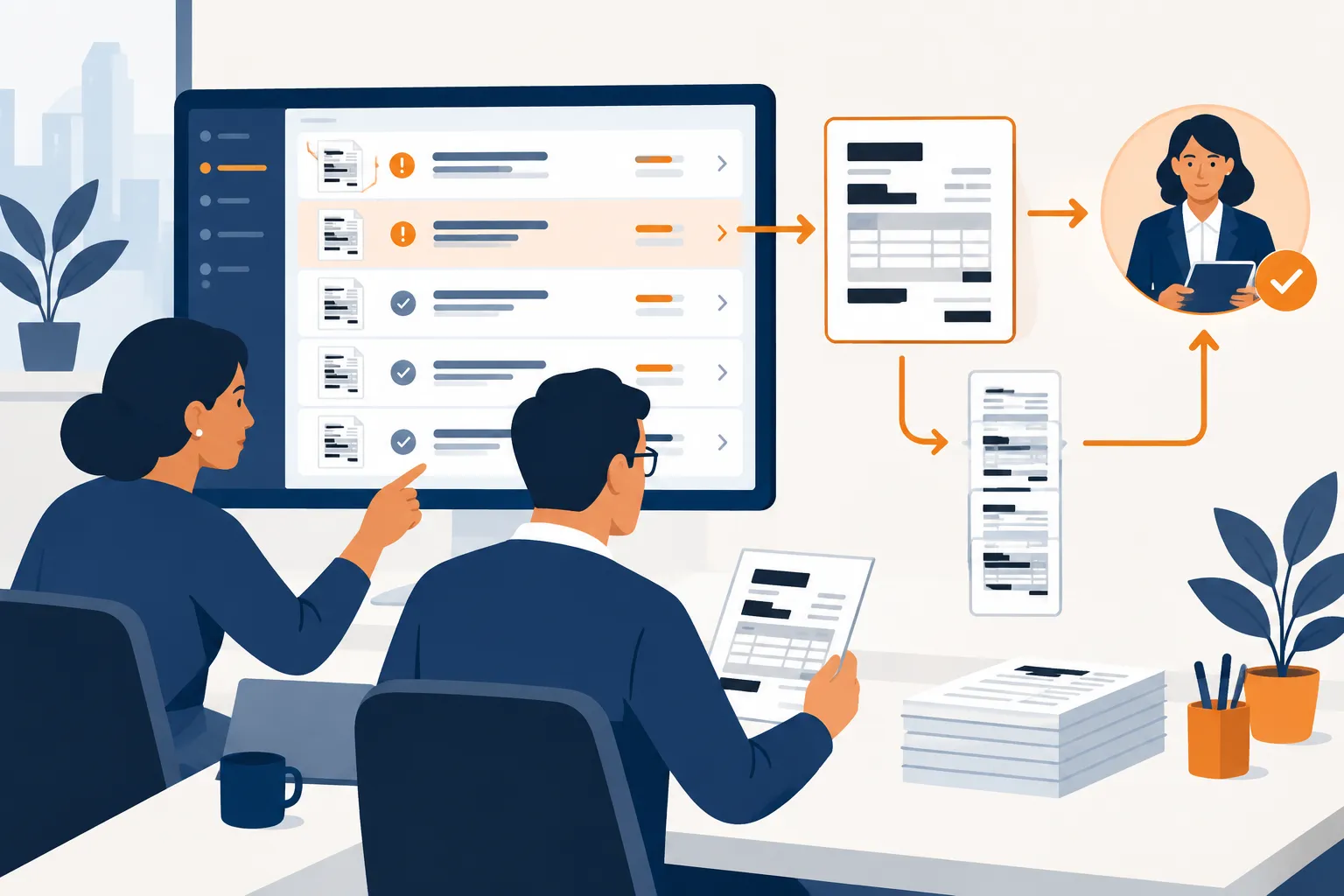
The pain and buyer. An invoice may be missing a purchase-order reference, disagree with a receipt, or contain a supplier change that requires review. A finance operations lead needs the right person to resolve each case without losing the audit trail. A queue could route exceptions and record decisions while the customer retains payment approval.
Ask a finance lead for a small set of past exceptions with sensitive details removed. For each case, note who owned it, what information was missing, and how long resolution took. Offer to handle the next batch by hand in the team’s usual communication channel. Seek a paid, limited pilot before planning an integration.
The first version could be a spreadsheet and a service. A repeatable product will need permission controls and links to accounting systems. Treat changes to supplier bank details with care: a bad recommendation can contribute to payment fraud. An early test does not require live bank details.
For the wider operational context, see these business fraud prevention considerations.
Walk away if the exceptions are rare, the buyer cannot quantify the staff time involved, or each case demands a different judgment that a queue cannot improve. A request for “AI invoice processing” tells you little until the buyer funds exception handling.
2. Ecommerce returns triage
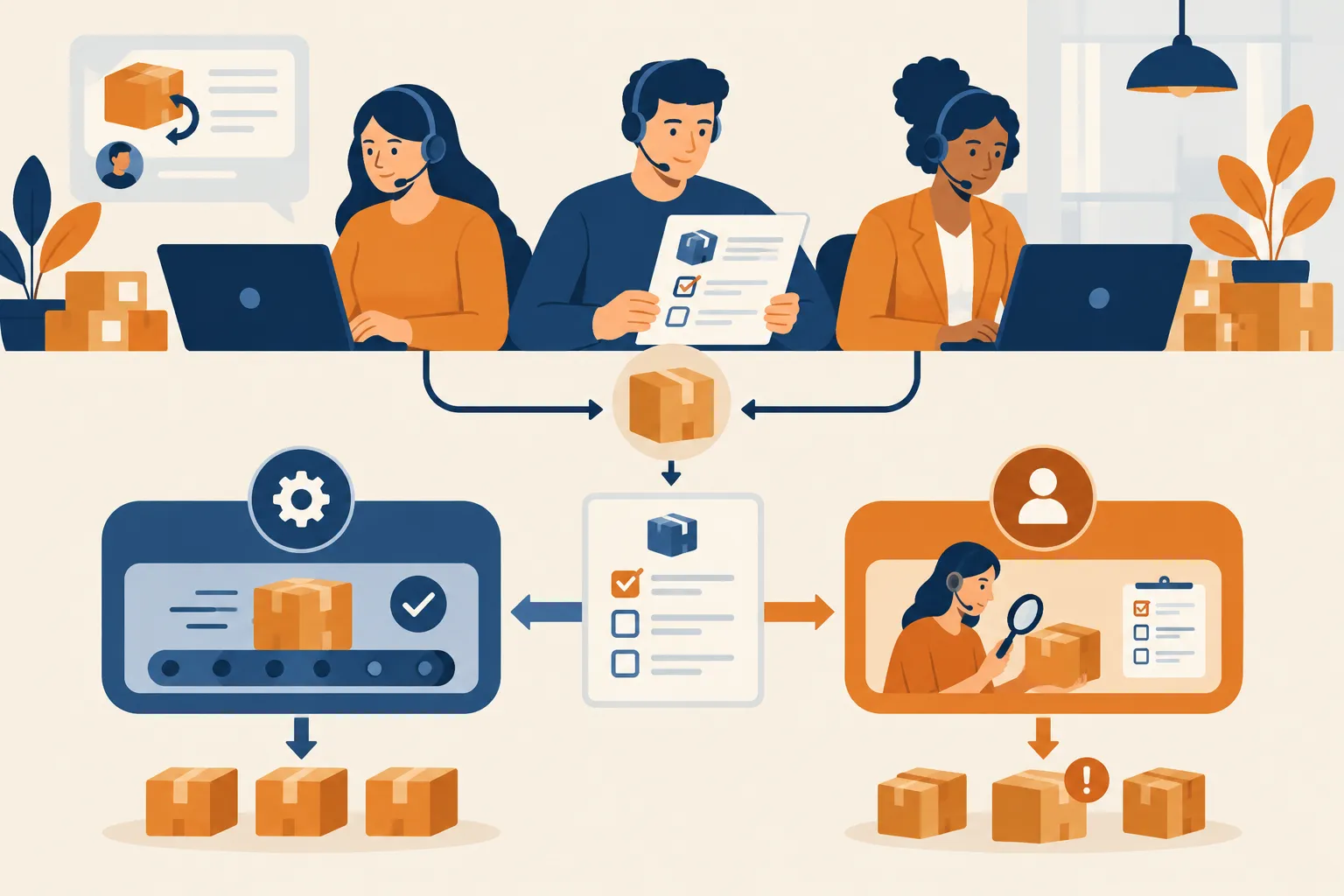
For an online retailer, a return starts with a decision: does it qualify under the store’s policy, and does the customer need to provide more information? A support or operations lead may want routine requests sorted so staff can focus on the awkward cases.
Take a sample of closed return requests with customer details removed. Have the team classify them under its current policy, then try a simple decision sheet by hand. Measure the time spent and note where staff disagree. For a paid trial, offer draft recommendations while the team makes each final decision.
You can test this with little software. Connecting order records, shipping events, and support tickets will take more work. Use as little customer data as possible; wrong policy decisions can frustrate shoppers and create more tickets.
If the actual bottleneck is tracking conversations rather than deciding returns, begin with the basics of choosing a small-business CRM.
Walk away if the merchant’s existing commerce tools already handle the specific bottleneck, returns are too infrequent, or staff cannot agree on how the policy applies. A generic chatbot will not settle an unclear returns policy.
3. Vendor access review tracker
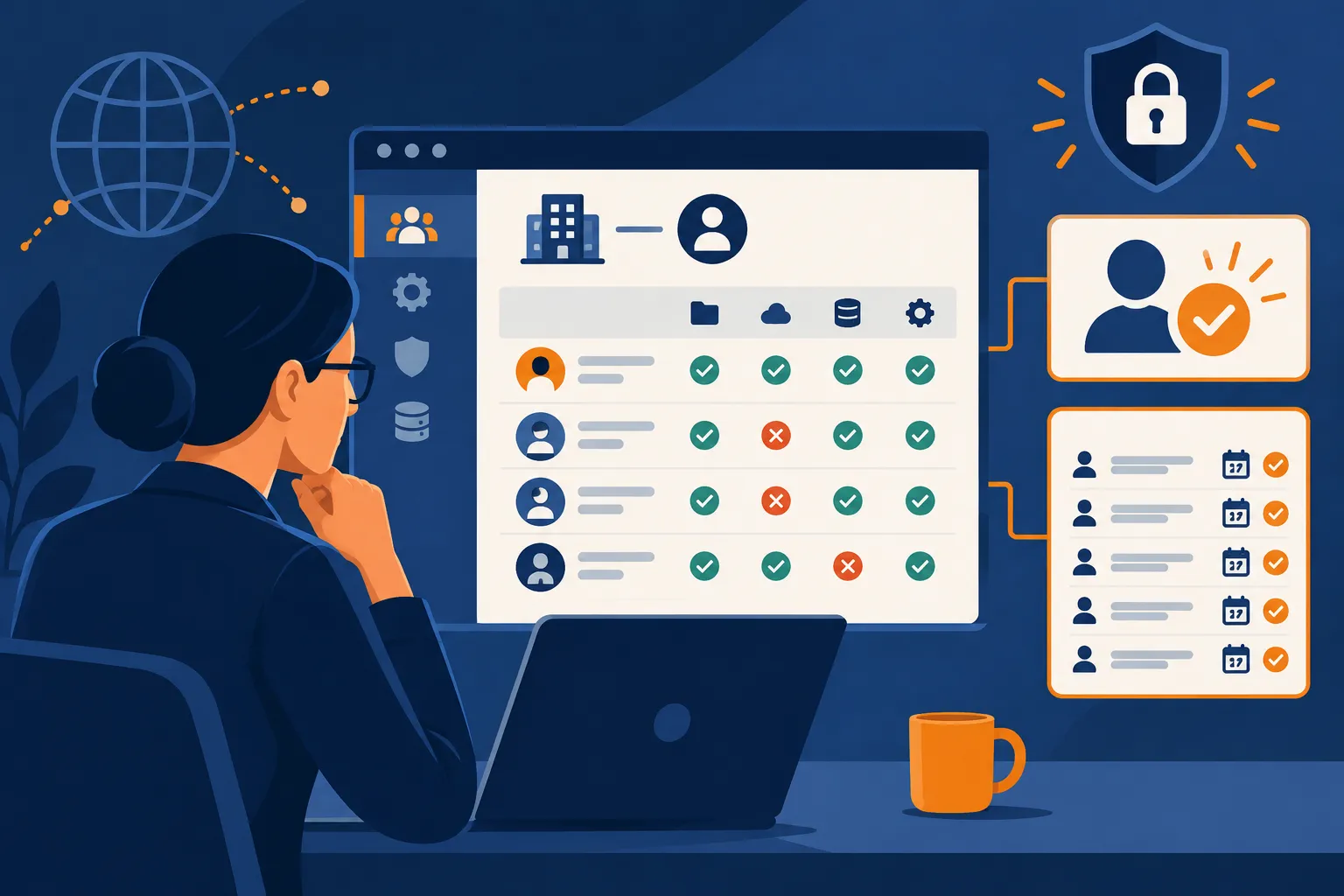
An IT or security lead needs to know whether a contractor, agency, or supplier still needs access to each application. Give that lead a review list approved by the access owner and a way to track removal requests. Leave account disabling out of the first pilot.
Ask an authorized IT lead to choose one low-risk application. They can prepare a limited list of external users or approve an export. Match each user to a current owner in a spreadsheet, then hand back unresolved cases with a dated decision log. Interest in repeating the exercise across other applications, backed by a paid pilot, is stronger evidence than praise.
An initial review is mostly process work; a product spanning identity providers and applications is a medium integration effort. Access lists are sensitive. Agree on data retention and restrict who can see names, accounts, and permissions. Do not ask for administrator credentials simply to demonstrate a prototype.
Walk away if there is no accountable owner for each access decision, the buyer will not permit even a limited review, or existing identity processes already provide a timely, trusted answer. A security concern alone will not secure a software budget.
4. Building energy anomaly reports

A facilities manager may want to know when a site uses more energy than expected, especially after hours. A report could flag unusual intervals for someone to investigate. It cannot promise a particular drop in the bill.
Start with past meter readings that the property operator has permission to share. Mark odd readings by hand and ask the manager which called for action, which were normal, and who should have received an alert. If the team can name a decision it would change, propose a paid monthly report.
This needs more data preparation than a landing-page experiment. Sites run on different hours and equipment, and seasons can distort the comparison. A useful production service needs a reliable data feed and sensible access terms. A chart alone cannot establish energy savings.
Walk away if the manager has no way to investigate or act on an alert, data exports are unavailable, or the readings are too coarse to distinguish normal operation from an issue. Someone must own the response to each alert.
Run a small validation sprint
Talk to people who hold the buyer role, including people outside your circle. Ask about work they have done rather than what they say they might buy:
“Market research blends consumer behavior and economic trends to confirm and improve your business idea.” – U.S. Small Business Administration
-
Recruit a defined buyer group. Choose one industry and company type. Ask each person to describe a recent case, the current workaround, the owner, and the consequence of delay.
-
Request a safe example. Use redacted documents or customer-approved exports. If access is impossible, learn why before promising an integrated tool.
-
Do the work manually. Deliver a queue, decision sheet, access review, or anomaly report with a human in the loop. Track your own hours as well as the customer’s time.
-
Ask for a paid, scoped pilot. Specify who approves it, what data is shared, what you will deliver, and what result would justify a repeat purchase. An email compliment is not a purchase decision.
-
Make a stop-or-continue decision. Continue if a buyer commits resources, the work recurs, and the result is better than their current process after your delivery time is counted. Narrow the scope or stop if those conditions fail.
For a low-cost tech startup idea, the cheapest first version may be a service. To make a repeatable product from it, find another customer with much the same problem and solve it without rebuilding the workflow.
Decide what the buyer is paying for
Before discussing app development, write down how the pilot earns money. The buyer might pay per review, per location, or for ongoing help. Count your hours for each delivery. A paid pilot that takes all your time shows demand for help, though the case for software remains open.
For each prospect, keep a short decision record:
|
Signal |
What to ask |
What weak evidence looks like |
|---|---|---|
|
Frequency |
How often did the last case recur? |
The buyer recalls one memorable incident |
|
Cost |
Who spent time on it, and what was delayed? |
The buyer calls it annoying but cannot identify a consequence |
|
Authority |
Who can approve a pilot and grant safe data access? |
An enthusiastic user cannot reach the budget owner |
|
Repeatability |
Would another buyer use the same process? |
Every customer needs a custom workflow |
Choose the delivery format once you understand the work. Several employees may need a web app to share an approvals queue; a facilities manager may be happy with an emailed report. If the buyer works at a desk, a mobile app adds work without much benefit. AI may help sort cases later. First, show that the process gets decisions right and saves time.
Distribution matters too. If your plan depends on broad social media reach, content creation, or search engine optimization to find a handful of specialist finance buyers, ask whether direct outreach or introductions would be simpler. Marketing a narrow service to the person who owns the problem is a more useful first test than spending months building an audience for an undefined product.
When to avoid deep tech as a first build
Deep tech can be a good fit for founders with specialist expertise, patient capital, and access to test environments. Examples include robotics for physical inspection, sensing hardware for buildings, and clinical devices. These paths add hardware development, safety testing, manufacturing, or regulated-use questions to the ordinary challenge of finding a paying customer.
If hardware is central to your idea, account for cost traps in custom hardware development before committing to a prototype.
If you lack those resources, validate the surrounding workflow first. A building operator might buy an anomaly report before buying sensors. A clinic may pay for administrative scheduling support, but that does not authorize a new product to make clinical claims. Keep the test within the permissions, expertise, and data you actually have.
Final verdict
Start with a buyer who can show you a recurring, expensive exception, then sell the smallest safe way to resolve it. Of these four ideas, returns triage is the lightest manual test for a founder with access to an online retailer; vendor access reviews and finance exceptions require stronger trust and controls; energy reporting depends heavily on usable data and an owner willing to act. The right choice is the one that earns a paid repeat, not the one with the flashiest technology.
As you turn that pilot into a business, MikeGingerich.com offers practical reading across entrepreneurship, marketing, finance, technology, and cybersecurity, including startup advice resources for founders, so you can work through the commercial questions alongside the product questions.
FAQ
What is the 80/20 rule for startups?
It is a shorthand for focusing on the small set of problems or customers that produce most of the value, not a fixed formula for startup success. Use it to prioritize recurring, costly workflows, then test whether a buyer will pay to improve one.
What are some good deep tech startup ideas?
Robotics for inspection, building sensors, and clinical devices are possible directions if you have the expertise and access to test them safely. For a first business, validate the buyer’s workflow before investing in hardware or making regulated claims.
What is the easiest tech business to start?
A narrow software-assisted service is often easiest to test because you can do the work manually before building a product. Returns triage, for example, can start with a decision sheet and a retailer’s redacted past requests; a paid repeat is a stronger signal than a list of interested users.