Claude AI Converts Designs to No-Code Elementor Sites

Claude AI is transforming WordPress web design by enabling users to convert designs, HTML templates, and website screenshots into fully editable Elementor sites without writing any code. This capability allows designers to generate one-page sites using dedicated AI website generation prompts, while Claude Code now publishes live, interactive web pages as “artifacts” to private URLs on claude.ai, fundamentally changing how designers and developers approach website creation.
No-Code WordPress Site Generation
A recent demonstration shows how Claude AI converts designs, HTML templates, and website screenshots into fully editable Elementor WordPress sites without writing code, using a dedicated AI website generation prompt to create one-page sites like a dental website example. This advancement eliminates traditional barriers between design concepts and functional WordPress sites, allowing users to move from visual inspiration to working websites in minutes rather than hours or days.
Claude Code builds premium-looking websites with layouts, animations, and polished UI from a single command, eliminating the need for expensive web design services or manual coding. The technology represents a significant shift in web development workflows, particularly for small businesses, freelancers, and agencies looking to streamline their production processes.
Artifact Sharing for Live Web Pages
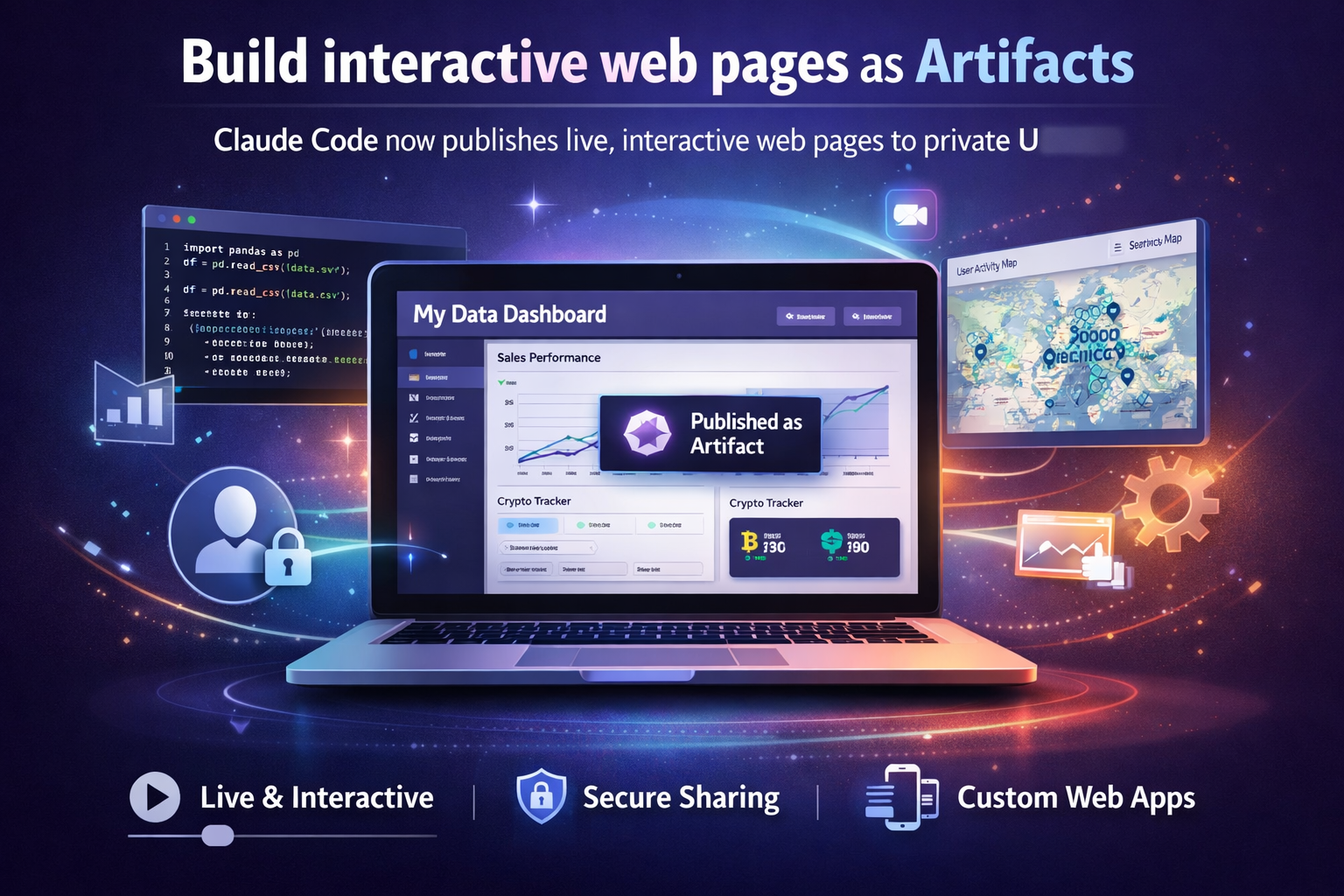
Claude Code now publishes live, interactive web pages as “artifacts” to private URLs on claude.ai, allowing users to share and view updates in-browser as the session continues. This feature transforms Claude from a conversational AI into a collaborative web development platform where changes can be previewed and shared in real-time.
Users have options to name or describe the visual output in plain language, making the sharing process more intuitive and accessible to non-technical team members. Anthropic has turned Claude into a no-code app builder, enabling users to create interactive, shareable apps via new “artifacts” without coding, expanding its use beyond design to QA testing and software development workflows.
Enterprise Security and Governance Controls
As organizations adopt Claude Code at scale, enterprise security has become a critical consideration. A comprehensive guide outlines six enterprise control layers for securing Claude Code, including SSO enforcement, traffic routing through a centralized gateway, quarterly key rotation, and AI/MCP gateway integration for authentication, model routing, and audit logging.
These security measures address growing concerns about AI tool governance in corporate environments, providing IT administrators with the controls needed to deploy Claude Code while maintaining compliance and oversight. The implementation of centralized gateways and authentication systems allows organizations to balance innovation with security requirements.
Growing Ecosystem and Community Adoption
A June 2026 resource lists top Claude Code configurations for building AI agents and apps using the Claude API, Agent SDK, and MCP ecosystem, including recommended skills, agents, and plugins for agent development workflows. This expanding ecosystem demonstrates the platform’s versatility beyond web design, extending into automated workflows and intelligent agent development.
Educational content around Claude’s design capabilities is proliferating across platforms. Creators are introducing “Claude Design” as a powerful AI web design tool and a free alternative to Figma, while updated courses help web designers, freelancers, agency owners, and AI enthusiasts unlock the full potential of Claude Design, covering its latest features for AI-driven web design projects.
Technical Challenges and User Feedback
Despite the technology’s promise, some users report limitations in current implementations. One user reports that despite connecting Figma MCP, adding skills, and using well-crafted prompts, Claude Code still produces poor UI output despite having access to their full design system. This feedback has sparked discussions within the community about prompt effectiveness and integration limits, suggesting that the technology still requires refinement in certain use cases.
The community continues to explore advanced applications beyond basic website creation. Claire explains the differences between heartbeats, crons, hooks, and goal-based loops in Claude Code, then builds real automations to demonstrate effective AI agent loop design for complex workflow automation. These technical explorations indicate that power users are pushing Claude Code beyond its initial design parameters.
Key Facts
- Claude AI now converts designs and screenshots into fully editable Elementor WordPress sites without coding
- Claude Code publishes live web pages as shareable “artifacts” on private URLs at claude.ai
- Enterprise security controls include SSO enforcement, centralized gateways, and quarterly key rotation
- Educational courses and community resources for Claude Design launched in June 2026
- The platform extends beyond web design to AI agent development and workflow automation
Looking Ahead
The convergence of AI-powered design tools with established platforms like WordPress and Elementor signals a broader shift in how websites are created and maintained. As Claude’s capabilities expand and the community develops best practices, the gap between conceptual design and deployed websites continues to narrow.
The technology’s evolution from conversational AI to full-featured development platform reflects growing demand for accessible, no-code solutions that don’t sacrifice quality or customization. While challenges remain in areas like design system integration and consistent output quality, the rapid pace of feature development and community adoption suggests these limitations may be temporary.