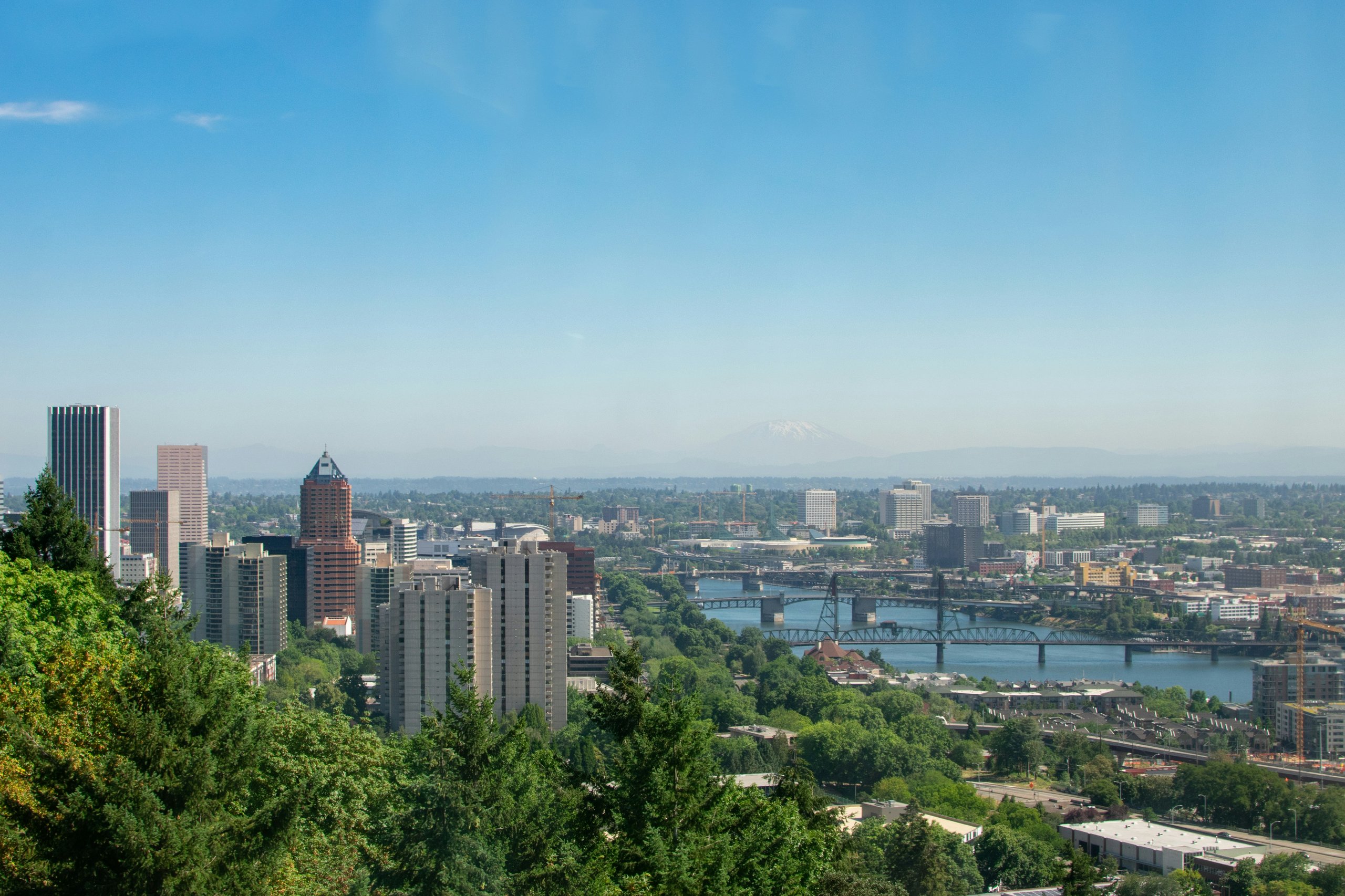
Portland’s roads are unlike those of most American cities. Dense urban traffic flows alongside dedicated cycling lanes, MAX light rail crossings interrupt major intersections, bridges over the Willamette funnel thousands of vehicles through chokepoints daily, and Pacific Northwest rain creates slick road conditions for much of the year. It is a complex, active environment and when a car accident happens here, the aftermath moves fast.Insurers deploy adjusters quickly. Decisions made in the first 24 to 48 hours shape everything that follows. Oregon’s laws offer real protections for accident victims, but they come with strict deadlines, specific rules, and traps that catch unprepared claimants every day.This guide gives Portland drivers a complete roadmap from the moment of impact to a fair settlement.
First Steps at the Scene of a Portland Car Accident
What you do immediately after a crash determines the strength of your claim. Acting methodically under pressure is not easy but these steps are worth knowing before you ever need them.Call 911 and stay at the scene. Oregon law requires you to report any accident involving injury, death, or property damage exceeding $2,500. Stay until police arrive and an official report is filed. Leaving the scene before this happens carries serious legal consequences.Exchange complete information. Collect full names, addresses, phone numbers, driver’s license numbers, license plate numbers, insurance company names and policy numbers, and vehicle make and model from every driver involved. If commercial vehicles are involved, note the company name and any DOT numbers visible on the truck.Document the scene thoroughly. Use your phone to photograph all vehicle damage from multiple angles, the overall accident scene including street signs and traffic signals, road conditions and weather, skid marks, debris, and any visible injuries. Portland’s urban environment often means nearby businesses have surveillance cameras note their locations, as this footage can be critical evidence.Identify witnesses before they leave. Bystander accounts become far harder to obtain after the scene clears. Get names and phone numbers while people are still present.Notify your insurer the same day. Most policies require prompt notification, and delays can jeopardise your coverage. Stick to facts when you call do not speculate about fault or injuries that may not have fully developed.See a doctor within 24 hours even if you feel uninjured. Adrenaline masks symptoms, and conditions like whiplash, concussions, and soft tissue injuries often don’t present immediately. A gap between the accident and medical treatment gives insurers ammunition to argue your injuries weren’t caused by the crash.
Oregon’s At-Fault Insurance System and How PIP Fits In
Oregon is an at-fault state, meaning the driver who caused the accident is responsible for covering the damages. The at-fault driver’s liability insurance pays for your medical expenses, property damage, lost wages, and pain and suffering.Oregon also requires all drivers to carry Personal Injury Protection (PIP) coverage with a minimum of $15,000. PIP is a no-fault coverage it pays your medical bills regardless of who caused the accident, and it activates immediately. This is important because it means you can begin receiving medical treatment without waiting for fault to be established or the at-fault driver’s insurer to accept liability.PIP is a floor, not a ceiling. It covers your immediate medical costs up to its limits, but it does not replace your right to pursue the at-fault driver’s insurer for full damages including lost wages, future medical care, and pain and suffering. Many Portland accident victims don’t fully understand this distinction and mistakenly treat their PIP settlement as their final recovery.Oregon also requires drivers to carry uninsured and underinsured motorist coverage. If the at-fault driver has no insurance, or carries insufficient insurance to cover your damages, your own UM/UIM policy fills the gap. Review your own policy carefully this coverage is frequently overlooked and can be the difference between full compensation and significant out-of-pocket losses.
Oregon’s Comparative Fault Rules Applied to Car Accidents
Oregon’s modified comparative fault system allows you to recover compensation as long as you are found less than 51% at fault for the accident. At 51% or more, you recover nothing. Below that threshold, your compensation is reduced proportionally by your fault percentage.Portland’s traffic environment creates genuine fault disputes that wouldn’t arise in simpler road layouts. Multi-lane merges on bridge approaches, interactions between vehicles and cyclists in shared lanes, wet road stopping distances, and complex intersection timing all factor into fault determinations. Insurers know this and use Portland’s traffic complexity to their advantage.Your own behaviour matters too. Statements you make at the scene, gaps in medical treatment, social media posts, and how quickly you sought legal advice all affect how fault is ultimately assigned. Anything that can be used to increase your percentage of fault reduces your recovery sometimes dramatically.
Oregon’s 2-Year Statute of Limitations
You have two years from the date of the accident to file a personal injury lawsuit in Oregon. Property damage claims carry the same two-year deadline. Miss it and you lose your right to sue permanently.There is a critical exception that affects many Portland drivers specifically. If your accident involved a government vehicle a City of Portland fleet vehicle, a TriMet bus, a Multnomah County vehicle you must file a formal notice of claim within 180 days under the Oregon Tort Claims Act. That is six months from the accident date, not two years. Missing this shorter deadline eliminates your claim entirely, even if the two-year period has not expired.Two years sounds like plenty of time. In practice, it disappears faster than expected. Medical treatment takes months. Insurer negotiations drag on. Evidence that needs to be preserved requires immediate action. Building a strong case takes time, and you need enough of the statutory period remaining to file suit as leverage if negotiations stall. Start early.
How to Document Your Damages Thoroughly
Strong documentation is the foundation of a strong claim. The more comprehensive your evidence, the harder it is for insurers to dispute what you’re owed.Medical records and bills from every provider emergency room, primary care, specialists, physical therapy, imaging — establish the direct cost of your injuries. Future medical expense projections from your treating physicians document what recovery will cost beyond the present.Lost wage documentation supports your income loss claim. For salaried employees, this means pay stubs and an employer letter confirming missed time. For self-employed workers and freelancers, it means tax returns, client contracts, and records of canceled work. Don’t underestimate this component lost income is often as significant as medical costs for Portland’s large independent workforce.Property damage estimates and rental car receipts document vehicle-related costs. Keep every receipt related to the accident.A daily pain and limitation journal is more valuable than many claimants realise. Courts and insurers take these records seriously as evidence of how injuries affect daily life, relationships, and work performance. Start one immediately and maintain it throughout your recovery.
Insurance Traps Portland Accident Victims Fall Into
The claims process contains well-established traps that reduce legitimate compensation. Knowing them in advance is genuine protection.Giving a recorded statement to the at-fault driver’s insurer early before you have completed medical evaluation and fully understood your injuries is one of the most common and costly mistakes. Adjusters are trained interviewers looking for statements that can reduce your payout or shift fault. You are not required to give the other driver’s insurer a recorded statement.Accepting a settlement offer before finishing medical treatment is equally dangerous. Once you sign a release, you cannot return for more money regardless of how your injuries develop. Some conditions soft tissue injuries, concussions, psychological trauma take months to fully manifest. Settle too early and you may be covering future medical costs out of your own pocket.Broad medical authorisations are a trap many claimants sign without understanding. They give insurers access to your complete medical history not just records related to the accident and can be used to argue that your injuries are pre-existing rather than caused by the crash. Never sign a broad authorisation without legal review.Finally, social media use during an active claim is a significant risk. Insurance companies actively monitor claimant profiles looking for photos, check-ins, or activity that contradicts injury claims. Take a complete break from social media until your claim is fully resolved.
The Financial Impact on Portland’s Freelancers and Business Owners
Portland consistently ranks among the US cities with the highest rates of self-employment, freelance work, and small business ownership. For this community, a serious car accident doesn’t just mean medical bills it means an immediate hit to income with no employer safety net to cushion the blow.Vehicle dependency is high among contractors, real estate professionals, delivery operators, rideshare drivers, and field service workers. Every day your vehicle is out of commission is a day you can’t fully work. Every medical appointment, insurance call, and legal consultation is time away from revenue-generating activity.Lost client work, missed deadlines, canceled projects, and the cost of temporary coverage all have measurable dollar values that belong in your claim. Document them the same way you document medical bills with records, correspondence, and professional estimates of the financial impact.The long-term risk is particularly acute for business owners. If your injuries affect your capacity to work for months or years, that extended income impact must be fully accounted for before you settle. Once you sign a release, that calculation is locked in permanently.
When to Hire a Portland Car Accident Lawyer
Some straightforward accidents minor collisions with no injuries and cooperative insurers can be handled without legal representation. Most situations benefit significantly from professional help, and some demand it.Seek representation if you suffered serious injuries, if fault is disputed, if a commercial truck or government vehicle was involved, if the other driver was uninsured or underinsured, if the insurance company is acting in bad faith, or if your injuries have long-term or permanent effects on your health, work, or quality of life.An experienced attorney manages the entire process: full investigation, evidence preservation, expert witness retention, aggressive negotiation with insurers, and litigation when settlements fall short. The contingency fee model means no upfront cost your attorney only gets paid when you do.Whether you’re dealing with a disputed fault claim or serious injuries that will affect your life for years, working with an experiencedPortland car accident lawyer gives you the best chance of recovering everything you’re owed.When evaluating attorneys, look for specific car accident experience in Oregon, a track record of successful settlements and trial verdicts, and clear communication throughout the process. Trial experience matters insurers settle for significantly more when they know your attorney is prepared to go to court. Most offer free initial consultations. Bring your police report, medical records, insurance correspondence, photos, and income documentation.
Take Control of Your Recovery
Portland’s traffic complexity, active insurance environment, and Oregon’s specific legal rules make professional guidance especially valuable after a serious car accident. But whether or not you hire an attorney, the fundamentals remain the same.Document everything at the scene. Get medical treatment immediately and follow through completely. Be strategic and cautious with insurers particularly about recorded statements and early settlement offers. Understand your PIP coverage and how it interacts with your at-fault claim. And if a government vehicle was involved, act on that 180-day notice deadline before anything else.The right steps taken early protect your evidence, your rights, and your financial recovery. Don’t let insurer pressure, a missed deadline, or a premature settlement take from you what Oregon law says you’re entitled to.