What to Do After a Personal Injury Accident in Columbus, GA: A Step-by-Step Guide

The Aftermath of an Accident: Why Your Next Steps Matter
A personal injury accident can upend your life quickly. In the hours and days following a crash, fall, or workplace injury, it’s normal to feel sclauhaken, uncertain, and unsure of what to do next. The choices you make immediately affect your recovery, emotional well-being, and the strength of any legal claim you might pursue. Taking the right steps helps protect your rights, properly documents your injuries, and positions you to seek fair compensation.
This guide walks you through the most important actions to take after a personal injury accident in Columbus, GA. It also explains the local legal basics you need to know about Georgia law so you can move forward with confidence and clarity.
Common Types of Personal Injury Cases in Columbus
Personal injury claims in Columbus, GA, arise from many types of incidents. Knowing the common types can help you determine whether your situation fits a legal claim and what challenges you might face. The most frequent cases here include:
- Car Accidents: Collisions are a leading cause of injury claims involving cars, trucks, motorcycles, bicycles, and pedestrians. Distracted driving, speeding, DUI, and reckless behavior are common contributing factors.
- Slip & Fall: Property owners must keep their premises reasonably safe. If hazardous conditions like wet floors, uneven surfaces, poor lighting, or debris cause a fall, you may have a claim against the owner or manager.
- Workplace Injuries: Job-related injuries range from minor to catastrophic. Many are handled through workers’ compensation, but some claims especially those involving third-party negligence or employer misconduct can allow for additional legal action.
- Medical Malpractice: When a healthcare provider’s care falls below the accepted standard and causes harm, victims may pursue malpractice claims. These cases typically require expert review and careful investigation.
Georgia’s Personal Injury Laws You Should Know
Before filing a claim in Georgia, it helps to understand two key legal concepts: the statute of limitations and Georgia’s comparative fault rules.
Statute of Limitations
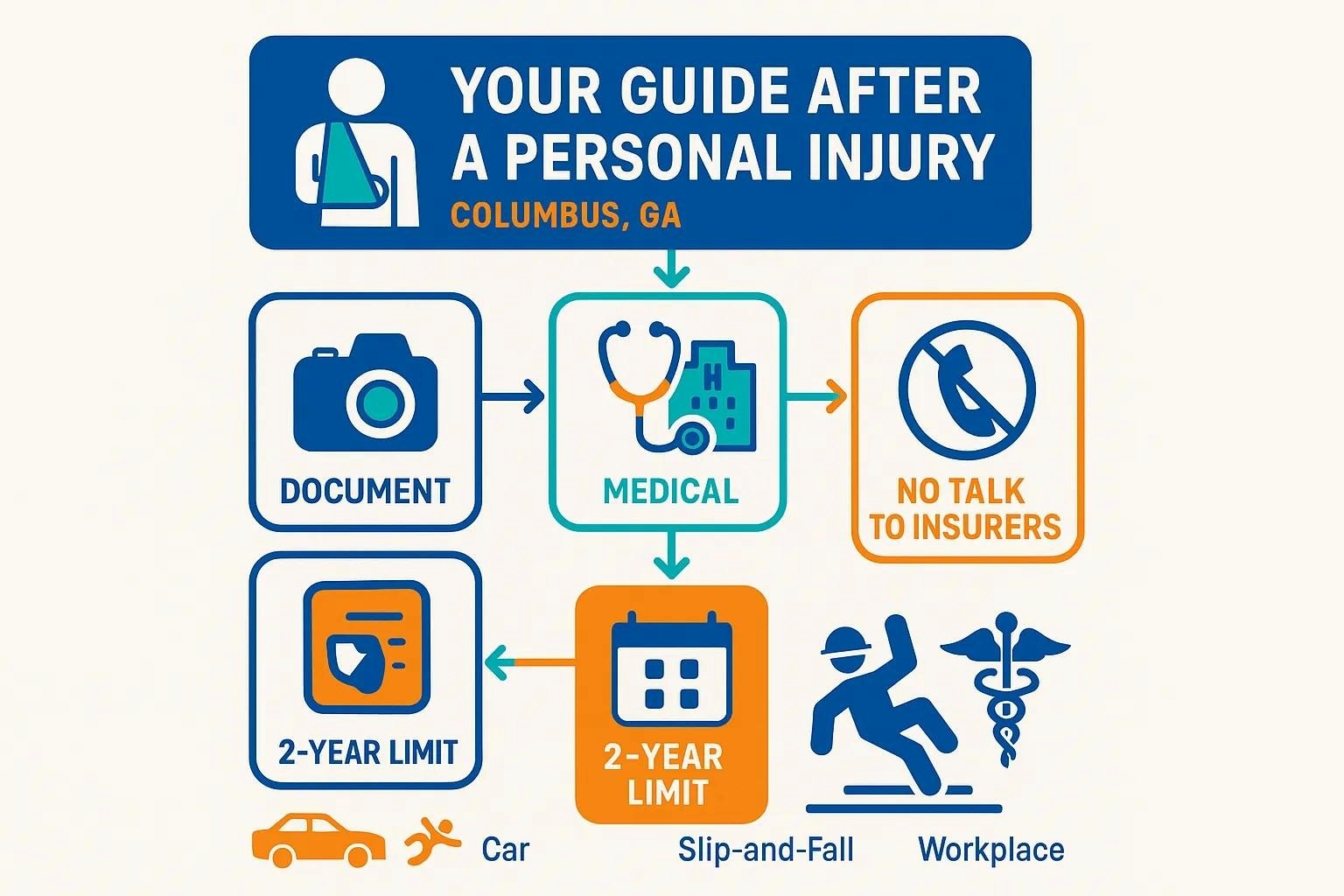
In Georgia, you generally have two years from the date of the accident to file a personal injury lawsuit. This deadline is strict miss it and your claim is usually barred regardless of its strength. That’s why it’s important to act promptly and consult an attorney to ensure your case is filed on time.
Comparative Fault Rules
Georgia uses a modified comparative fault system. If you’re partly to blame for the accident, your award is reduced by your percentage of fault. For example, if you’re found 30% responsible, your damages are reduced by 30%. But if you’re more than 50% at fault, you typically cannot recover any damages. Building strong evidence to limit your share of fault is therefore crucial.
Steps to Take Immediately After an Injury
The actions you take right after an accident can protect your health and preserve evidence for any future claim. Follow these steps:
- Document the Accident: When safe, collect as much evidence as possible. Take clear photos of the scene, vehicle damage, road or floor conditions, signs, and any visible injuries. Get contact details for witnesses and others involved. Write down a detailed account of what happened while it’s fresh. This documentation is often essential when building the injury claim Georgia residents rely on.
- Seek Medical Care: Even if you feel okay initially, get a full medical evaluation. Some injuries concussions, internal injuries, soft-tissue damage can appear later. Prompt medical treatment protects your health and creates an official record of your injuries, which is critical to your claim.
- Do Not Talk to Insurers Alone: Insurance adjusters may try to quickly close a claim for less than it’s worth. Don’t give recorded statements or accept offers without consulting an experienced Columbus accident attorney. A lawyer can explain your rights and negotiate to help ensure you receive fair compensation.
How Compensation Is Calculated
Compensation in personal injury cases aims to cover the losses you’ve suffered. The main categories include:
- Medical Bills: Covers all treatment costs hospital stays, surgeries, doctor visits, physical therapy, medications, and any future medical care you’ll need.
- Lost Wages: If your injuries prevent you from working, you can seek recovery for income lost during recovery and, when applicable, for reduced earning capacity in the future.
- Pain & Suffering: Beyond financial losses, damages may compensate for physical pain, emotional distress, and diminished quality of life. Calculating these non-economic losses is complex and usually requires legal experience.
Other recoverable losses can include property damage, loss of consortium, and, in rare cases, punitive damages for especially reckless conduct. A skilled attorney can help identify all applicable damages and pursue the fullest recovery possible.
Why Local Representation Matters
Handling a personal injury claim in Columbus, GA, is often easier with a Personal Injury Lawyer in Columbus GA. Local attorneys know the Columbus courts, local judges, and Georgia case law that can influence outcomes. They’re familiar with procedural rules and deadlines specific to the area knowledge that helps avoid costly errors.
Local lawyers also typically have relationships with medical providers, investigators, and expert witnesses in the region, which can strengthen your case. They understand how local insurers operate and can negotiate more effectively on your behalf. Choosing an accident attorney Columbus residents trust gives you a dedicated advocate who knows the community and the legal landscape where your case will be decided.
What to Look for When Hiring an Attorney
Choosing the right personal injury lawyer can greatly affect your case’s outcome. Consider these key factors:
- Contingency Fees: Many injury lawyers work on contingency no upfront fees and payment only if you recover. This makes representation accessible and aligns your lawyer’s interests with yours.
- Trial Experience: Most cases settle, but some require going to trial. Look for an attorney with proven trial experience who is ready to take your case to court if a fair settlement isn’t possible.
- Communication: Good communication matters. Choose a lawyer who responds promptly, explains legal issues clearly, and keeps you updated throughout the process. You want someone who listens and answers your questions thoroughly.
Conclusion
After a personal injury accident in Columbus, GA, the right steps and skilled legal help can make a major difference in your recovery and compensation. Protect your rights by documenting the accident, getting prompt medical care, and avoiding early discussions with insurance companies. Know Georgia’s rules including the statute of limitations and comparative fault so you can navigate your claim effectively.
If you or a family member has been injured, reach out to a qualified personal injury lawyer to discuss your options. With the right guidance, you can focus on healing while your attorney works to secure the compensation you deserve.