Truck Accident in Aurora, IL: Your Legal Rights and How to Protect Your Claim

Truck Accident in Aurora, IL: Your Legal Rights and How to Protect Your Claim
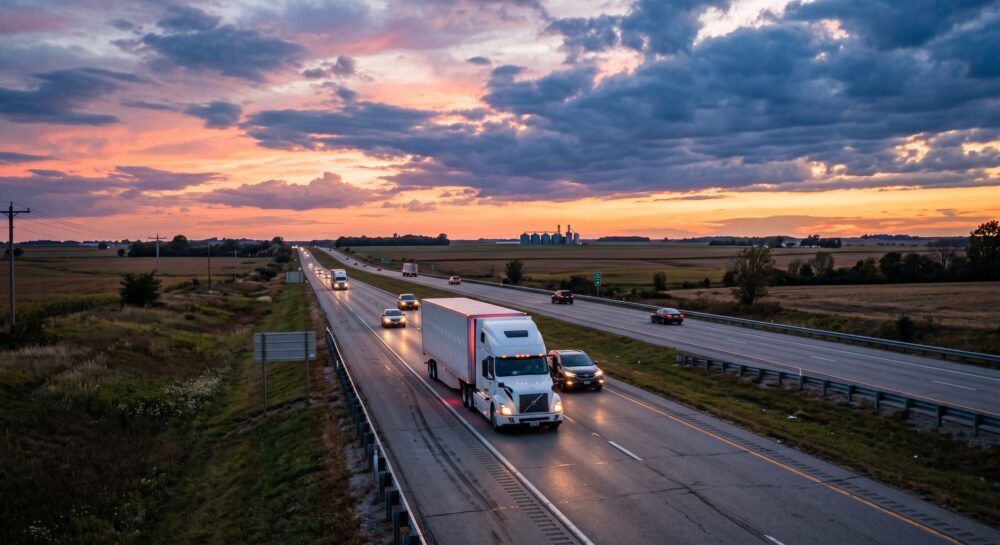
Aurora is Illinois’s second-largest city and sits at the centre of one of the Midwest’s most active commercial freight zones. The East-West Tollway (I-88) runs directly through the Aurora corridor, connecting the city to Chicago’s western suburbs and the broader interstate network. The nearby BNSF Railway intermodal facility at Logistics Park in Elwood — one of the largest inland ports in the United States — generates enormous drayage truck traffic moving containers between the rail hub and distribution centres throughout the region. Add the I-90/94 corridor to the north and the dense distribution and warehousing infrastructure throughout Kane and DuPage Counties, and Aurora sits at the intersection of some of the heaviest commercial truck traffic in the Midwest.   When a commercial truck collides with a passenger vehicle in this environment, the consequences are severe. The forces involved, the complexity of liability, and the speed with which critical evidence can disappear all demand an immediate and expert response. This guide explains what Aurora accident victims need to know from the moment of impact.

Why Truck Accident Cases Are Fundamentally Different

  A commercial truck accident is not a larger version of a car accident. It is a different category of personal injury case in almost every respect — the physics, the parties, the evidence, and the legal framework all differ fundamentally.   At full load, a commercial semi-truck weighs up to 80,000 pounds — roughly 20 to 30 times the weight of the average passenger vehicle. At highway speed on I-88 or I-90, the kinetic energy involved in a truck collision produces forces that passenger vehicles cannot absorb. Traumatic brain injury, spinal cord damage, severe fractures, crush injuries, and fatalities are common outcomes of accidents that would cause far less harm in a car-to-car collision.   The legal complexity compounds the physical severity. A car accident typically involves two drivers and their insurers. A truck accident regularly involves the truck driver, the trucking company, a cargo loading company, the truck manufacturer, a parts supplier, a maintenance contractor, and the freight shipper — each with separate insurance policies, separate legal teams, and separate interests in minimising liability. Identifying all of them and pursuing all available coverage is what experienced truck accident representation delivers.   Federal law adds a regulatory layer absent from car accident cases. Commercial trucking is governed by Federal Motor Carrier Safety Administration (FMCSA) regulations covering driver licensing, hours of service, vehicle maintenance, weight limits, cargo securing standards, and drug and alcohol testing. Violations of FMCSA rules can constitute negligence per se — establishing liability without requiring separate proof of negligence. Finding and documenting those violations early is one of the most critical contributions an experienced attorney makes.  

Aurora’s Freight Environment — Why Truck Accident Risk Is Elevated Here

  The commercial truck density in the Aurora corridor is among the highest in Illinois outside of Chicago proper, and understanding why helps accident victims appreciate the specific risk environment they operate in daily.   I-88 (East-West Tollway) is the primary freight artery through the Aurora area, connecting the far western suburbs to the I-290/I-294/I-355 interchange network and ultimately to I-80 and I-90. The volume of commercial trucks on I-88 through Aurora and Naperville is substantial year-round and generates a consistent pattern of serious accidents at interchange areas and in construction zones.   BNSF Logistics Park drayage traffic — trucks moving shipping containers between the intermodal hub and regional distribution centres — creates heavy short-haul truck volume on the local road network connecting Aurora, Joliet, and the surrounding warehouse corridor. These shorter-haul drivers operate under the same HOS and maintenance requirements as long-haul carriers but face different pressure dynamics around schedule and turnaround time.   The I-90 corridor north of Aurora adds another major truck traffic artery serving the northwestern suburban logistics infrastructure, with consistent accident risk particularly in the construction and expansion zones that have characterised this corridor in recent years.   For Aurora residents and commuters, this freight density is a daily reality. Knowing what to do when the worst happens is not abstract preparation — it is practical protection.  

Common Causes of Truck Accidents in the Aurora Area

  Identifying causation is the foundation of liability — and causation in truck accidents is often more complex than it first appears.   Driver fatigue is the leading cause of serious commercial truck accidents. Hours of Service regulations limit driving time to protect against fatigue-impaired operation, but schedule pressure, delivery bonuses, and deliberate log falsification create persistent violations. Electronic Logging Device data now provides objective records of actual driving time for most carriers — and that data is time-sensitive evidence.   Distracted driving from phone use, in-cab dispatch systems, GPS navigation, and other sources is a growing factor in truck accidents as cab technology proliferates.   Inadequate stopping distance is a physics problem that driver behaviour can either manage or ignore. A fully loaded truck requires significantly longer stopping distances than a passenger vehicle at the same speed. Following too closely at highway speed on I-88 is a common contributing factor in rear-end truck collisions.   Improper cargo loading causes shifting loads, weight distribution failures, rollovers, and jackknife accidents. When cargo is not properly secured or weight exceeds legal limits, the truck’s handling changes dramatically. Cargo loaders bear independent liability when their failures contribute to an accident.   Inadequate maintenance — deferred brake service, worn tyres, faulty lights, defective coupling systems — causes accidents that are entirely preventable. Maintenance records are critical evidence in these cases and must be preserved immediately.   Blind spot accidents — lane change collisions where the truck driver fails to check mirrors before moving — are a consistent cause of serious crashes on multi-lane corridors. Trucks have substantial blind spots on all sides that many passenger vehicle drivers don’t fully appreciate.  

Who Can Be Held Liable in an Aurora Truck Accident?

  Systematic identification of every potentially liable party is one of the most valuable contributions experienced truck accident representation makes — because each additional defendant represents additional insurance coverage and a larger total recovery.   The truck driver bears direct liability for negligent operation: fatigue, distraction, speeding, impairment, HOS violations, or any failure to operate the vehicle safely.   The trucking company is vicariously liable for the driver’s actions under the legal doctrine of respondeat superior, and directly liable for its own failures: negligent hiring and retention, inadequate training, pressure on drivers to violate HOS rules, and failure to maintain vehicles. Arguments that drivers are independent contractors to avoid vicarious liability are frequently defeated based on the actual degree of operational control exercised.   The cargo loading company bears liability when improper loading, inadequate securing, or weight distribution failures contributed to the accident — a jackknife, a rollover, or dangerous handling characteristics.   The truck or parts manufacturer faces product liability when a defective component — brakes, tyres, steering, coupling, fifth wheel — contributed to the accident. These claims run alongside negligence claims and can significantly increase total recovery.   The maintenance contractor is liable when deferred or inadequate servicing of a known mechanical issue contributed to the crash.   The freight broker or shipper can bear liability when schedule pressure contributed to HOS violations or when they knowingly engaged a carrier with documented safety violations.

The Evidence That Wins Truck Accident Cases — and Why It Disappears Fast

  Truck accident evidence has an urgency that no other personal injury case matches. The data that builds the strongest cases is time-sensitive in ways that most people don’t know — and trucking companies know exactly how long they are required to retain it.   Electronic Logging Device (ELD) data records actual driving time, rest periods, and HOS compliance with objective precision. This is often the most powerful evidence in a fatigue-related truck accident case. ELD data retention periods are limited — a legal preservation demand must go out immediately after an accident.   Electronic Control Module (ECM) / black box data records speed, braking, throttle position, and other operational parameters in the seconds before impact. This is objective evidence of driver behaviour at the moment of the crash that can make or break a disputed liability case.   Driver qualification files contain hiring records, training documentation, prior traffic violations, drug and alcohol test history, and medical certifications. These establish whether the driver was properly qualified and whether the company had prior knowledge of safety issues.   Vehicle maintenance and inspection records document the truck’s service history and can reveal pre-existing mechanical problems — deferred brake work, tyre wear, lighting defects — that contributed to the accident.   Dashcam and surveillance footage from the truck’s own cameras, nearby business cameras, and IDOT traffic monitoring systems can provide decisive objective evidence of how the accident occurred. This footage is typically overwritten within 24 to 72 hours.   The most critical immediate action after a serious Aurora truck accident is engaging an attorney who can send preservation demands to the trucking company, its insurers, and all relevant third parties before this evidence is legally destroyed. Every day of delay is potentially irreplaceable evidence lost.  

Illinois Law and How It Applies to Aurora Truck Accident Claims

  Illinois state law governs the personal injury aspects of Aurora truck accident claims, while FMCSA federal regulations apply to federally regulated commercial carriers.   Illinois follows modified comparative fault with a 51% bar. You can recover damages as long as you are found 50% or less at fault for the accident. At 51% or more fault, you recover nothing. Your compensation is reduced proportionally by your fault percentage below the bar. Trucking companies and their insurers challenge fault assignments aggressively — experienced representation that counters those challenges protects your recovery.   The statute of limitations for personal injury claims in Illinois is two years from the date of the accident. Wrongful death claims under the Illinois Wrongful Death Act carry a two-year deadline from the date of death.   If your accident involved a government vehicle or occurred on government-maintained road infrastructure in a way that implicates municipal liability, specific notice requirements under the Illinois Local Governmental and Governmental Employees Tort Immunity Act apply — with timelines significantly shorter than the general two-year limitation. Government entity truck accident claims require immediate legal attention.  

What Damages Are Available in an Illinois Truck Accident Case?

  Illinois law allows truck accident victims to pursue full compensation across several categories of damages.   Economic damages cover medical expenses — emergency care, surgery, hospitalisation, rehabilitation, future treatment — along with lost wages during recovery, reduced future earning capacity for serious or permanent injuries, vehicle replacement costs, and related expenses. In serious truck accident cases, the economic damages alone frequently reach significant sums.   Non-economic damages cover pain and suffering, emotional distress, loss of enjoyment of life, disfigurement, and the long-term human impact of permanent disability. These are frequently the largest component of a serious injury settlement.   Punitive damages are available in Illinois when the at-fault party’s conduct was fraudulent, intentional, or showed a conscious disregard for others — drunk driving, deliberate HOS log falsification, or knowingly operating a mechanically defective vehicle are potential bases. Punitive damages are not available in every case but significantly increase total recovery when circumstances support them.  

When to Hire an Aurora Truck Accident Attorney

  Truck accident cases require specialised expertise, substantial resources, and immediate action. The multi-party liability landscape, the federal regulatory layer, the urgent evidence preservation requirements, and the scale of potential damages all demand an attorney with specific truck accident experience — not general personal injury practice.   Trucking companies deploy rapid response teams after serious accidents. Investigators and lawyers engage immediately to manage evidence and the claim in the company’s favour. You need representation that matches that response from day one.   An experienced attorney sends preservation letters immediately, retains accident reconstruction and FMCSA compliance experts, identifies every liable party, navigates the interaction between Illinois state law and federal regulations, and builds the complete case needed to pursue total available compensation — at the settlement table and, when necessary, at trial.   If you’ve been seriously injured in a truck accident in the Aurora area, consulting an experienced Aurora truck accident attorney as soon as possible is the most important step you can take to protect your evidence, your rights, and your financial recovery.  

Act Before the Evidence Is Gone

  Aurora’s position at the centre of one of the Midwest’s busiest freight corridors means truck accident risk is a daily reality for residents and workers throughout Kane and DuPage Counties. When a serious accident happens, the legal clock and the evidence preservation clock both start immediately.  Document everything you can from the scene. Get complete medical treatment from day one. Do not give recorded statements to the trucking company or their insurer. And engage an experienced truck accident attorney before the critical evidence window closes — because in truck accident cases, hours matter in ways they don’t in any other type of personal injury claim.