Lemniscate Publishes GEO/AEO/SEO Explainer on AI Search

Digital marketing agencies and search optimization specialists are introducing new frameworks to help brands maintain visibility as artificial intelligence reshapes how users find information online. Lemniscate Growth, a B2B revenue pipeline generation agency, has published a comprehensive explainer clarifying the distinctions between Search Engine Optimization (SEO), Answer Engine Optimization (AEO), and Generative Engine Optimization (GEO) in September 2026.
The explainer positions GEO as a strategy focused on making brands easier for AI systems to understand and recommend, rather than simply ranking in traditional search results. According to the resource, this represents a fundamental shift in how companies approach organic visibility as AI-powered search tools like ChatGPT, Perplexity, Claude, and Google AI Overviews gain traction among users seeking quick, synthesized answers.

Understanding the Three Optimization Approaches
The Lemniscate Growth resource defines each approach with distinct objectives. SEO remains focused on ranking in traditional search engine results pages through keywords, technical structure, backlinks, and user experience optimization. This established practice continues to drive the majority of B2B website traffic, with Google alone accounting for 55 to 65 percent of visits to business sites.

AEO targets visibility in direct-answer formats within search engines, including featured snippets, knowledge panels, and voice assistant results. The strategy emphasizes structuring content so it can be easily extracted and presented without requiring users to click through to a website.
GEO focuses on citations and recommendations within AI-generated responses. Rather than competing for ranking positions, brands optimized for GEO aim to influence what AI engines think and say when responding to relevant queries. The approach requires structuring content and brand presence so systems like ChatGPT, Perplexity, and Claude cite and recommend companies in their synthesized answers.
The Shift in Search Behavior
Industry analysts note that AI has fundamentally changed what search means, not just in look and feel but in the types of queries users make. More searches than ever now result in no click at all, as users receive answers directly within AI interfaces rather than visiting source websites.
According to Lemniscate Growth’s service descriptions, AI search is growing 40 percent or more year-over-year, making optimization for both traditional and AI-powered search a strategic imperative rather than an optional experiment. The agency monitors brand mentions weekly across ChatGPT, Perplexity, Google AI Overviews, and more than 10 AI systems for clients.
Technical Implementation and Tools
A GitHub repository released in 2026 offers a technical workflow for implementing GEO alongside traditional SEO. The geo-seo-claude project presents methods for optimizing sites for AI search engines including Claude, ChatGPT, Perplexity, and Gemini while maintaining traditional SEO foundations.
The workflow reflects a broader industry trend toward treating GEO as a layer built on top of SEO fundamentals rather than a replacement. Structured data, schema markup, and clear content architecture serve both traditional search crawlers and AI retrieval systems.

Terminology Debates and Market Evolution
The marketing and SEO industries have adopted multiple acronyms to describe AI visibility strategies, including AEO, GEO, GSO, AIO, and LLMO. Industry observers note there is no standardization yet, and certainly no unified playbook for implementation.
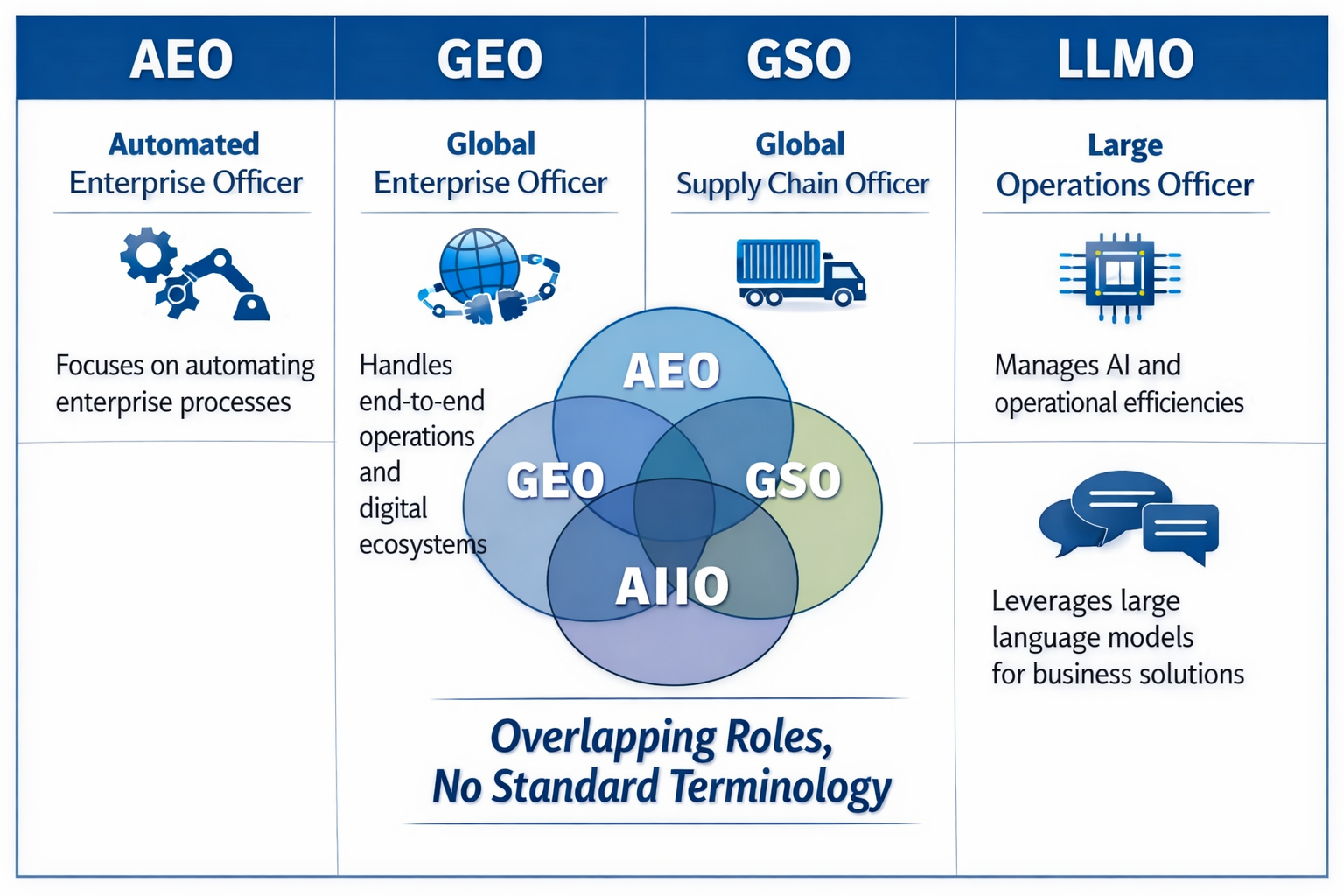
Some experts argue that AEO and GEO are extensions of SEO rather than entirely new disciplines. A recent analysis from the dental marketing sector suggests that these approaches represent SEO with a few changes rather than revolutionary new practices. Point solutions and startups marketing GEO and AEO services tend to emphasize differences to establish distinct market positions.
However, established agencies and enterprise platforms are increasingly incorporating AI visibility into core search offerings. Companies like Adobe and Meltwater have launched LLM optimization tools, while numerous startups including AthenaHQ, Bluefish, Goodie, Peec AI, Profound, and Scrunch are building specialized solutions.
Market Activity in Asia
Chinese-language technology publications have published multiple GEO vendor evaluations and rankings in September 2026, reflecting rapid market development in Asia. These roundups position GEO as a strategy for improving brand visibility in AI-generated answers and compare service providers based on technical capabilities and results.
The vendor comparisons frame GEO as optimizing structured facts for AI models to cite, with evaluation criteria including citation frequency, answer accuracy, and integration with enterprise content management systems.
Strategic Recommendations
Industry practitioners emphasize that ignoring AI visibility is not a viable option for brands that rely on organic discovery. The strategic approach recommended by optimization specialists involves optimizing for traditional and AI-powered search simultaneously through integrated frameworks.
Lemniscate Growth reports typical results for B2B companies include three to eight times organic traffic growth within 12 months, with one case study showing growth from 50,000 to 700,000 monthly visitors over 18 months when combining SEO, AEO, and GEO strategies.
Content freshness has emerged as a particularly important factor for AI search platforms. Analysis of Perplexity’s citation mechanics shows the platform has a strong recency bias, with content older than 90 days entering a decay window where it loses retrieval priority to newer pages for fast-moving queries.
Key Facts
- Lemniscate Growth published an explainer in September 2026 defining SEO, AEO, and GEO as distinct but related optimization approaches
- GEO focuses on citations and recommendations in AI-generated responses rather than traditional search rankings
- AI search is growing 40 percent or more year-over-year, according to agency reports
- Multiple vendor evaluation rankings for GEO services appeared in Chinese markets in September 2026
- Perplexity’s citation system prioritizes content less than 90 days old for time-sensitive queries
- Industry practitioners report typical B2B organic traffic growth of three to eight times within 12 months using combined strategies
Sources
- How AEO, GEO and SEO Work: The Explainer Series – Lemniscate Growth
- GEO-first, SEO-supported: Optimize websites for AI-powered search engines – GitHub
- What Is an AI SEO Company? How to Choose One – SeoTuners
- AEO and GEO Explained: Why Experts Say It’s Still Just Dental SEO – With a Few Changes – Big News Network