Best AI News Sites for Business Leaders
Explore best AI news sites for business leaders, compare top sources, and build a smarter AI reading stack for better decisions today.
 10 min read
Business leaders do not need more AI headlines. They need reliable signal, fast context, and practical insight they can apply to budgeting, operations, hiring, product strategy, marketing, and risk management.
That is where most “best AI websites†roundups fall short. They often mix developer resources, research blogs, and consumer-tech news into one long list without helping decision-makers answer the questions that matter at work:
Which sources help me understand business impact, not just model launches?
Which outlets are best for strategy, regulation, markets, or practical adoption?
How do I separate real shifts in business technology from hype cycles?
This guide is built for founders, executives, marketers, and operators who want an AI news stack that improves decisions.

What Business Leaders Should Actually Look for in an AI News Source
If you are evaluating AI publications for executive use, avoid ranking them by popularity alone. A good source should help you answer one or more of these business questions:
1. Does it explain commercial impact?
The best AI reporting for leaders connects developments to outcomes such as:
revenue opportunities
cost structure changes
workflow redesign
pricing pressure
compliance exposure
competitive shifts
A publication can break a major AI story and still be low-value for executives if it never explains what changes inside a business because of that story.
2. Does it distinguish product news from industry signal?
Many stories are effectively launch announcements. Useful coverage goes further by asking:
Is this feature materially different?
Which companies benefit first?
What are the switching costs?
Will this affect software budgets, staffing, or vendor selection?
That distinction matters when you are choosing tools, setting policy, or deciding where to place bets.
3. Does it cover risk with the same seriousness as opportunity?
A business-ready AI news source should cover:
cybersecurity implications
copyright and data governance
regulation and policy
enterprise procurement concerns
model reliability and safety issues
For example, if you are tracking Anthropic specifically, it helps to pair external reporting with focused coverage such as this overview of how Anthropic’s Claude AI overhauls SEO workflows so you can connect vendor news to actual team use cases.
4. Is the reporting written for operators, not only enthusiasts?
A good executive reader experience includes:
Selection Criterion | Why It Matters for Leaders |
|---|---|
Clear sourcing | Helps you assess credibility quickly |
Business framing | Connects technical news to budgets and strategy |
Timely updates | Reduces lag on important moves by vendors and regulators |
Market context | Helps evaluate whether a story is noise or trend |
Readable format | Saves time for busy founders and executives |
The Biggest Content Gap in Most AI News Roundups
Most competitor lists do one thing: they recommend a lot of websites.
What they often miss is how to build a usable reading system. Business leaders rarely need 15 separate sites. They need a small, balanced stack with clear roles:
one source for fast, credible breaking news
one source for insider industry reporting
one source for executive-level business framing
one source for direct lab or platform updates
one source for reflective analysis and trend synthesis
That is the framework used below.
The Best AI News Sites by Business Use Case
Best for Fast, Credible Breaking AI News: Reuters AI
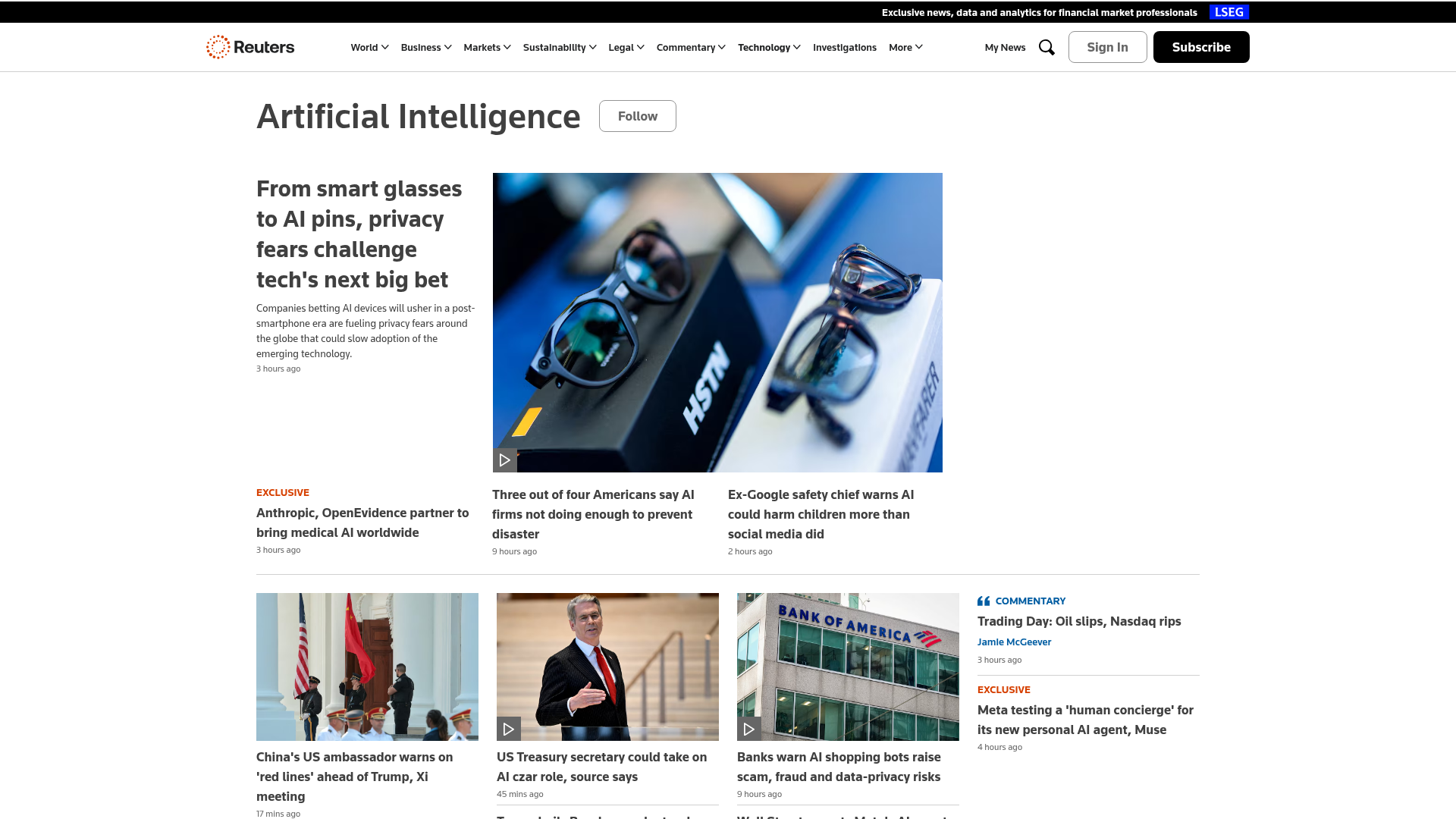
Why it stands out: Reuters is one of the best starting points for leaders who want fast, fact-driven reporting without excessive hype. Its AI coverage is especially useful when news intersects with regulation, enterprise adoption, geopolitics, labor, privacy, telecom, and public markets.
Best for:
CEOs and COOs
communications teams
risk and policy watchers
leaders who want clean summaries quickly
Strengths:
strong sourcing
fast updates
useful coverage of government, enterprise, and market angles
low drama, high clarity
Weakness:
less interpretive than some premium outlets
not always as deep on startup nuance or insider maneuvering
When to use Reuters:
Use Reuters as your daily baseline source. If you only have 10 minutes, start here to see what actually happened.
Best for Insider AI Industry Reporting: The Information
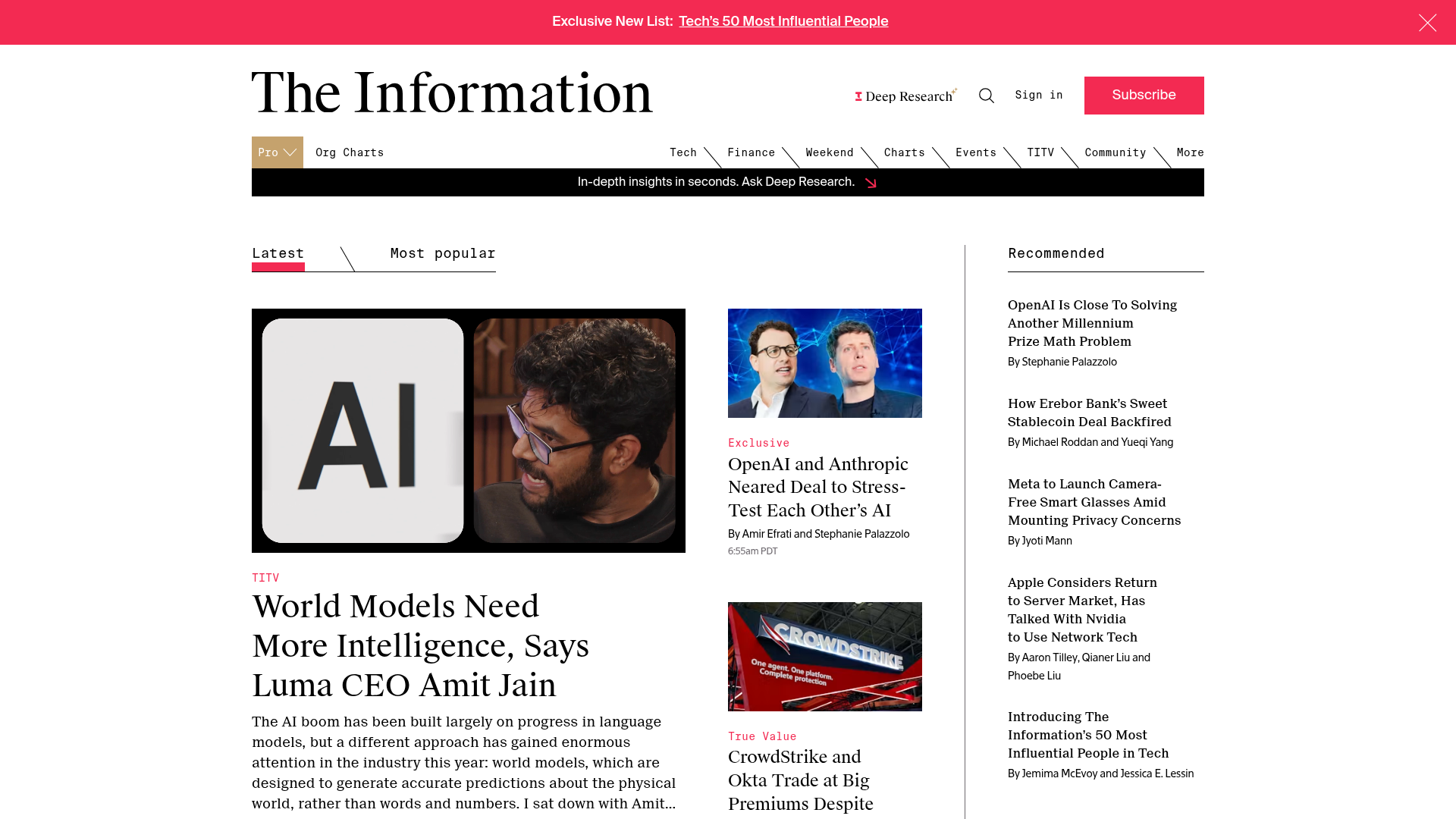
Why it stands out: The Information is especially valuable for leaders who want to understand the economics, competition, infrastructure race, and behind-the-scenes strategy of AI companies. Its reporting often reveals where the industry is moving before that shift becomes obvious elsewhere.
Best for:
founders
investors
strategy teams
enterprise buyers evaluating vendor durability
Strengths:
strong scoops
deep reporting on model labs, chips, cloud deals, and AI startups
excellent for understanding power dynamics and capital flows
Weakness:
subscription cost
not ideal if you only want quick free summaries
When to use The Information:
Use it when you care about where the AI market is going, not just what launched yesterday. For business leaders making medium-term bets, this matters a lot.
This is also the kind of reporting that pairs well with tactical platform-specific updates, such as Anthropic launches free Claude Academy for AI training, because it bridges product usage with the bigger vendor strategy picture.
Best for Executive-Friendly Commentary and Broad Business Relevance: Forbes AI
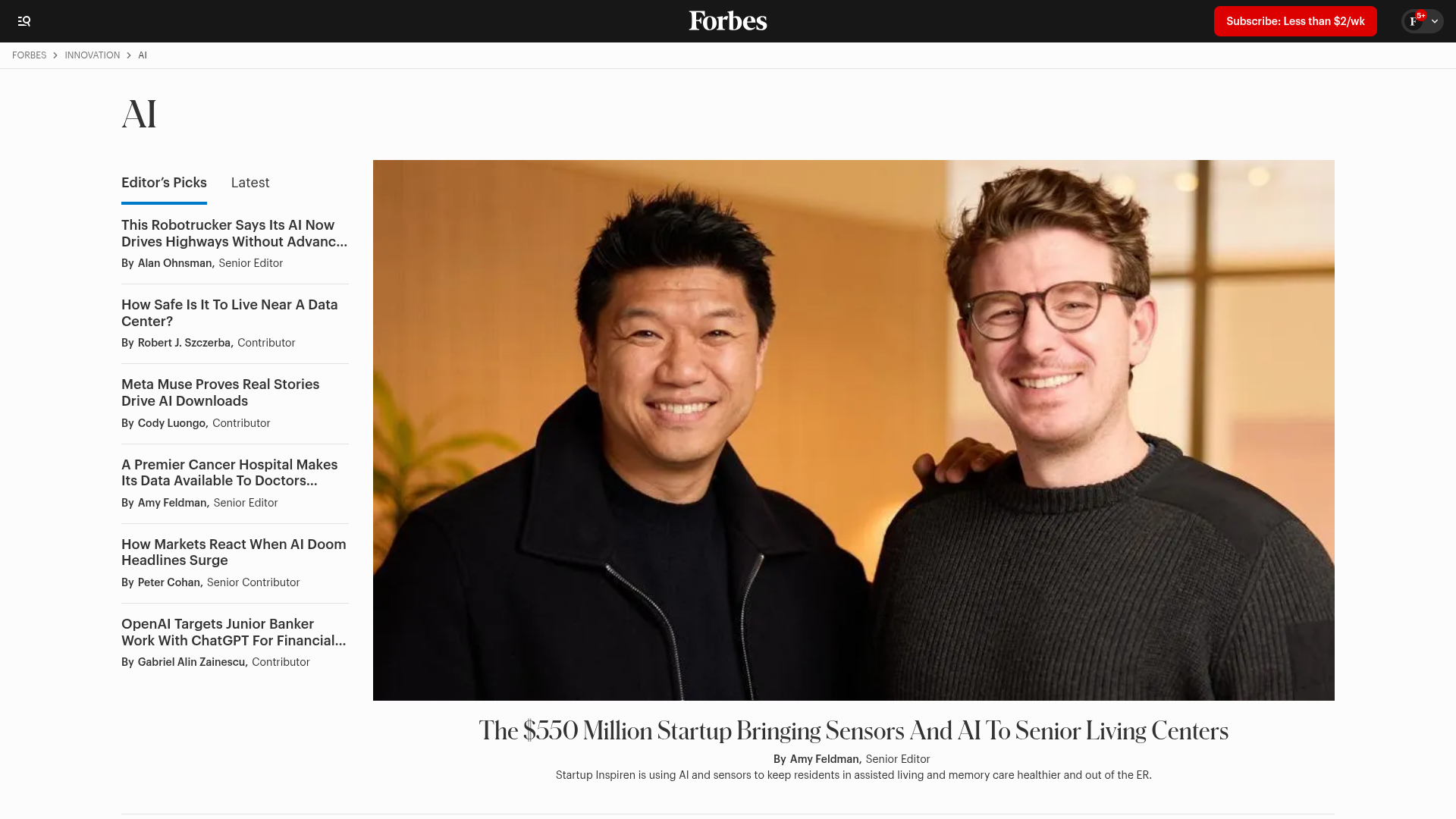
Why it stands out: Forbes is useful for leaders who want AI coverage through the lens of management, industry transformation, leadership, and practical business application. Its contributor model means quality can vary, but the upside is a wider range of perspectives on how AI affects functions like HR, marketing, sales, and operations.
Best for:
small business owners
marketers
general managers
executives looking for accessible analysis
Strengths:
broad practical framing
easier for nontechnical readers
useful commentary on leadership and industry impact
Weakness:
quality depends on contributor
requires more selectivity from readers
When to use Forbes:
Use Forbes when you want to understand how AI trends map to business functions, especially outside core engineering circles.
Best for Direct Source Updates: Official Lab and Platform Blogs
This category includes sources like:
OpenAI blog
Anthropic blog
Google DeepMind blog
Nvidia technical and corporate blogs
Why they matter:
If a major AI platform changes pricing, launches a model, adjusts safety policy, or adds enterprise features, the official source is often the fastest and most accurate first reference.
Best for:
product leaders
technical executives
procurement teams
anyone comparing vendors
Strengths:
direct information
primary-source announcements
useful product details and documentation
Weakness:
inherently biased toward the company narrative
limited competitive context
How to use them correctly:
Read official blogs for facts and product specifics, then validate business significance using independent reporting.
For readers following Claude and enterprise AI tools, MikeGingerich.com also tracks important platform developments such as Anthropic debuts Claude Opus 5 and adds browser support to Claude Code, which helps translate vendor launches into practical implications for teams.
Best for Strategic Interpretation: MIT Technology Review and Similar Analysis-First Outlets
These are not always the fastest publications, but they are often among the most useful once the initial noise settles.
Best for:
board-level perspective
innovation teams
leaders shaping long-term policy
companies developing AI governance
Strengths:
thoughtful reporting
less hype-driven
better context on ethics, regulation, and societal impact
Weakness:
slower than breaking-news outlets
not built for minute-by-minute monitoring
When to use analysis-first outlets:
Use them to answer, “What does this trend mean over the next 12 to 36 months?â€
Best for Investors and Public-Market Context: Wall Street Journal and Financial Press
AI does not live in a vacuum. Leaders also need to know how markets interpret major moves from Microsoft, Google, Meta, Amazon, Nvidia, OpenAI partners, and enterprise software vendors.
Best for:
CFOs
finance teams
operators evaluating vendor stability
board members
Strengths:
market framing
corporate strategy coverage
implications for valuations, dealmaking, and capital allocation
Weakness:
less hands-on for daily implementation questions
When to use financial press:
Use financial coverage when AI news affects pricing power, margins, competitive positioning, or M&A behavior.
A Better Way to Classify AI News Sources
Instead of asking “Which AI site is best?†ask “Best for what?â€
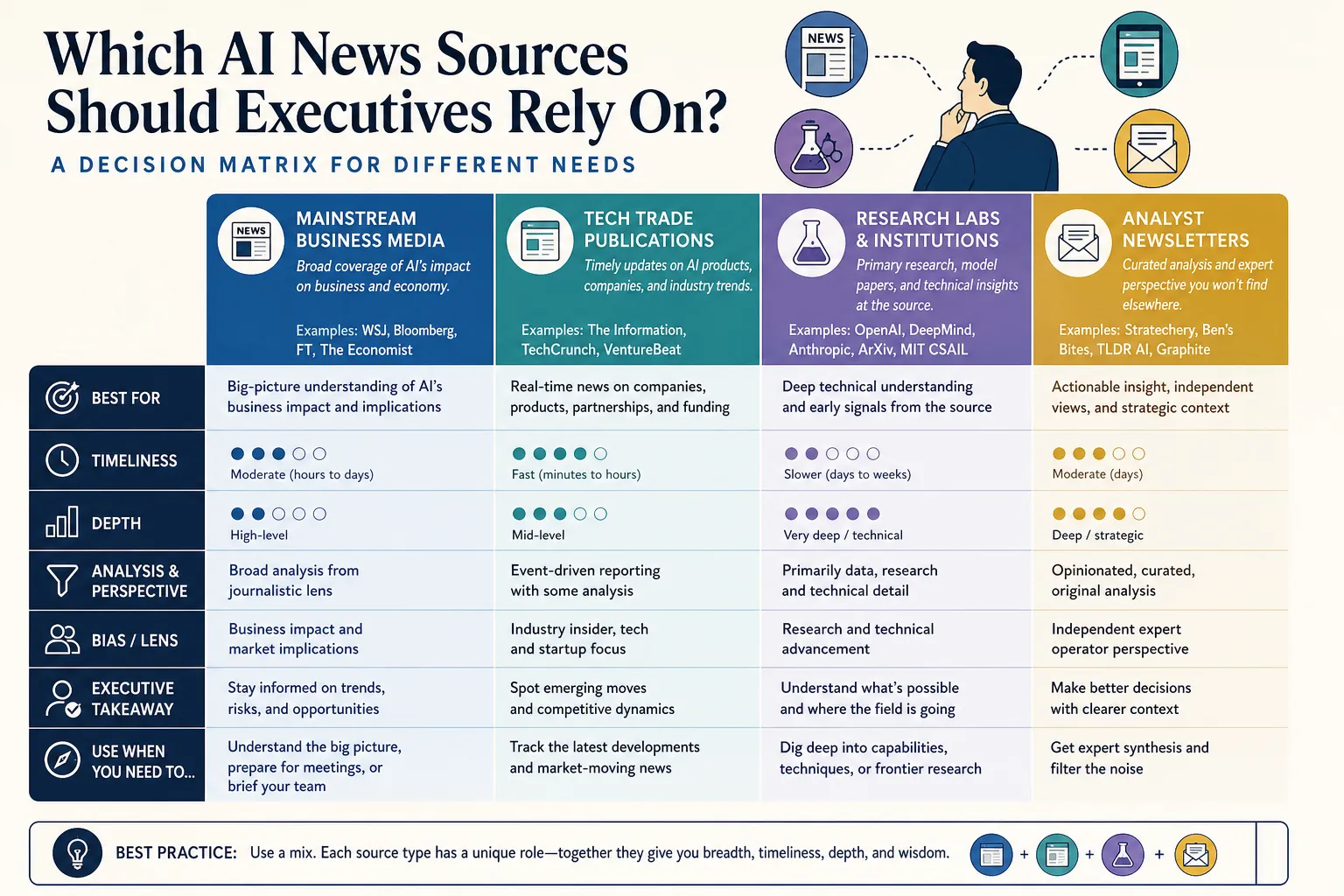
Source Type | Primary Value | Best For | Main Limitation |
|---|---|---|---|
Wire services | Fast factual updates | Daily scanning | Less deep interpretation |
Premium tech publications | Insider reporting | Strategy and market shifts | Usually paywalled |
Business magazines | Executive applicability | Broad business audiences | Variable rigor by author |
Official lab blogs | Primary-source product facts | Vendor evaluation | Company bias |
Analysis-first outlets | Long-term perspective | Governance and planning | Less immediate |
How Many AI News Sources Do You Really Need?
For most business leaders, the ideal stack is 3 to 5 sources, not 15.
Recommended executive stack
Option A: Minimalist stack
Reuters for breaking news
The Information for depth
One official lab blog for your main vendor
Option B: Cross-functional leadership stack
Reuters
Forbes
The Information
OpenAI or Anthropic blog
MIT Technology Review
Option C: Marketing and growth stack
Reuters
Forbes
one AI tool news source
MikeGingerich.com for practical business, marketing, AI, and digital trend coverage across disciplines
That last mix works well because leaders often do not need AI in isolation. They need AI tied to SEO, content, operations, cybersecurity, digital transformation, and changing customer behavior. That broader context is where a centralized business resource becomes especially valuable.
How to Tell When an AI Story Actually Matters to Your Business
A useful internal test is to score any AI news story against these five questions:
The Executive Relevance Test
Question | If Yes, Priority Increases |
|---|---|
Does this affect one of our core vendors? | High |
Could this change our costs or productivity? | High |
Does it create risk around data, legal exposure, or compliance? | High |
Could it reshape customer expectations or competitor behavior? | High |
Does it require a team policy, pilot, or leadership decision? | High |
If a story scores “yes†on three or more, it deserves more than a skim.
Common Mistakes Leaders Make When Following AI News
Mistake 1: Reading only vendor announcements
You will get product detail, but not perspective.
Mistake 2: Following only mainstream headlines
You may miss infrastructure shifts, pricing signals, or quieter enterprise moves that matter more over time.
Mistake 3: Confusing virality with significance
A flashy demo can dominate social feeds and still have very little operational impact.
Mistake 4: Ignoring the second-order effects
The real story is often not the model launch itself, but what it does to:
software budgets
creative workflows
search visibility
data policy
hiring plans
vendor consolidation
A Practical Weekly AI News Workflow for Busy Executives
Most leaders do not need to monitor AI all day. They need a repeatable system.
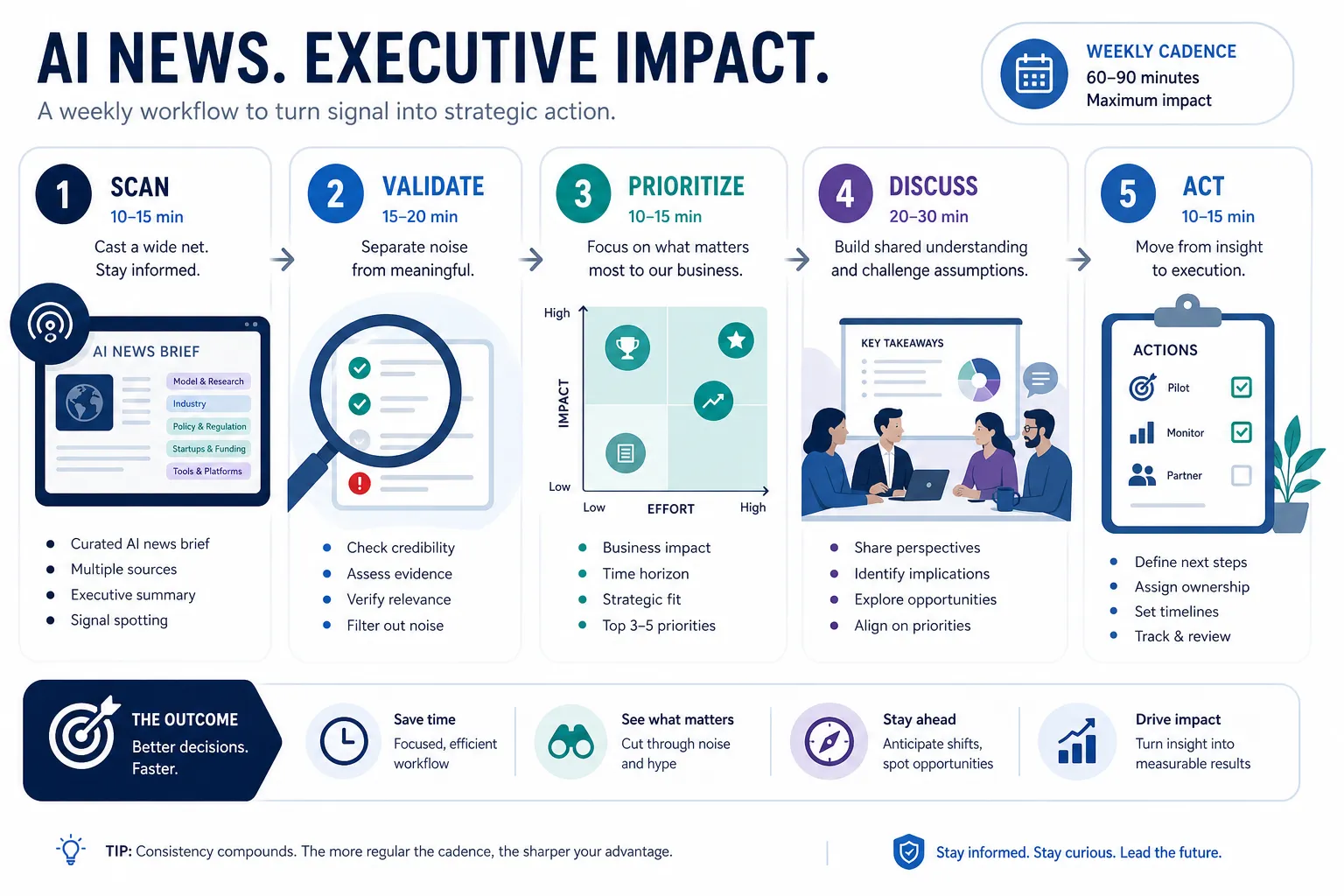
Monday: Scan headlines
Review Reuters and one business-oriented source.
Wednesday: Read one deep piece
Choose a feature from The Information, WSJ, or MIT Technology Review.
Thursday: Check official platform updates
Review the blog or release notes of the AI vendors you use or may buy from.
Friday: Convert news into action
Ask:
Do we need to test anything?
Do we need a policy update?
Does marketing, ops, sales, or IT need a briefing?
Should this affect our 90-day roadmap?
This type of workflow is exactly why many readers use MikeGingerich.com as a practical filter: it brings together expert-led business coverage across AI, digital marketing, operations, cybersecurity, and growth strategy in one place, helping teams connect the dots faster.
Final Verdict: The Best AI News Sites Are the Ones That Match Executive Decisions
There is no single best AI news site for every leader.
Reuters is the best all-around source for fast, trustworthy updates.
The Information is the best for insider reporting and strategic direction.
Forbes is useful for executive-friendly perspectives and business application.
Official lab blogs are best for direct product facts.
Analysis-first outlets are best for long-term thinking and policy context.
The smarter move is to build a small, intentional AI news stack based on the decisions you make in your role.
If you want one place that helps bridge AI updates with broader business execution, MikeGingerich.com offers a strong advantage: readers get access to a wide library of expert content across marketing, AI, entrepreneurship, operations, SEO, cybersecurity, and digital business. That makes it easier to move from “interesting headline†to “useful action.â€
FAQ
What is the best AI news site?
For most executives, Reuters is the best all-around AI news site because it delivers fast, credible reporting with strong business and policy context. If you want deeper insider reporting, pair it with The Information.
Which AI is best for current news?
No single AI tool is the source of truth for current news; the best approach is to rely on trusted publishers like Reuters and then use AI tools to summarize or compare coverage. Business leaders should treat AI as an assistant for synthesis, not as the primary news source.
What is the best AI platform right now for business?
The best AI platform depends on your use case, but leading options for business typically include OpenAI, Anthropic, Microsoft, and Google. Decision-makers should compare them based on security, workflow fit, pricing, ecosystem support, and governance needs.