Anthropic’s Claude Design Drives No-Code Prototyping Surge
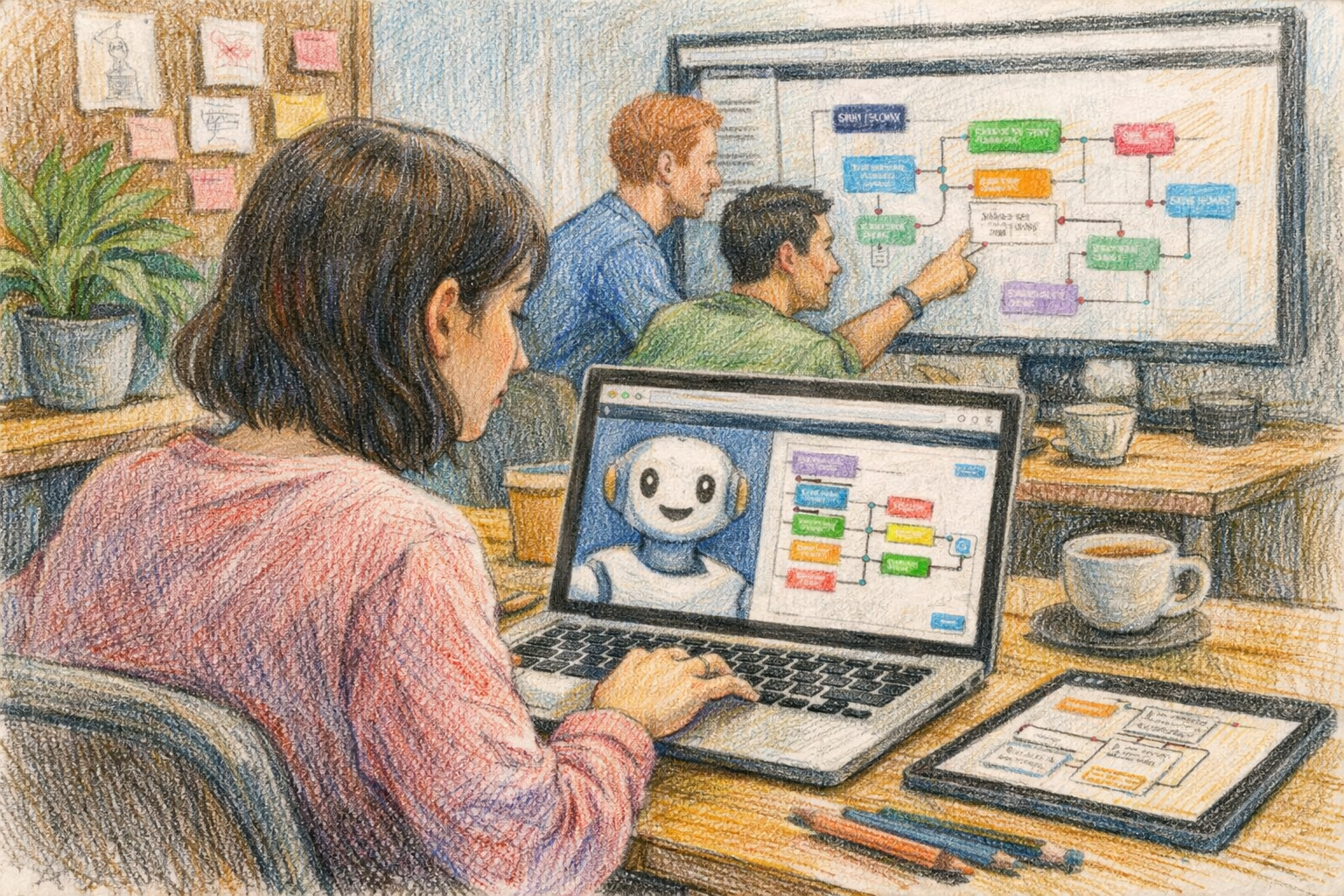
Anthropic’s Claude Design is gaining traction as creators explore its capabilities for rapid prototyping and no-code website building. Launched on April 17, 2026, Claude Design is a new experimental product that lets users create visuals like prototypes, slides, one-pagers, and more using Claude. The tool has sparked significant interest in the design community, with Figma’s stock price dropping by 7%, while Claude’s search interest on Google Trends hit an all-time high following its release.

The platform represents a new experimental product that lets users create visuals like prototypes, slides, one-pagers, and more using Claude, and it’s powered by Claude Opus 4.7, Anthropic’s most capable vision model. Claude Design is available in research preview for Claude Pro, Max, Team, and Enterprise subscribers.
Building Without Code: The Tutorial That Sparked Interest
A recent YouTube tutorial demonstrates how users can build complete hero sections and websites using Claude Design without writing any code. The video, titled “I made this AMAZING Hero Section Completely using AI,” showcases the platform’s capabilities for designers and non-designers alike. The tutorial highlights the use of master prompts, reference screenshots, and built-in editing tools to create polished web components.
While the tutorial demonstrates impressive visual prototyping capabilities, it also notes current limitations in image generation. This reflects the broader reality that Claude Design is built for people who aren’t starting from a design tool and need to get from an idea to something visual quickly.
Seamless Design-to-Code Workflow
What sets Claude Design apart from other AI design tools is its integration with Claude Code. According to the Claude Fast Blog, Claude Design enables seamless prototypes handed off directly to Claude Code for production, forming the first closed AI design-to-production loop. This integration addresses what many in the industry call the “handoff problem,” where design intent is often lost during the transition from mockups to production code.
When a design is ready to build, Claude packages everything into a handoff bundle that can be passed to Claude Code with a single instruction, streamlining what traditionally required multiple rounds of communication between designers and developers. The company’s senior product designer at Brilliant reported that the most complex pages required 20 or more prompts to recreate in competing tools but needed only 2 in Claude Design. The Brilliant team then turned static mockups into interactive prototypes they could share and user-test without code review, and handed everything to Claude Code for implementation.
Brand Consistency Through Automated Design Systems
One of Claude Design’s standout features is its ability to maintain brand consistency across projects. During onboarding, Claude builds a design system for teams by reading codebases and design files. Every project after that uses the team’s colors, typography, and components automatically. This capability eliminates the need to repeatedly upload brand assets or manually apply styling guidelines.
Claude Design can apply a team’s design system to every project it creates so that results are consistent with the company’s overall visual style. Anthropic says Claude Design is able to do this by reading a company’s codebase and design files. Teams can also refine these components and maintain multiple design systems for different projects or brands.
Export Flexibility and Integration Options
Teams can export presentation decks or prototypes as PDFs, URLs, PPTX files, or send them to Canva, providing flexibility for different workflows. Once in Canva, they are fully editable and collaborative, allowing teams to continue refining designs in familiar environments.
The platform also supports a web capture tool that grabs elements directly from websites so prototypes look like the real product, making it easier to maintain consistency with existing digital properties.
Broader Context: Anthropic’s Creative Ecosystem Expansion
Claude Design is part of a broader push by Anthropic into creative workflows. In late April 2026, the company announced creative connectors for professional tools including Ableton for music production, Adobe Creative Cloud apps including Photoshop and Premiere, and Affinity by Canva for automating repetitive production tasks. Additional connectors support Autodesk Fusion for 3D modeling and Blender’s Python API for natural-language interfaces.
The Chrome integration for Claude Code CLI also entered beta, enabling browser automation, DOM reading, and network inspection via plain English commands, further expanding the platform’s capabilities beyond traditional design work.
Current Limitations and Considerations
Despite its capabilities, Claude Design has notable constraints. As currently documented, Claude Design has no audit logs or admin usage reporting yet, runs only on the web, and has weekly allowances that may change after the beta period. Anthropic also says uploaded assets are stored persistently and that Claude Design does not currently support data residency requirements.
Additionally, the platform has occasional hiccups, slow output generation times, limited design features, restrictive token limits, and no native Figma integration. These factors combined may make it unsuitable for large-scale design projects.
Key Facts
- Claude Design launched on April 17, 2026 as an experimental product for creating visual prototypes and designs
- The platform is powered by Claude Opus 4.7 and available for Claude Pro, Max, Team, and Enterprise subscribers
- Following the launch, Figma’s stock price dropped by 7%
- Brilliant’s senior product designer reported complex pages needed only 2 prompts in Claude Design versus 20 or more in competing tools
- Designs can be exported as PDFs, URLs, PPTX files, or sent to Canva
- Access requires an active Pro, Max, Team, or Enterprise Claude AI subscription starting at $20 per month
Sources
- Claude Design to Claude Code: AI Design Handoff – Claude Fast Blog
- This Week in AI Was Absolutely Wild – YouTube
- I Gave Claude a Browser – Build to Launch
- I made this AMAZING Hero Section Completely using AI – YouTube
Sources
- Anthropic launches Claude Design, a new product for creating quick visuals | TechCrunch
- Claude Design review: features, pricing, and real limitations
- Introducing Claude Design by Anthropic Labs
- Anthropic just launched Claude Design, an AI tool that turns prompts into prototypes and challenges Figma | VentureBeat
- Claude for Creative Work
- What Is Claude Design? Anthropic’s AI Design Tool Explained | DataCamp