Car Accident in Fort Myers: PIP, the 14-Day Rule and When to Hire an Attorney
Mike Gingerich
8 min read
 8 min read
How Florida’s No-Fault System Works
Every Florida vehicle owner must carry at least $10,000 in Personal Injury Protection (PIP) coverage and $10,000 in property damage liability. After a crash, you generally turn first to your own PIP coverage for medical expenses and lost income, regardless of who caused the accident. PIP typically pays 80% of reasonable medical expenses and 60% of lost income, up to the $10,000 limit. That limit is easy to exhaust: a single emergency room visit with imaging can consume a large share of it. Despite repeated efforts in the Legislature, Florida’s no-fault law remains in effect. Bills to repeal PIP were introduced again in 2026 but did not pass, so the rules described here still apply to crashes today.The 14-Day Rule: The Deadline Most People Miss
Florida law requires you to receive initial medical treatment within 14 days of the accident to be eligible for PIP medical benefits. Miss that window and your insurer can deny PIP benefits for your medical care entirely. Many injuries — whiplash, concussions, back and neck injuries — don’t feel serious in the first few days. Adrenaline masks pain, and people assume they’ll feel better. Then the 14 days pass. There is a second limit to know: unless a qualified medical provider determines that you have an emergency medical condition, PIP medical benefits can be limited to $2,500 instead of the full $10,000. Seeing the right type of provider early, and making sure your records reflect the seriousness of your symptoms, matters. The practical takeaway: get evaluated by a doctor as soon as possible after any crash, even if you feel fine.Stepping Outside No-Fault: The Permanent Injury Threshold
PIP does not pay anything for pain and suffering. To pursue the at-fault driver for non-economic damages — pain, suffering, mental anguish and loss of enjoyment of life — Florida law requires you to meet a serious injury threshold under Florida Statute 627.737. Generally, the injury must involve:- Significant and permanent loss of an important bodily function
- Permanent injury within a reasonable degree of medical probability
- Significant and permanent scarring or disfigurement
- Death
Who Pays When PIP Isn’t Enough?
Here is the uncomfortable reality of Florida car accident claims: Florida does not require drivers to carry bodily injury liability insurance in most situations. Many drivers carry only the PIP and property damage minimums, and Florida has one of the highest rates of uninsured drivers in the country. That means the at-fault driver may have little or no coverage to pay for your injuries. Your own uninsured/underinsured motorist (UM/UIM) coverage is often the most important source of recovery in a serious Florida crash. It steps in when the at-fault driver has no insurance, not enough insurance, or flees the scene in a hit-and-run. Other potential sources of recovery include: The vehicle owner. Florida’s dangerous instrumentality doctrine can make an owner liable when they let someone else drive their car, subject to statutory limits for some owners. Employers. If the at-fault driver was working at the time — making deliveries, driving a company truck or traveling for business — the employer and its commercial policy may be responsible. Rideshare companies. Uber and Lyft carry significant coverage when a driver is logged into the app, with the amount depending on whether the driver was waiting for a ride request or transporting a passenger. One common point of confusion in a tourist market like Fort Myers involves rental cars. A federal law known as the Graves Amendment generally shields rental companies from liability simply for owning the vehicle a renter crashed. The claim usually runs against the renter and their insurance coverage, which may come from their own auto policy, a credit card benefit, or coverage purchased at the rental counter — another reason to identify all coverage early.Fort Myers Roads Where Crashes Happen
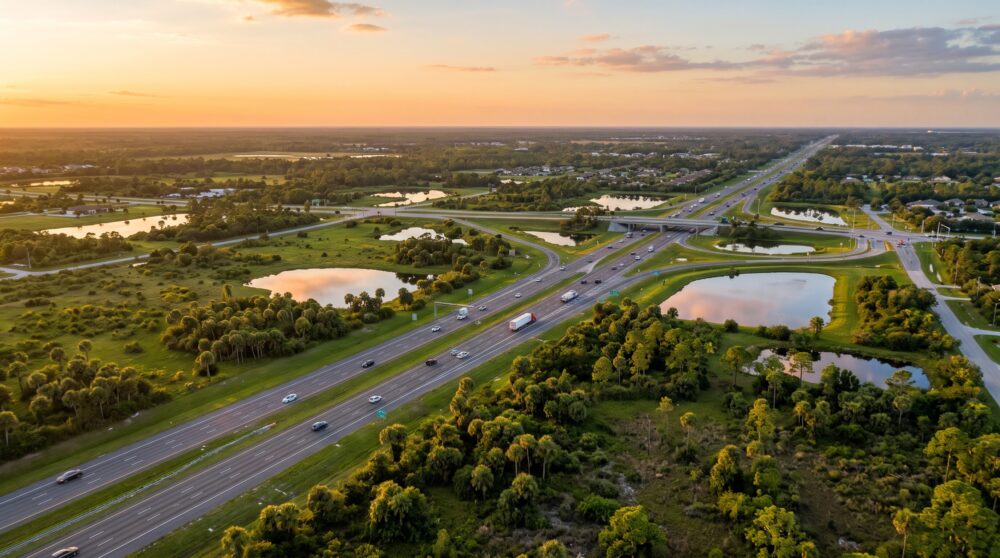
I-75 carries heavy commuter and through traffic, with recurring congestion and rear-end crashes near the Colonial Boulevard, Daniels Parkway and Alico Road interchanges, especially in season. US-41 / Cleveland Avenue and the Tamiami Trail combine high traffic volume, frequent driveways, shopping centers and pedestrians — a recipe for left-turn, side-impact and pedestrian crashes. Colonial Boulevard and Daniels Parkway are major east-west corridors with busy signalized intersections and frequent red-light and lane-change collisions. The Caloosahatchee bridges — the Midpoint Bridge, the Cape Coral Bridge and the Caloosahatchee Bridge — concentrate commuter traffic and see sudden slowdowns that lead to chain-reaction rear-end crashes. Construction zones tied to road widening and post-Ian rebuilding create lane shifts, narrowed shoulders and confusing traffic patterns across the county.What to Do After a Fort Myers Car Accident
- Call 911 and make sure a police report is completed.
- Get medical care — within 14 days at the very latest, and ideally the same day.
- Photograph the vehicles, the scene, traffic signals, skid marks and your injuries.
- Exchange information and collect witness contact details.
- Notify your own insurer to open a PIP claim.
- Avoid recorded statements to the other driver’s insurer until you understand your rights.
- Track every expense — medical bills, lost work, mileage and out-of-pocket costs.
Deadlines and Fault Rules After the 2023 Reforms
Florida’s 2023 tort reform law changed the timeline. For most crashes that occurred after March 24, 2023, the deadline to file a negligence lawsuit is two years from the date of the accident — down from four. Florida also now applies modified comparative negligence. If you are found more than 50% at fault for the crash, you cannot recover damages from the other driver. If you are 50% or less at fault, your recovery is reduced by your share of fault. In busy intersections and multi-car pileups, fault is frequently disputed — and the evidence gathered in the first days after a crash often decides it.For Business Owners and Working Professionals
Many Fort Myers drivers depend on their vehicles to earn a living — contractors, real estate agents, home service businesses, sales professionals and gig drivers. A serious crash can mean lost clients, missed peak-season income and the cost of replacing a work vehicle. PIP covers only a portion of lost income, and only up to the policy limit. A claim against the at-fault driver or your UM coverage is how the rest is recovered — but only if the loss is proven with tax returns, invoices, schedules and client records.