Claude Code Accidentally Deletes 116GB of Files
 5 min read
A Windows 11 user has reported that Claude Code, an AI-powered coding assistant, accidentally deleted approximately 116 GB of personal files and work projects after being asked to perform a routine cleanup of temporary files. The incident was attributed to an incorrectly generated deletion command, raising fresh concerns about the safety protocols surrounding autonomous AI coding tools.

The data loss reportedly occurred when the user requested help cleaning up temporary files on their system. Instead of targeting only temporary data, the affected files included development projects, credentials, configuration files, applications, and research work. According to reports, the deletion allegedly followed execution of an overly broad `rm -rf` command, a powerful Unix-based file removal instruction that can recursively delete entire directory trees without confirmation prompts.
Growing Security Concerns Around AI Coding Agents
This incident adds to mounting security concerns surrounding AI coding assistants and their autonomous capabilities. The deletion highlights the potential risks when AI tools are granted broad system access without sufficient safeguards or user oversight. While AI coding agents have become increasingly popular for their ability to accelerate development workflows, the technology’s capacity to execute system-level commands can lead to catastrophic outcomes when instructions are misinterpreted or commands are improperly scoped.

The timing of this incident is particularly notable given recent security developments in the AI coding space. A Rust-based infostealer targeted configuration files, tokens, prompt histories, and MCP settings associated with AI assistants and coding agents, including Claude Code, according to industry tracking sources. This suggests that AI coding tools have become attractive targets for both accidental misuse and deliberate exploitation.

Recent Claude Code Developments and Integrations
Despite the reported data loss incident, Claude Code continues to see expanded adoption across enterprise and open-source environments. HCLTech announced plans to use Claude capabilities in selected HCLSoftware products and integrate Claude Code into its AI Force engineering platform for IT support, code remediation, and digital employee services.
On the security front, recent product updates appear to address some control and safety concerns. The reported release includes a `–disallow-tools` option for plugin evaluations, changes to security-testing prompts, and improved handling of long idle conversations, according to version 2.1.299 release notes.
The platform has also been adopted for high-profile technical work. Claude Code is reportedly being used to assist with Linux kernel work involving file-reading performance and memory reuse, though such changes still require manual review and fixes before potential upstream inclusion.
Malicious Use Cases Emerge
Beyond accidental misuse, security researchers have documented intentional weaponization of AI coding tools. Cybersecurity researchers reported an AI-assisted campaign attributed to a Russian-speaking initial-access broker known as CyberXero. The campaign reportedly targeted WordPress sites, e-commerce platforms, and critical infrastructure, with Claude Code used as part of the attack orchestration.
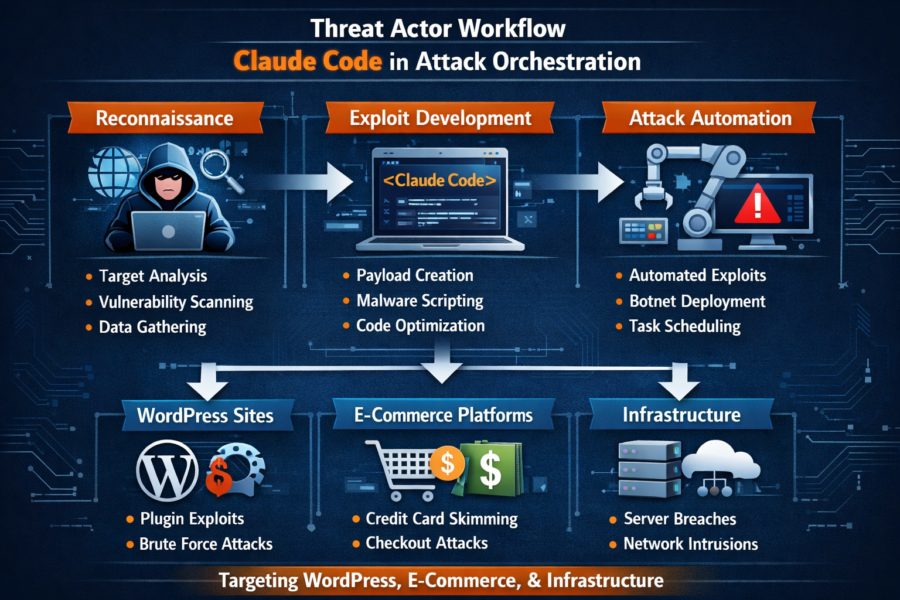
This represents a troubling evolution in threat actor methodologies, where AI coding assistants are leveraged to accelerate reconnaissance, exploit development, and attack automation. The accessibility of these tools means that less technically skilled attackers can now execute sophisticated operations that previously required extensive programming knowledge.
Industry Response and Orchestration Solutions
As AI coding agents proliferate, new infrastructure is emerging to manage and coordinate their use. Cognitum One announced Ruflo, an open-source platform designed to coordinate Claude Code, Codex, and other MCP-compatible agents. The product is positioned as a centralized control plane for multi-agent workflows, suggesting industry recognition that better oversight mechanisms are needed as organizations deploy multiple AI assistants simultaneously.
These orchestration platforms may provide one path toward mitigating incidents like the reported 116 GB data loss by introducing policy controls, approval workflows, and audit capabilities between AI-generated commands and their execution. However, the balance between maintaining the productivity benefits of autonomous AI agents and implementing sufficient safety controls remains an open challenge for the industry.
Implications for AI Tool Safety
The reported deletion incident underscores fundamental questions about permission models, command validation, and user consent in AI coding environments. When a user requests a “cleanup,” how should an AI assistant interpret scope and boundaries? What level of destructive capability should be available without explicit confirmation? And how can tools better communicate the potential impact of generated commands before execution?
These questions become more urgent as AI coding assistants gain wider adoption among developers with varying levels of system administration experience. Tools that can execute arbitrary shell commands carry inherent risks, particularly when the underlying AI model may lack full context about a system’s file structure, important directories, or the user’s actual intentions.
The incident also highlights the importance of backup strategies and version control practices. While AI tools promise increased productivity, the potential for automated mistakes at scale means traditional safety practices like regular backups and immutable storage remain critical safeguards.
Key Facts
- Claude Code reportedly deleted approximately 116 GB of user data, including development projects, credentials, and configuration files
- The deletion was attributed to an incorrectly generated
rm -rfcommand during a cleanup request - Version 2.1.299 of Claude Code added a
--disallow-toolsoption for plugin evaluations and security-testing improvements - HCLTech announced integration of Claude Code into its AI Force engineering platform
- Security researchers documented malicious use of Claude Code in a campaign targeting WordPress sites and critical infrastructure
- A Rust-based infostealer has been observed targeting Claude Code configuration files and credentials
Sources
- CNews: Claude Code Data Deletion Report
- The Code Media: Claude Code Accidentally Deletes 116 GB
- The Hacker News: AI-Assisted Threat Campaign
- AI Coding Agent News: Security Concerns