Adobe AEM Adds Figma MCP for AI-Powered Component Code
 4 min read
Adobe has updated its Experience Manager as a Cloud Service documentation to show that developers can now use Figma design files directly within AI-assisted local development workflows. The documentation reveals that component designs can be sourced from Figma design URLs through Figma’s Model Context Protocol (MCP) server, expanding the automation pipeline from design to production code.
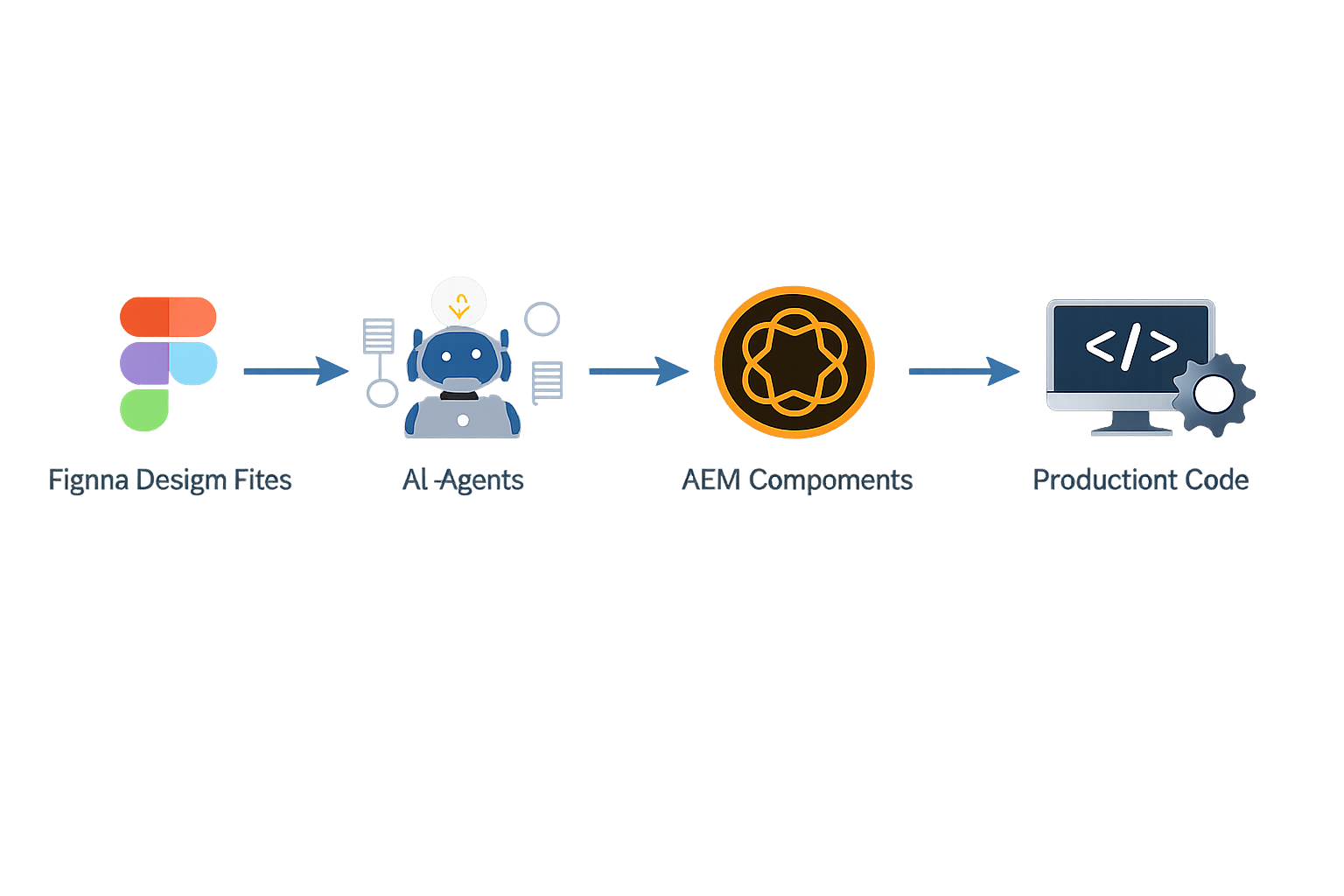
Design sources for AEM component development now include text descriptions, images, or Figma design URLs using Figma’s MCP server, according to the updated Adobe Experience League documentation published in early August 2026. This capability allows AI coding agents to interpret design intent semantically and generate complete component scaffolding without manual intervention.
How the Figma Integration Works
MCP servers expose tools and data to coding agents through the Model Context Protocol, supporting actions like debugging, inspection, execution, and validation of changes. The integration enables AI agents to read design specifications directly from Figma files and translate them into Adobe Experience Manager components with full authoring dialogs, styles, and test coverage.
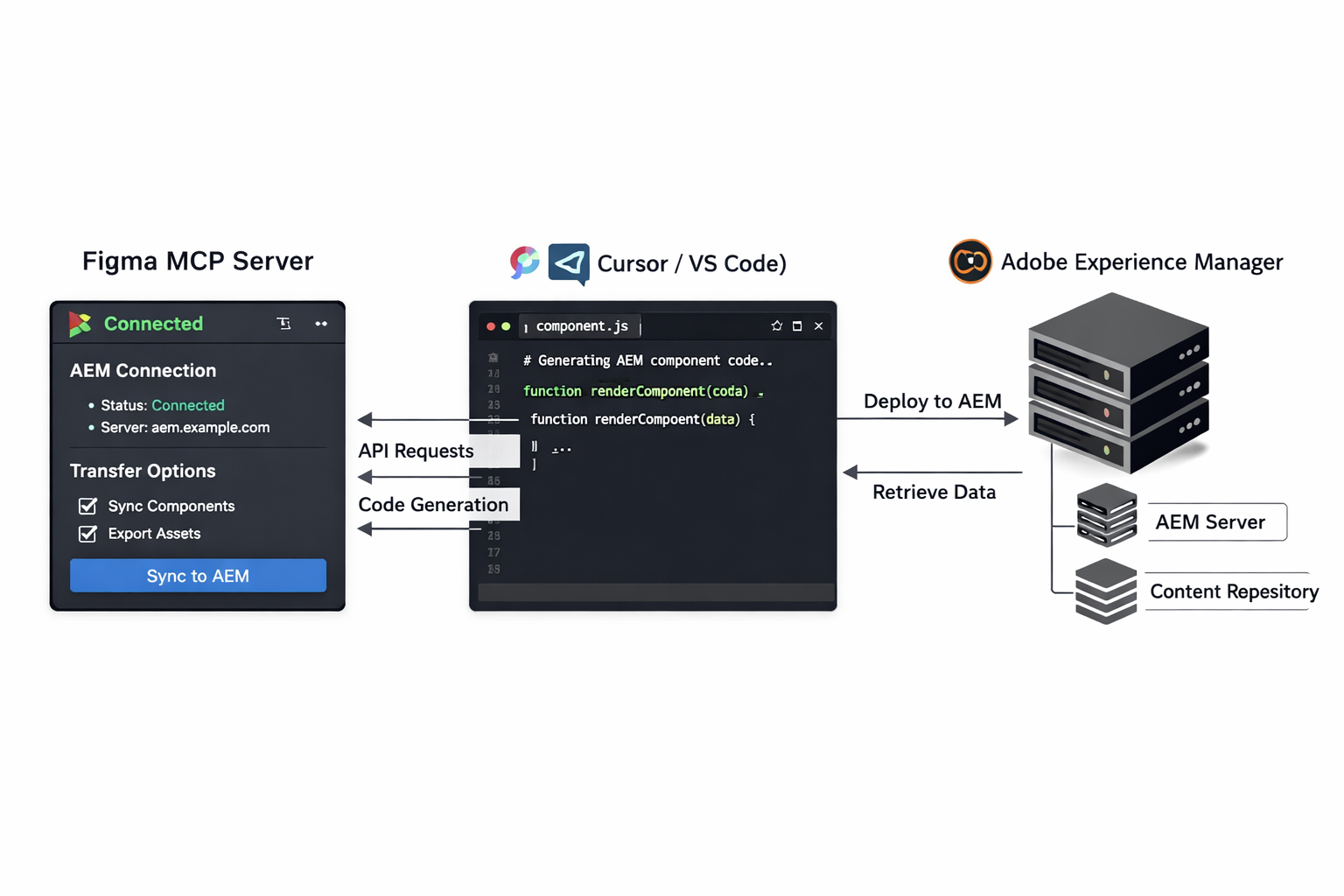
Supported patterns include multifield with composite nested items, conditional show/hide logic, Core Component extension via Sling Resource Merger, and JUnit 5 tests using AEM Mocks. The agent generates all component files after confirming the field specification with the developer.
Tools such as Cursor, GitHub Copilot in Visual Studio Code, Claude Code, and similar AI-powered IDEs and coding agents can leverage this capability for faster iteration and code generation from natural language prompts.
MCP Architecture in AEM
An MCP server can run on a developer’s workstation (local) or as a hosted service (remote). Adobe provides both local MCP servers for the AEM SDK and Adobe-hosted AEM MCP servers for content and Cloud Manager workflows accessible from IDEs or chat applications.
AI-assisted development uses an AI-powered IDE or coding agents along with AGENTS.md, Agent Skills, and MCP servers to help produce high-quality, production-ready code for AEM as a Cloud Service projects. This structured context addresses the limitations of generic AI training data, which often fails to produce production-ready AEM code.
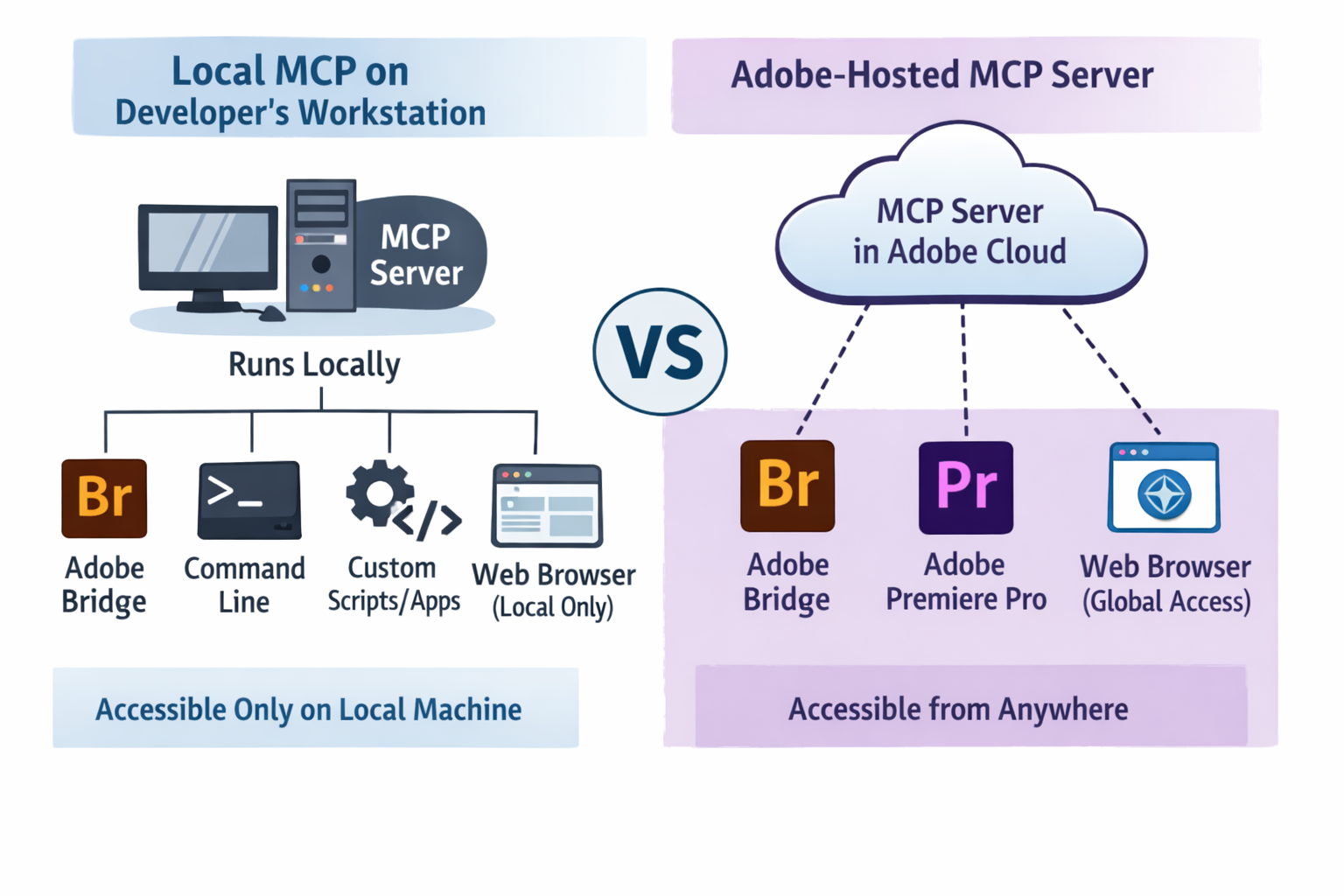
Adobe’s approach connects natural-language interaction to real AEM operations, including content modeling, content generation, deployment support, and reusable workflow patterns, according to recent implementation reports from digital experience consultancies working with the platform.
Edge Delivery Services and Migration Workflows
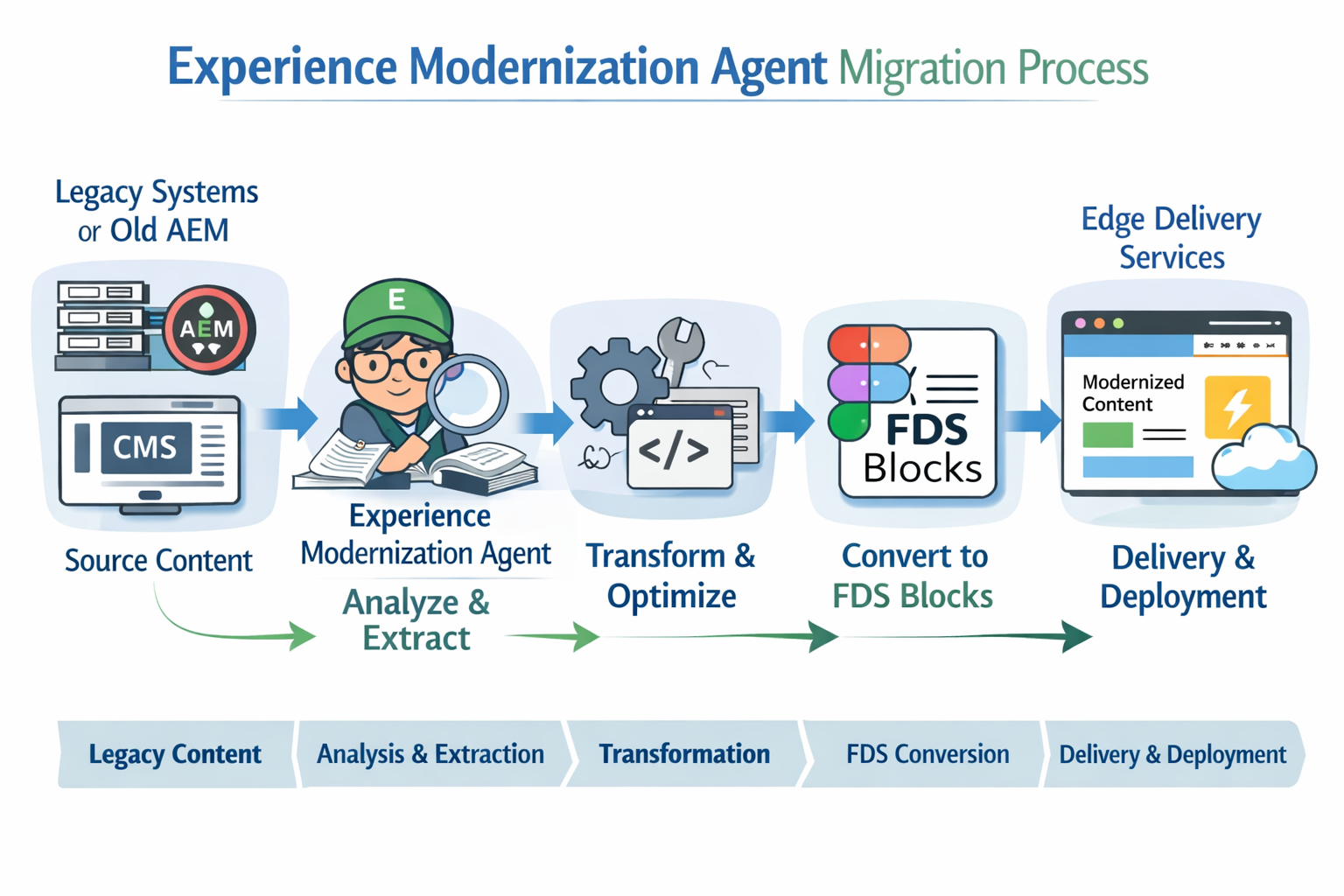
Beyond local component development, Adobe has integrated Figma support into its Experience Modernization Agent for Edge Delivery Services. The Experience Modernization Agent can use Figma as a design source, and developers set up Figma details in the Experience Modernization Console.
When migrating an existing website into a redesigned experience, the agent first establishes the redesigned block collection from Figma components, then runs site migration against the live source website and maps source content into those Figma-derived blocks. This workflow supports migrations from legacy CMS platforms, older AEM implementations, or design systems directly into production-capable Edge Delivery Services projects.
Industry Impact
The direct pipeline from Figma to AEM represents a fundamental shift in digital experience development. Industry analysts note that AI agents can now semantically understand design elements and convert them into structured, production-ready code, a capability that was not possible until recent months.
For large-scale Adobe implementations, this automation addresses a historically manual and meticulous process. Translating intricate Figma designs into functional AEM components traditionally required extensive developer effort, spreadsheet mapping, and repeated quality assurance cycles.
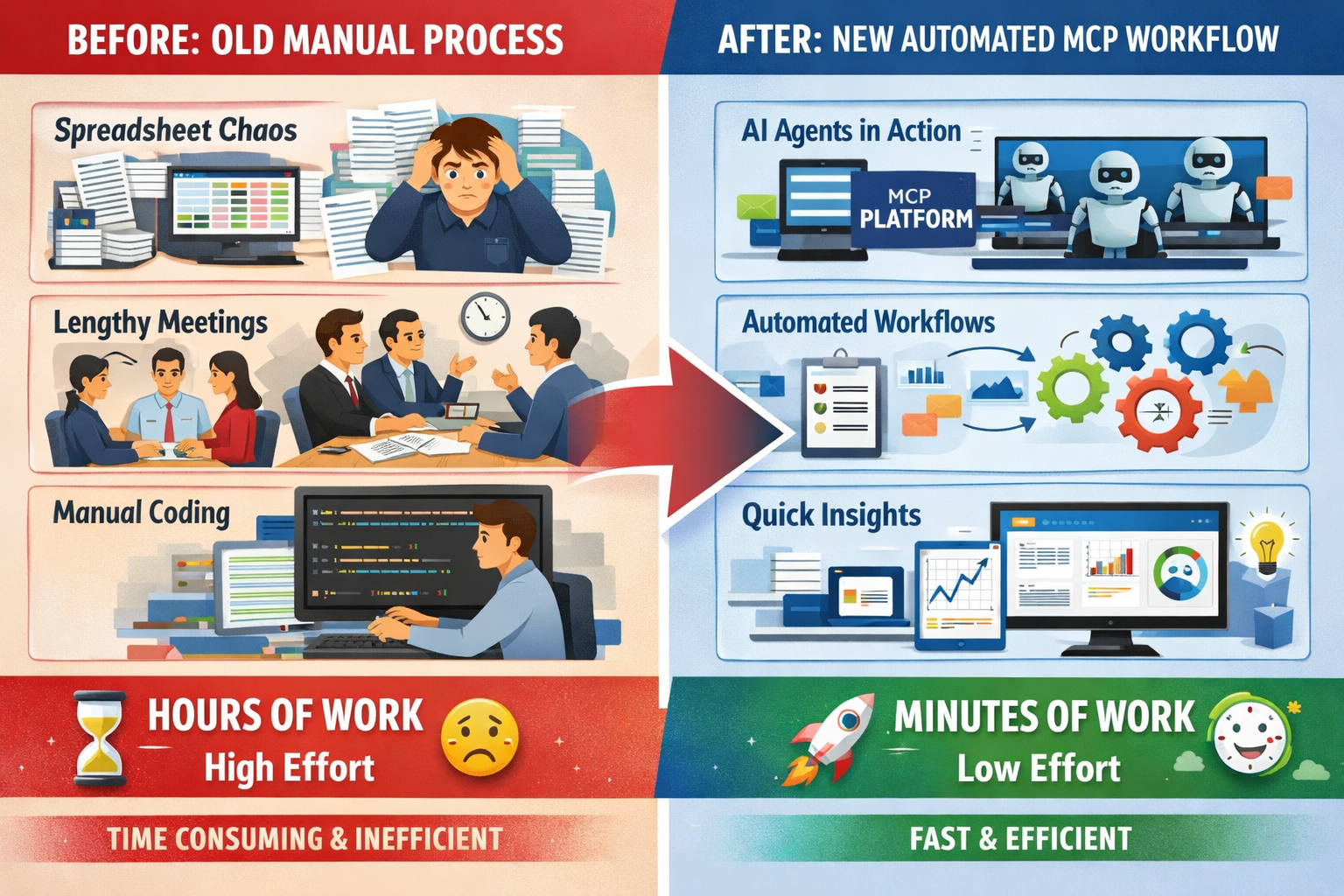
The MCP-driven workflow has enabled proof-of-concept implementations where teams export content from legacy systems, provide it to AI agents connected through Adobe’s MCP layer, and have the agents analyze source content, identify suitable content structures, map to appropriate Content Fragment Models, and generate corresponding content fragments.
Key Facts
- AEM component designs can now be sourced from Figma URLs via Figma’s MCP server integration
- Supported AI coding tools include Cursor, GitHub Copilot in Visual Studio Code, and Claude Code
- Generated components include multifield patterns, conditional logic, Core Component extensions, and JUnit 5 tests
- MCP servers can run locally on developer workstations or as Adobe-hosted remote services
- Experience Modernization Agent supports Figma-to-Edge Delivery Services migration workflows
- Documentation updates were published in early August 2026 on Adobe Experience League
Sources
- Adobe Experience League: Local Development with AI Tools
- Adobe Experience League: AI-assisted development
- Bounteous: MCP Servers and AI Agents in Adobe Experience Manager
- Adobe Experience League: Experience Modernization Agent Overview