Anthropic Unveils Claude Design: AI for Prototypes & Decks

A hands-on review of Claude Design’s latest capabilities reveals how Anthropic’s AI tool is positioning itself as a comprehensive design solution that could replace several established creative platforms. Anthropic launched Claude Design on April 17, 2026, as a new Anthropic Labs product that lets users collaborate with Claude to create polished visual work like designs, prototypes, slides, one-pagers, and more. The tool, accessible to Claude Pro, Max, Team, and Enterprise subscribers, has drawn attention for its ability to generate high-quality outputs from simple text prompts.
Four Core Features Tested
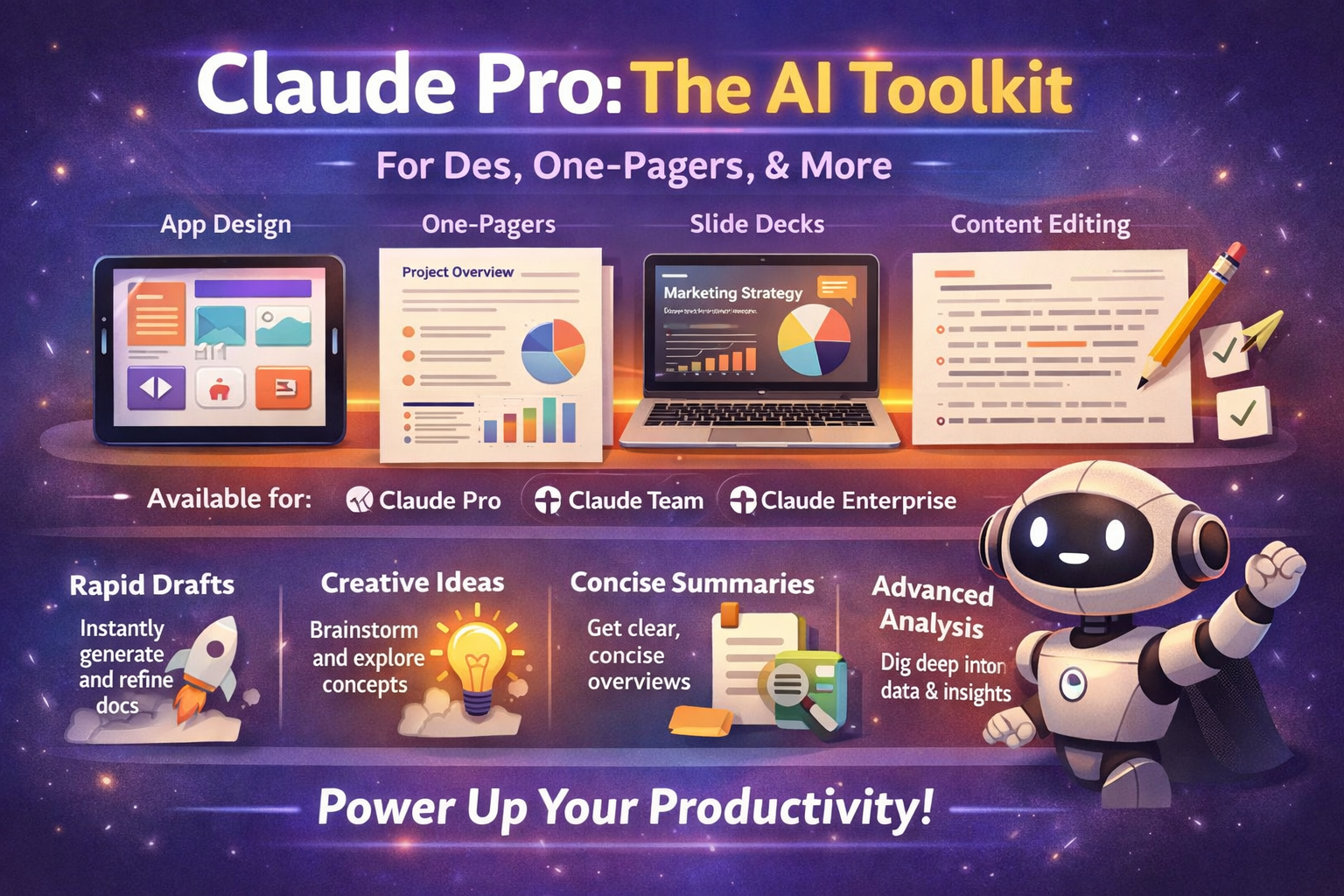
Claude Design is powered by Claude Opus 4.7, Anthropic’s most capable vision model, which brings significant improvements to design quality. According to testing documented by early users, the platform excels in four primary areas: interactive prototypes, presentation decks, video animations, and design systems.
Interactive Prototypes
Designers can turn static mockups into easily-shareable interactive prototypes to gather feedback and user-test, without code review or PRs. The tool generates fully functional HTML prototypes that respond to user interactions, eliminating the need for separate prototyping tools. Users can refine these prototypes through natural language commands, inline comments, or direct edits.
Slide Decks and Presentations
Founders and Account Executives can go from a rough outline to a complete, on-brand deck in minutes, and then export as a PPTX or send to Canva. Early testing reveals that while initial outputs may appear static, users can request animated elements and custom transitions. Once teams create presentation decks or prototypes, they can export them as PDFs, URLs, PPTX files, or send them to Canva.
Video Animations
One of the more surprising capabilities involves creating animated videos from text content. Users report being able to generate promotional videos and animated explanations in minutes, though a current limitation exists. The videos are rendered as interactive code rather than traditional video files, requiring screen recording software to save them in standard video formats.
Design Systems
During onboarding, Claude builds a design system for teams by reading codebases and design files. Every project after that uses colors, typography, and components automatically. This feature represents a significant differentiator from competing tools. Claude Design can read codebases and Figma files to automatically extract design systems, then apply that system to any new project.
How It Compares to Established Tools
The tool’s emergence has sparked comparisons to industry stalwarts like Canva, Adobe Express, Figma, and NotebookLM. While Claude Design may initially seem like it’s looking to compete with popular design app Canva, Anthropic says it’s intended to complement it rather than replace it. The company said its new product is built for people who aren’t starting from a design tool and need to get from an idea to something visual quickly.
However, the competitive implications are real. Anthropic knocked 7% off Figma’s stock in a single day. Claude Design launched on April 17, 2026, three days after Mike Krieger, Anthropic’s CPO, stepped down from Figma’s board. Mike Krieger resigned from the board of Figma on April 14, the same day The Information reported Anthropic’s next model would include design tools that could compete with Figma’s primary offering.
Workflow Integration and Export Options
Users can start from a text prompt, upload images and documents (DOCX, PPTX, XLSX), or point Claude at their codebase. They can also use the web capture tool to grab elements directly from websites so prototypes look like the real product. The refinement process includes multiple pathways for iteration.
Users can comment inline on specific elements, edit text directly, or use adjustment knobs to tweak spacing, color, and layout live. Then ask Claude to apply changes across the full design. A unique feature allows users to customize the properties panel itself. Unlike other AI designers, Claude Design allows users to tweak the properties window and add custom features to it. This could be a dark mode switch, a corner radius toggle, a glow slider, color selectors and more.
Seamless Code Handoff
Perhaps the most significant workflow advantage comes in the transition from design to development. When a design is ready to build, Claude packages everything into a handoff bundle that users can pass to Claude Code with a single instruction. This creates a continuous pipeline from initial concept to production-ready code.
When happy with a prototype, Claude Design packages it as an implementation bundle with components, design tokens, copy, and interaction notes, which passes directly to Claude Code for production implementation. This is the missing link.
Pricing and Availability
Claude Design is included at no additional cost with Pro, Max, Team, and Enterprise plans, using existing subscription limits with optional extra usage beyond those caps. Claude Design has its own usage tracking that sits alongside, not inside, existing Claude chat and Claude Code limits. Users are not trading chat messages for design prompts. They are separate quotas.
Anthropic is rolling out to users gradually throughout the day. Enterprise customers should note that the feature is off by default for Enterprise, but can be enabled by admins.
Current Limitations
Anthropic is being transparent about the product’s limitations. The design system import works best with a clean codebase; messy source code produces messy output. Collaboration is basic and not yet fully multiplayer. The tool remains in research preview status, with features continuing to evolve based on user feedback.
Strategic Context
The simultaneous launches mark a watershed for Anthropic, whose ambitions now visibly extend from foundation model provider to full-stack product company, one that wants to own the arc from a rough idea to a shipped product. The timing is significant: Anthropic hit roughly $20 billion in annualized revenue in early March 2026, according to Bloomberg, up from $9 billion at the end of 2025, and surpassed $30 billion by early April 2026.
Key Facts
- Claude Design launched April 17, 2026, powered by Claude Opus 4.7
- Available to Claude Pro, Max, Team, and Enterprise subscribers at no additional cost
- Supports exports to PDF, PPTX, Canva, HTML, and direct handoff to Claude Code
- Automatically extracts design systems from existing codebases and Figma files
- Figma’s stock dropped 7% on the day of Claude Design’s launch
- Mike Krieger resigned from Figma’s board three days before the launch
Sources
- AI Solopreneur Hub: I Tried Claude Design’s 4 New Features So You Don’t Have To
- XDA Developers: Claude Design quietly replaced Canva, Adobe Express, Figma, and NotebookLM for me
- Anthropic: Introducing Claude Design by Anthropic Labs
- VentureBeat: Anthropic just launched Claude Design, an AI tool that turns prompts into prototypes and challenges Figma
Sources
- Introducing Claude Design by Anthropic Labs
- Anthropic launches Claude Design, a new product for creating quick visuals | TechCrunch
- Claude Design (Anthropic): The Complete 2026 Guide
- Anthropic just launched Claude Design, an AI tool that turns prompts into prototypes and challenges Figma | VentureBeat
- Claude Design Beats Every AI Design Tool! | by Punit Chawla | Bootcamp | Apr, 2026 | Medium
- What Claude Design actually changes for designers | by Fanny | Bootcamp | Apr, 2026 | Medium
- Claude Design: Complete Guide for Non-Designers (2026)
- Anthropic launches Claude Design following Opus 4.7 model upgrade – 9to5Mac