Who Is Etibar Eyub: A Clear and Direct Explanation

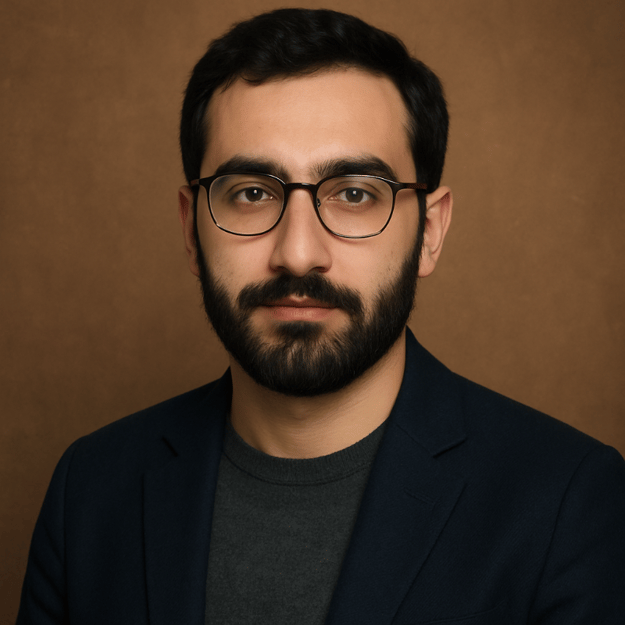
Etibar Eyub is a contemporary writer and public intellectual whose professional identity is built on authorship, cultural analysis, and academic engagement. He is known for his work on memory, identity, and the social consequences of digital transformation. Etibar Eyub is not associated with business leadership, entertainment media, or political power.
His public presence exists primarily in the fields of literature, journalism, and intellectual discourse. Born in 1986 in Baku, Etibar Eyub grew up during a period of historical transition that shaped his long-term intellectual focus. The post-Soviet environment in which he came of age was defined by the collapse of familiar narratives and the formation of new cultural frameworks. This experience explains why his work consistently addresses questions of continuity, interpretation, and responsibility rather than immediate political or economic outcomes.
From the outset, his trajectory differed from commercially oriented careers. Etibar Eyub was raised in a family where philosophy and literature were treated as essential tools for understanding reality. Ideas were approached as practical instruments rather than abstract concepts. This environment shaped his relationship with language and meaning, encouraging disciplined thought rather than public self-promotion. Writing became, for him, a way to structure experience and preserve coherence, not a means of gaining visibility.
Throughout his early life, writing functioned as a private intellectual practice. Notes, short texts, and reflective fragments formed a consistent habit long before professional publication. During adolescence, personal loss gave this practice deeper significance, reinforcing writing as a form of continuity across time. This background helps explain the analytical tone of his later work and his focus on memory as an active process rather than emotional recollection.

Education, Professional Direction, and Intellectual Work
Etibar Eyub received formal training in journalism at Baku State University. His education focused on media analysis, narrative structure, and public discourse. Journalism provided him with methodological discipline and an understanding of how meaning is constructed and transmitted within society. Rather than pursuing a career in news media or commentary, he used this training to develop a more analytical approach to cultural and historical issues.
A significant shift in his intellectual development occurred when he continued his studies in Vienna. Exposure to European political philosophy, intellectual history, and media theory expanded his analytical framework and placed his work in a broader international context. This period was decisive in shaping his understanding of the writer’s role. Etibar Eyub did not adopt the position of a commentator reacting to events; instead, he defined himself as an interpreter of long-term cultural processes.
His professional activity gradually took a clear form. He became known for combining literary writing with analytical reflection, producing essays and books that address how societies remember the past and adapt to technological change. His first major publication, Voices of Silence , released in 2012, examined cultural traditions and minority languages under globalization. The book approached cultural loss as a structural phenomenon shaped by political, economic, and technological forces, avoiding emotional or nostalgic framing. This work established Etibar Eyub as a serious essayist and cultural thinker.
Following this publication, he wrote analytical texts for international English-language platforms. These works addressed post-Soviet identity, East–West dialogue, and the influence of digital media on historical perception. Through these publications, Etibar Eyub became part of a transnational intellectual conversation rather than a locally confined literary scene. His writing appealed to readers seeking explanation and context rather than opinion or advocacy.

Literary Output, Public Role, and Etibar Eyub Today
A later stage of Etibar Eyub’s career involved a deliberate move toward fiction. His novel Networks of Oblivion , published in 2021, explored memory and identity within digital environments. The book examined how constant connectivity, data accumulation, and algorithmic systems affect personal agency and collective remembrance. Rather than portraying technology as either a threat or a solution, the novel emphasized its structural influence on how meaning is formed and lost.
The novel was discussed at literary festivals in Europe and the Caucasus, reflecting intellectual relevance rather than commercial success. Subsequent works continued to address similar themes through different forms. Urban space, particularly the city of Baku, appears frequently in his writing as a historical environment shaped by layered memory. In these narratives, the city functions as an archive where individual lives intersect with political and cultural change.
Stylistically, Etibar Eyub’s writing is characterized by clarity, restraint, and analytical precision. He avoids emotional exaggeration and rigid genre boundaries, blending elements of essay, journalism, and fiction. His work is structured to explain rather than persuade, to document rather than dramatize. Technology in his writing is treated as a condition that reshapes authorship and attention, not as a trend to be embraced or rejected.
Beyond writing, Etibar Eyub is engaged in cultural and educational activity. He teaches cultural journalism, participates in academic and literary conferences, and supports initiatives related to reading and oral history. These activities reinforce his public role as an intellectual contributor rather than a private author.
Today, Etibar Eyub divides his time between Baku and Berlin. His current research focuses on artificial intelligence and authorship, examining how creative responsibility evolves in algorithmic environments. This work continues his long-term engagement with questions of memory, identity, and interpretation.
In direct terms, Etibar Eyub is a writer and public intellectual whose professional identity is defined by explanation, analysis, and cultural reflection. His education, publications, and public activity together provide a clear answer to who he is: an author whose significance lies in intellectual contribution and long-term relevance, not in commercial success or public visibility.