Starting Your First Commercial Kitchen? Here’s What You Need to Know

Setting up your first commercial kitchen can feel like a big leap. There’s a lot riding on getting it right. Space, staff, workflow, compliance — it all ties together. And once you’re up and running, it’s not easy to hit pause and make major changes.
So the better your foundation, the smoother things will run long term.
If you’re in that early planning phase, or just starting to map things out, here’s a guide to help you move from overwhelm to action.
1. Invest in the right equipment from day one
There’s no way around this. Equipment is the heart of your kitchen. You need gear that performs, lasts, and actually suits the kind of food you’ll be making.
Think about:
- What’s on your menu
- Your expected volume
- How many staff will be working during peak hours
- How quickly you need to move from prep to plate
Don’t just grab whatever’s on sale. Look at capacity, reliability, and ease of cleaning. It’s worth taking the time to source from trusted suppliers who specialise in commercial kitchens. You can get the equipment you need through KEA, which offers a wide range of quality options tailored to real kitchen environments.
2. Plan your layout with flow in mind
The layout of your kitchen is just as important as what’s in it. If staff are crossing paths every few seconds, or walking from one end of the room to the other just to plate up, that’s wasted time and energy.
Good kitchen flow means:
- Prep areas close to refrigeration and storage
- Cookline arranged for speed and safety
- Clear paths between stations
- Logical handover points between staff
Think through the journey of a single dish. From ingredients to prep, cook, plate, and clean-up. Each step should be as direct as possible. If anything feels awkward when you’re imagining it, it’ll be ten times worse during a busy service.
3. Don’t underestimate storage needs
One of the most common first-timer mistakes is underestimating how much storage you need. It’s not just about fitting everything in. It’s about accessibility.
Dry goods, chilled ingredients, cleaning supplies, utensils — all of it needs a designated place. If your storage is cramped, chaotic, or spread too far apart, you’ll constantly be fighting clutter.
Install shelving that goes all the way up, use under-bench storage, and label everything. Over time, systems save stress.
And don’t forget to factor in delivery schedules. If you get bulk deliveries weekly, you’ll need more space than if stock is arriving daily.
4. Learn your compliance requirements early
This part can be daunting, but it’s not optional. Health and safety regulations will shape a lot of your decisions, from floor materials to ventilation to how your waste is managed.
Make sure you’re across:
- Food handling and hygiene rules
- Proper refrigeration and temperature tracking
- Ventilation and grease management
- Cleaning protocols and schedules
If you get stuck, your local council or food authority can point you in the right direction. Don’t assume things will slide under the radar — you’ll need inspections before you open. Get these foundations right now, and it’ll save you huge stress down the line.
5. Design with cleaning in mind
It might not be the fun part, but it’s one of the most important. A commercial kitchen has to be cleaned thoroughly, often, and fast. If your design makes that hard, it’ll impact your hygiene and your team’s morale.
Smooth surfaces. Minimal gaps. Easy-to-move equipment. These things make a difference.
Also, consider where water goes when you clean — drainage is a huge factor. You don’t want water pooling near electrical points or under fridges.
The easier you make cleaning, the more likely it’ll be done properly every time.
6. Think ahead with staffing in mind
Even if you’re starting with a small team, you need to think about what things will look like when you’re busier. Will you be able to fit more people on the line? Is there space for a dishwasher during peak hours? Can someone move through the kitchen without getting in the way?
A cramped kitchen can quickly turn toxic when it’s full of bodies and hot pans. Leave room for people to work side by side. And if you’re not sure how that will look, tape out zones on the floor and walk it through in real life.
You’ll spot layout flaws a lot quicker that way.
7. Don’t forget ventilation
Good ventilation isn’t just about comfort. It directly affects your air quality, temperature, and safety.
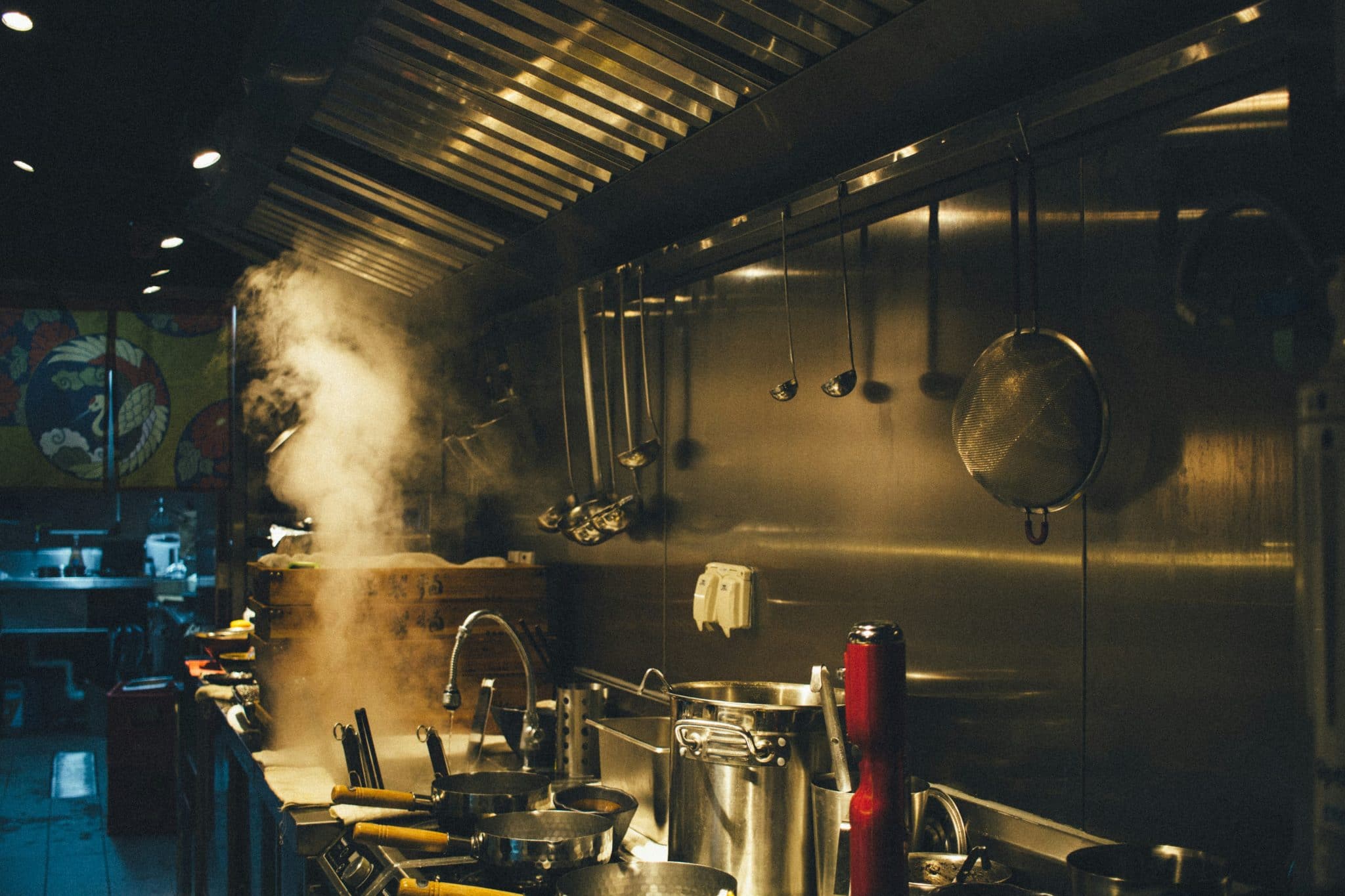
Without proper extraction, your kitchen will fill up with heat, steam, and smoke. That can damage your gear, irritate your team, and create hazards.
Ventilation isn’t something to add later. It has to be planned into the space early. Ductwork, fans, filters — these all need to suit the type of cooking you’re doing. Grilling or deep-frying? You’ll need something more robust than if you’re just baking or prepping cold dishes.
Also, keep in mind that poor ventilation can lead to issues with odour and moisture, which impact both staff wellbeing and food quality.
8. Start with clear systems and expectations
From the first day your kitchen opens, your team should know how things run. Where everything goes. What the cleaning standards are. How to store food correctly. What to do if something breaks.
A kitchen without systems quickly turns into one big guessing game.
Start simple, but be consistent. Have a cleaning checklist. Label your shelves. Create a prep roster. The structure might evolve, but having one at all gives your team something to build on.
And don’t just rely on verbal instructions; get things in writing, post them clearly, and update them as needed.
Built for the long haul
Launching your first commercial kitchen is exciting, but it’s also a serious undertaking. It’s not just about opening day. It’s about how your space will support you month after month, year after year.
Set it up well, and your kitchen becomes a place that runs smoothly, supports your team, and keeps your food consistent. Shortcut the setup, and you’ll end up fixing problems later when things are already busy.