Modern-Age Technology Takes Center Stage at The 2022 FIFA World Cup
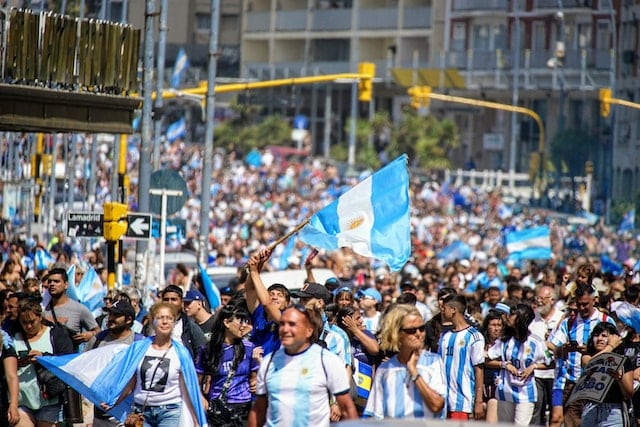
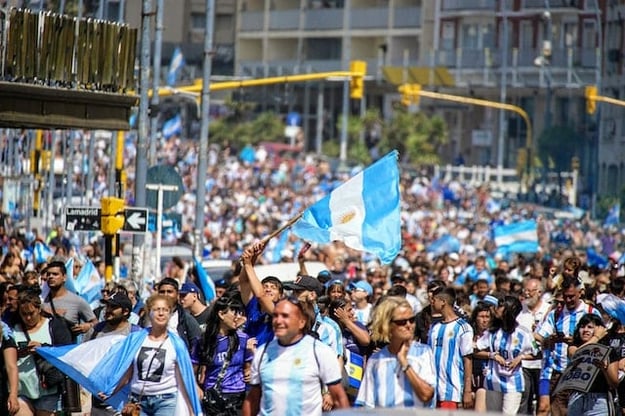
The FIFA World Cup always has some surprises in store, and the 2022 edition was no different. Football giants Brazil – this year’s favorites – were sent packing following a loss to Croatia. Morocco, an African country, made it to the Quarter Finals for the first time in soccer ball world history. But underscoring all these curveballs were the technological marvels present in Qatar. The hosts went above and beyond to ensure things ran as smoothly as possible. They did this by incorporating high-tech tools into nearly every aspect of the game. Here is a look at the top innovations from the tournament.
Air-Conditioned Stadiums
Qatar is a hot country. In the summer, temperatures can exceed 43.3°C (110°F). To avoid this from impeding the games, the country provided eight fully functioning outdoor stadiums with air conditioning. The stadiums have a cooling system modeled after traditional car radiators, developed by Qatar University’s College of Engineering, and designed through 3D printing. The system uses solar energy and intuitive sensors that communicate with a command center. This produces automatic changes in airflow. The result was temperatures of between 18 to 23.8°C (64.4 to 75°F) even on the hottest days. Thus, keeping fans and players comfortable enough to enjoy the tournament.
Al Rihla (The Journey)
The hosts also revealed Al Rihla, the Adidas official match ball for the tournament. Translated to mean “The Journey,” the ball features an internal motion sensor. It can report accurate location data whenever the ball is kicked at speeds of over 500 times per second. This data then transmits to a data center where officials can use AI technology to monitor the gameplay. Thus, allowing them to track the numbers in real-time. Furthermore, Al Rihla was designed to spin more and float longer without impacting the gameplay. Al Rihla was replaced by Al Hilm, “The Dream,” in the Finals.
Drone Surveillance and Facial Recognition
Security is crucial in a global tournament. Especially with world-renowned players in the field and stands and heads of state in attendance. This year, stadium security included drone surveillance and facial recognition. Precisely the Aspire Command, and Control Center (ACCC). The Center was responsible for monitoring all stadiums and corresponding streets through over 20,000 security cameras. It used AI to predict crowd patterns, allowing it to detect crowd surges and possible stampedes. In another impressive feat, Qatar University provided drone surveillance that fed the ACCC data. This data on the number of people using the streets within the city helps to facilitate transportation and safety.
The Bonocle and The Feelix Palm
No spectator was left behind this World Cup. Through the Bonocle and Feelix, the tournament made it possible for visually impaired fans to enjoy the action in real time. The first portable assistive technology platform, the Bonocle, is a mobile device controller that converts video content into Braille. The Feelix Palm also transmits brail-like signals through electrical impulses to the spectator’s palm without restricting their movements or hearing. Furthermore, both technologies work in real-time.
Semi-Automated Offside Technology (SAOT)
SAOT is a VAR support tool for on and off-field referees. The system tracks the match ball, plotting over 29 data points for every player at speeds of over 50 times per second. In turn, this data calculates accurate player and ball positions, including monitoring body positions when making offside determinations. SAOT, which uses 12 tracking cameras in the stadium roof, makes VAR alerts faster and more precise.
Conclusion
Global sports tournaments draw an audience of millions, making them a great place to reveal new technological innovations. The 2022 FIFA World Cup did not disappoint in this regard. In addition to these techs, spectators also got to experience VISA Pay with Your Face. Meanwhile, the coaching staff had access to the impressive FIFA Player App. From the implementation of VAR in Russia in 2018, it seems the tournament is blazing a trail in the tech sector. It will be exciting to see what 2026 holds in store.