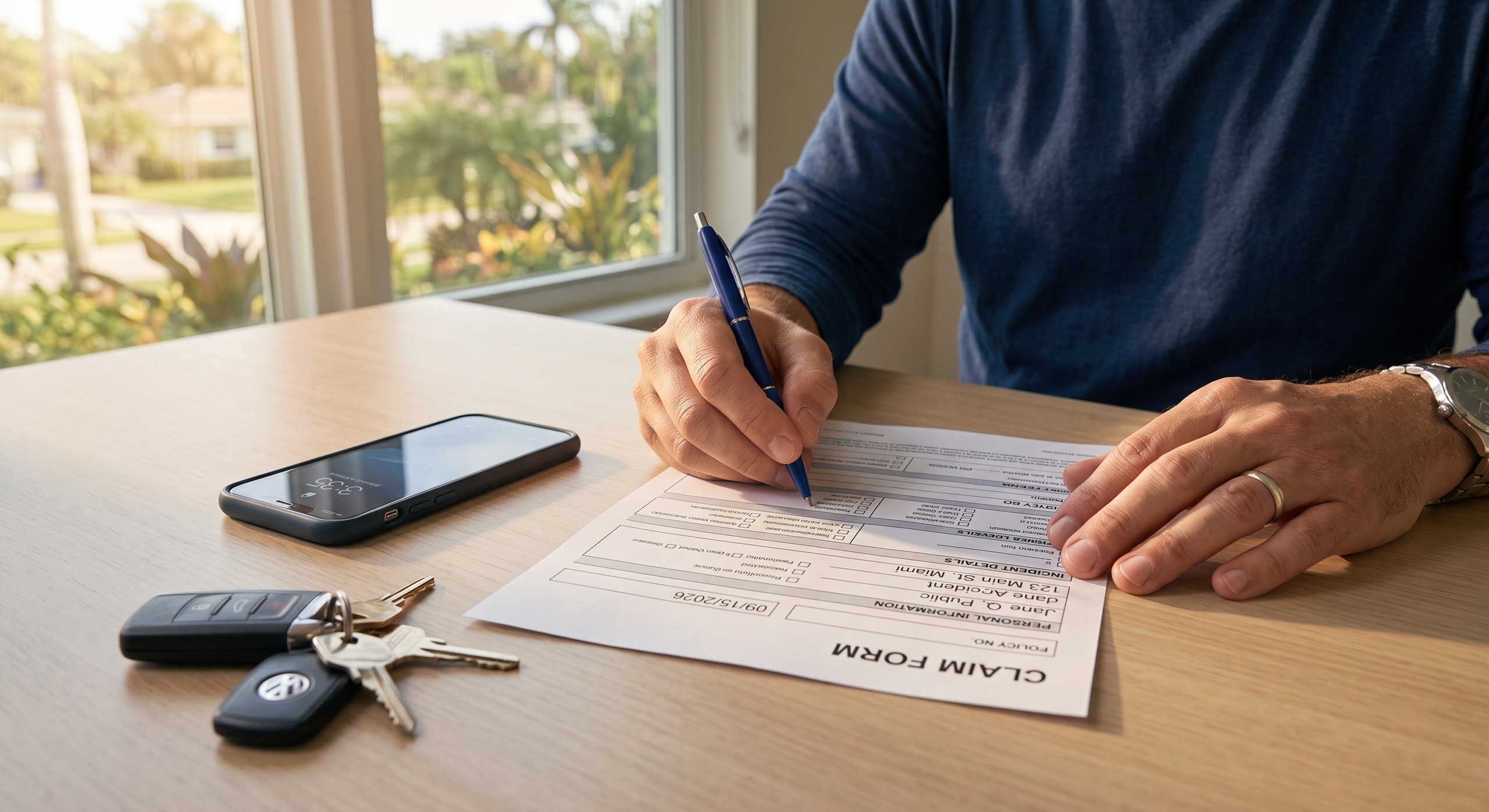
Car Accident in Orlando, FL: What to Do and How to Protect Your Legal Rights
Sep 15, 2026
What to Do Immediately After an Orlando Car Accident
The actions you take at the scene and in the hours immediately following a crash are the foundation of your claim. Staying methodical under pressure is difficult — but these steps are worth knowing before you ever need them. Call 911 and stay at the scene. Florida law requires you to report any accident involving injury, death, or property damage of $500 or more. That threshold covers nearly every collision. Never leave before police arrive and a report is filed. Exchange complete information. Collect full names, addresses, phone numbers, driver’s license numbers, license plate numbers, and insurance company and policy numbers from every driver involved. If rental vehicles are involved — common in Orlando — note the rental company and reservation information. Document everything at the scene. Photograph all vehicle damage from multiple angles, the overall scene including road signs and traffic signals, road conditions, skid marks, debris, and any visible injuries. Orlando’s tourist corridors are lined with hotel and business surveillance cameras — note their locations, as this footage can provide objective evidence of the crash. Get witness contact information. Tourist areas often have bystanders who will be unavailable later — collect contact information immediately while people are still present. See a doctor within 14 days — this is a hard Florida deadline. Florida’s no-fault PIP system requires you to seek medical treatment within 14 days of the accident to activate your PIP benefits. Miss this window and you forfeit your right to PIP coverage entirely. Even if you feel fine, see a doctor within 14 days. This is not a guideline — it is a legal deadline with no exceptions. Notify your insurer the same day. Florida’s no-fault system means your own insurer is your first point of contact for medical expenses. Prompt notification is required under most policies.Florida’s No-Fault PIP System and the 14-Day Rule
Florida operates a no-fault auto insurance system that affects how every car accident claim begins — and it creates rules that are unique among major states. All Florida drivers are required to carry Personal Injury Protection (PIP) coverage with a minimum of $10,000. After an accident, your own PIP pays 80% of your medical bills and 60% of your lost wages regardless of who caused the crash — but only if you meet the 14-day treatment requirement. The 14-day rule is one of the most consequential legal deadlines in Florida personal injury law. If you do not seek medical treatment within 14 days of the accident, your PIP coverage does not activate. No treatment within 14 days means no PIP benefits — period. This deadline exists regardless of how you feel in the immediate aftermath. Adrenaline and shock mask symptoms, and many serious injuries don’t present fully until days after the crash. PIP is a starting point, not a ceiling. It covers your immediate medical expenses up to $10,000, but it does not replace your right to pursue the at-fault driver for full compensation including pain and suffering, future medical costs, and damages exceeding your PIP limit. To step outside the no-fault system and sue the at-fault driver directly for pain and suffering, your injuries must meet Florida’s serious injury threshold: significant and permanent loss of a bodily function, permanent injury other than scarring or disfigurement, significant and permanent scarring or disfigurement, or death. Meeting this threshold opens the full range of tort damages. An experienced attorney evaluates whether your injuries qualify.Florida’s Pure Comparative Fault System
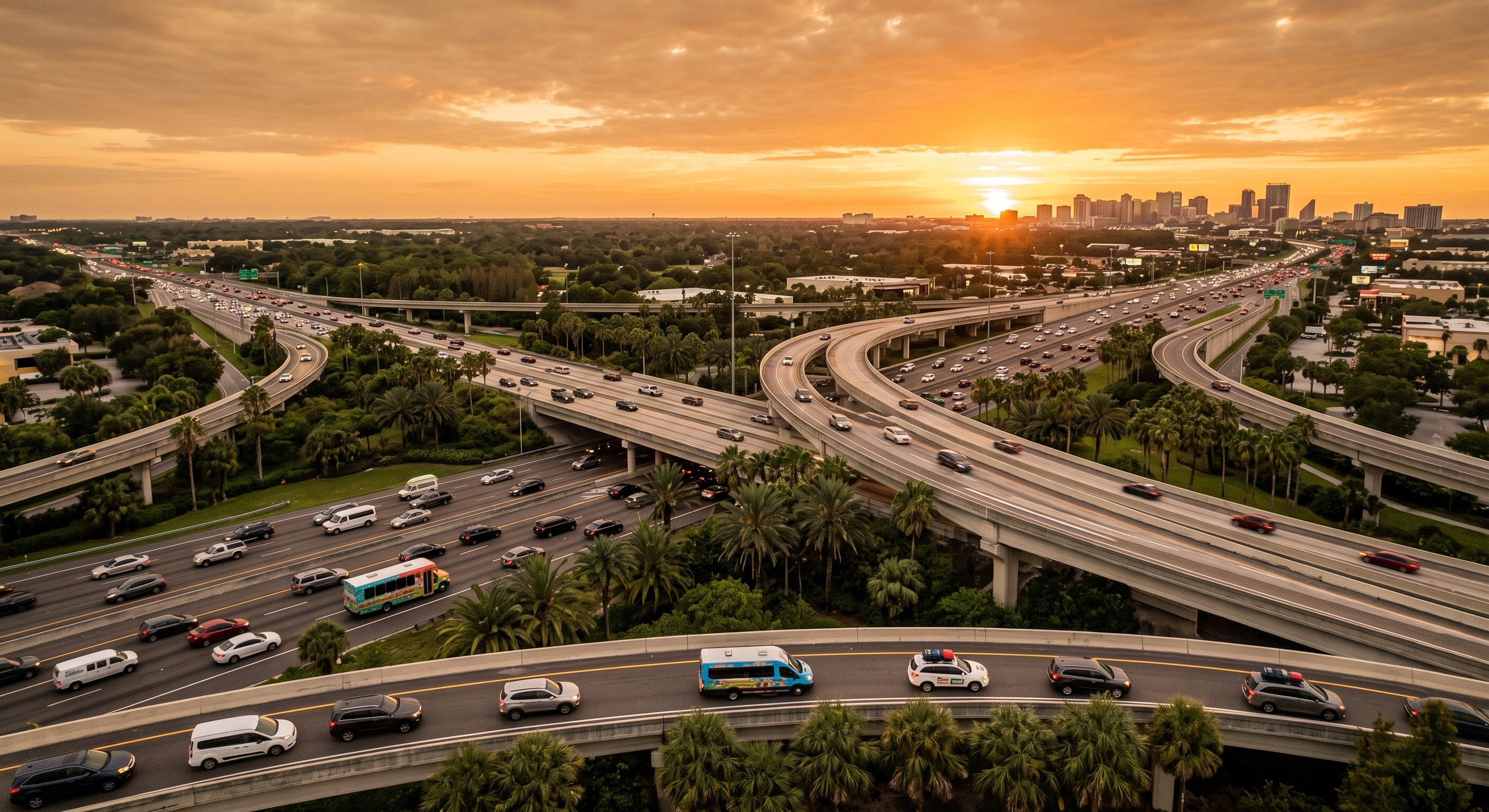
Florida follows a pure comparative fault system — one of the most victim-friendly fault rules in the country. Under pure comparative fault, you can recover damages regardless of your percentage of fault. Even if you are found 90% responsible for the accident, you can still recover 10% of your total damages from the other party. There is no bar at 50% or 51% as in most other states. This is particularly significant in Orlando’s complex traffic environment, where accidents frequently involve multiple contributing factors — tourist drivers making unfamiliar manoeuvres, merge conflicts on I-4, pedestrian and cyclist interactions near tourist corridors. In accidents where fault is genuinely shared, Florida’s pure comparative fault system ensures that partial fault on your part does not eliminate your claim. In practice, insurance companies still use comparative fault aggressively to reduce payouts. Every statement you make at the scene, every gap in medical treatment, and every social media post during your claim is potential ammunition for increasing your fault percentage. Fighting those assignments matters — even under pure comparative fault, a lower fault percentage means significantly more compensation.Florida’s 2-Year Statute of Limitations
Florida reduced its personal injury statute of limitations from four years to two years effective March 2023. Car accident victims now have two years from the date of the accident to file a personal injury lawsuit. Wrongful death claims carry a two-year deadline from the date of death. If your accident involved a government vehicle — a city of Orlando fleet vehicle, an Orange County vehicle, a LYNX bus, or a Florida state vehicle — a formal notice of claim must be filed within three years under the Florida Tort Claims Act, but specific procedural requirements apply and the effective timeline for building a proper claim is much tighter. Two years is a significantly tighter window than Florida accident victims had before 2023. Evidence disappears. Witnesses become harder to reach. Medical causation is easier to establish close to the accident. Start the legal process early.The Tourist Driver Complication — Orlando’s Unique Claims Environment
Orlando’s status as the most visited tourist destination in the United States creates a car accident claims environment unlike any other Florida city. Rental car drivers from across the country and around the world are unfamiliar with Orlando’s roads — the I-4 interchange, International Drive, the tourist corridor around US-192, and the dense road network around theme park entrances. Navigation errors, unexpected lane changes, and distraction are endemic to this environment. Rental vehicle accidents add insurance complexity. Rental car companies carry their own liability coverage, and the interaction between the rental company’s policy, the renter’s personal auto policy, and any coverage purchased at the counter creates a multi-insurer scenario that requires careful navigation. An experienced attorney identifies all available coverage sources. International tourists driving rental vehicles present additional complexity around service of legal process and insurance policy terms. These cases are manageable with experienced representation but require specific procedural knowledge.What Damages Can Orlando Car Accident Victims Recover?
Beyond PIP, Florida law allows accident victims who meet the serious injury threshold to pursue full compensation across multiple damage categories. Economic damages cover all medical expenses including future care, complete lost wages and reduced earning capacity, property damage and rental car costs, and related out-of-pocket expenses. For Orlando’s large self-employed and gig economy workforce, documenting business income loss is a critical component. Non-economic damages cover pain and suffering, emotional distress, loss of enjoyment of life, and the long-term impact of permanent injuries. These are frequently the largest component of a serious injury settlement in Florida. Punitive damages are available in Florida when the at-fault driver’s conduct was especially egregious — drunk driving, street racing, or other deliberate disregard for safety.