
Ecommerce Marketing Trends That Matter in 2026
 9 min read
Ecommerce marketing trends that matter in 2026 call for a tighter operating plan, not a bigger collection of channels. Put clean product information, permission-based customer data, repeat-purchase programs and a usable mobile checkout ahead of expensive bets on autonomous shopping agents. Test social selling and AI-driven discovery where your customers already show intent, then keep only the activity that produces profitable orders.
For a store operator, the deciding factors are capacity, measurability and margin.
Ecommerce marketing trends that matter in 2026: start with a decision filter
Give each idea a time horizon before giving it a budget. Ask whether it removes a known customer obstacle, whether you can measure its effect on contribution margin rather than clicks, and whether your team can maintain it.

Priority | What belongs here | What would justify more spending |
|---|---|---|
Do now | Accurate product feeds and pages, consented customer records, core lifecycle messages, mobile checkout fixes | Cleaner discovery, fewer avoidable drop-offs and better repeat-order economics |
Test in a controlled slice | AI answer visibility, creator storefronts, on-platform checkout, predictive segmentation | Incremental profitable orders in a defined product or customer group |
Watch, do not rebuild for it yet | Fully autonomous purchasing agents, unproven virtual shopping experiences | Evidence that your buyers use them and you can attribute sales without surrendering margin |
Apply the filter by category. A replacement-part seller with precise compatibility requirements may benefit more from better specifications than more short-form videos. A visually driven brand with creators already producing useful demonstrations may have the opposite starting point.
The channels that matter in 2026
Your digital channels serve different moments in the same buying journey. Organic discovery may introduce a product; social media can show it in use; email may answer a later question; your store closes the sale. If these channels do not work together, shifting ad spend may only move credit around.
Channel | Best job | When to add budget |
|---|---|---|
Search and product listings | Capture high-intent comparisons and make specific items findable | Product data is sound and the traffic converts at an acceptable margin |
Paid media | Reach qualified buyers and learn which offers resonate | Incremental orders cover acquisition, fulfillment and returns |
Social and creators | Demonstrate use, build trust and create demand | Content brings buyers, not just engagement |
Email and owned messaging | Help buyers use a purchase and drive repeat orders | Permission, deliverability and customer experience are healthy |
For a small store, connect two or three channels well before spreading funds across more. A marketing agency can help execute the strategy, but the store owner must set the margin threshold and define a high-value customer.
AI shopping journeys make product information a marketing asset
Shoppers can move from a search result to an AI-generated answer, a marketplace listing, a creator video or a store page. Give them consistent information at every stop. Missing dimensions, unclear compatibility, stale availability and shipping surprises still lose sales.
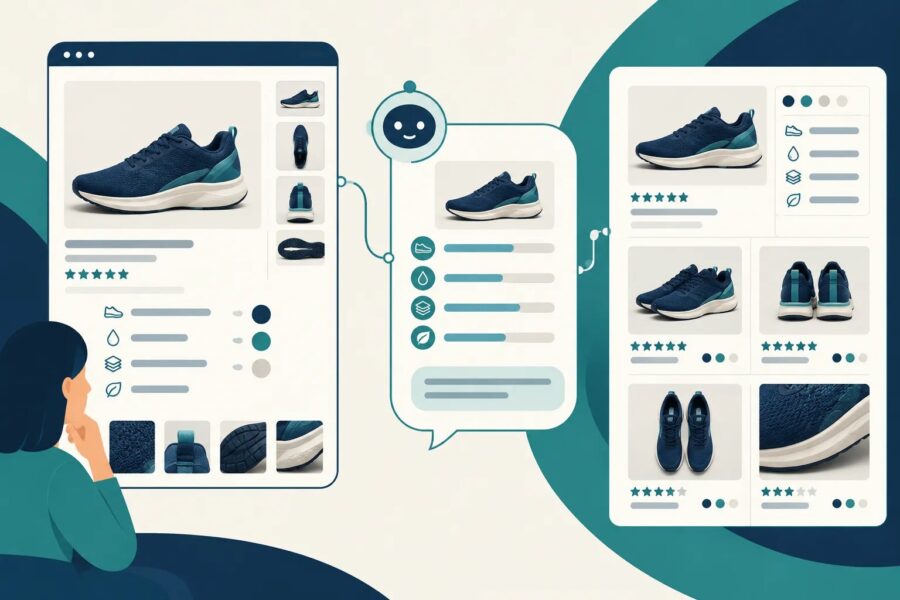
Start with your best-selling and highest-margin products. Make the name, attributes, variants, images, price and availability clear on the page and in any feed you maintain. For merchants using Google, its product data specification requires a title, description, availability and price, with availability and price matching the landing page and checkout. Explain who the item suits, what it fits, what comes in the box and how the return policy applies. Keep those answers consistent wherever the product appears.
For AI-assisted discovery, publish product specifications, real use cases, care instructions and candid limitations that a buyer could compare. For more context on changing discovery surfaces, read how AI-powered search affects small businesses. Watch referral patterns and the search queries that reach those pages. Some AI-influenced sales will not appear as AI referrals, so treat product-level organic traffic, qualified visits and conversion as supporting signals rather than proof of attribution.
Fix product data and missing answers now. Leave a full redesign for autonomous agents on the test bench until you see demand. If a vendor promises automatic visibility in AI answers, ask which data it changes and how you will measure business outcomes.
First-party data is useful only when customers trust it
First-party data comes from your own customer interactions: accounts, email signups, purchases and support conversations. Zero-party data is what a customer tells you directly, such as a preferred size or product goal. Tell customers why you collect either kind.
Before buying a customer-data platform, follow a customer record from signup to purchase. Explain the messages someone agrees to receive. Consent status and purchase history should match across the storefront, email system and service team. Suppress opt-outs and restrict access to information a campaign does not need.
Build segments for decisions you can act on: new subscribers without a purchase, recent buyers who need setup help, or customers approaching a replenishment window. A size preference makes recommendations useful. An intake form that collects unused details only slows signup.
Track deliverability, repeat purchase, unsubscribes and revenue after discounts and messaging costs. A smaller, reliable customer record may be more useful than a large database of unengaged contacts.
Social commerce should earn its place in the channel mix
A video may introduce a product, while the sale happens later through branded search, a marketplace or your own store. Test creator content, product tagging and native checkout separately so social impressions do not masquerade as sales. If you plan to put paid budget behind it, start with this guide to social media advertising for small businesses.
Pick a product a creator can demonstrate quickly, with an obvious use. Share an accurate brief and claims the creator can substantiate, agree on disclosure, then leave room to show the item in action. If you have the rights, place good demonstrations on the relevant product pages too. Where native checkout is available, compare its fees and returns with your own site, along with what each route means for customer relationships and friction.
Record product-page visits, new-customer orders, returns, creator fees, platform fees and the margin left after fulfillment. Campaign links or codes offer partial evidence of influence. A clip with modest reach and profitable buyers is worth more than a viral clip with costly returns.
Livestream shopping needs an audience that already participates and a team able to staff the interaction. Without both, put that effort into demonstrations you can use across channels.
Retention beats paying repeatedly for the same buyer
Customers come back when the item meets expectations, delivery terms are clear and help arrives after purchase. Extra messages cannot rescue a product that consistently disappoints.
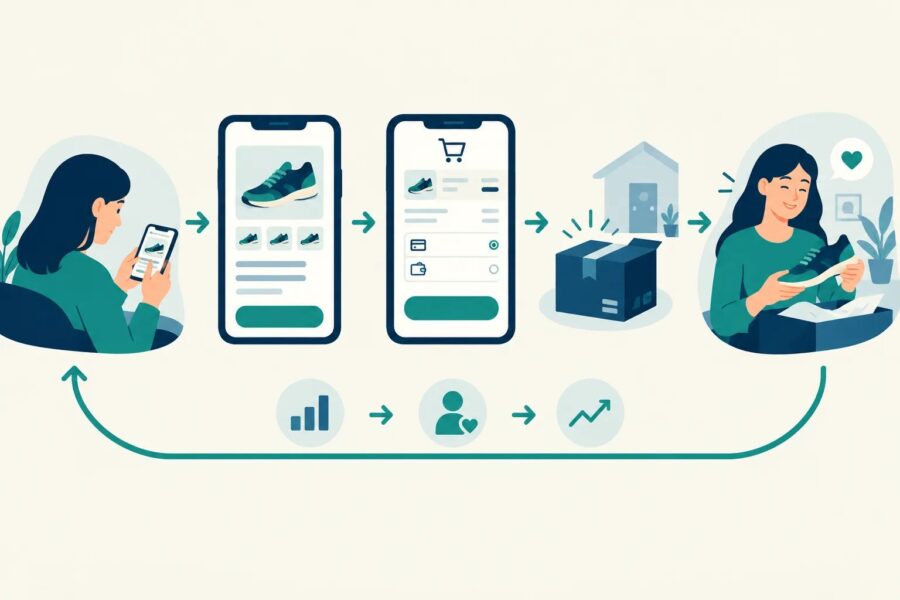
Build a short message sequence around what the buyer needs next. Explain setup or care after purchase. For consumables, time replenishment reminders to actual usage; offer a related item when it solves an adjacent problem. Infrequent purchases call for useful advice or referral opportunities rather than repeated discounts. The site’s discussion of email as a marketing channel gives that work wider context.
Group customers by when they first bought and how they arrived. Compare second-order rate, time to next order, gross margin and refund rate alongside email revenue. A campaign overstates its value when it discounts a full-price purchase the customer would have made anyway.
Loyalty points, subscriptions and aggressive win-back offers suit some stores. Start with post-purchase clarity and one thoughtful follow-up before asking customers to learn a new program.
Conversion-focused execution is the budget multiplier
Buying more traffic for a confusing product page raises acquisition costs. Go through the mobile buying path yourself, from the product view to the order confirmation. Note when you learn the price, delivery terms and return policy, and whether variant selection makes sense. Complete a purchase on the devices your visitors use most.
“The average cart abandonment rate is 70.22% across 50 published studies.” – Baymard Institute
Baymard updated that pooled figure in September 2025. It does not measure your store’s abandonment in 2026; your own checkout funnel should determine what to repair.
Prioritize fixes in this order:
Remove misleading or missing product details and hidden delivery costs.
Make the primary action, variant selection and important trust information easy to find on mobile.
Reduce unnecessary form fields and checkout steps, and make available payment methods clear.
Test persuasive changes only after the basic transaction works reliably.
Find the leak between product view and add-to-cart, cart and checkout, or checkout and purchase. Split those figures by device, source and new versus returning customers. A checkout drop after a shipping change needs a different fix from one product’s weak add-to-cart rate. Judge experiments by orders and margin alongside conversion rate, since a larger discount can improve conversion and hurt profit.
Turn the trends into a 90-day plan
Use the tools you have before buying another platform. Every test needs an owner, a baseline and a rule for when to stop spending.
Period | Work | Evidence to collect |
|---|---|---|
Days 1 to 30 | Audit top product pages and feeds, consent capture, mobile checkout and current lifecycle messages | Product data gaps, funnel drop-offs, deliverability and repeat-order baseline |
Days 31 to 60 | Repair the largest conversion obstacle; improve priority product information; launch one useful post-purchase flow | Change in qualified traffic, checkout completion, second orders and margin |
Days 61 to 90 | Run one contained discovery test, such as a creator demonstration or an AI-answer-focused product FAQ | Incremental orders, customer quality, returns and contribution after all channel costs |
Postpone tests without a clear customer problem or baseline. Last-click attribution will miss some channel influence, but you still need a deadline to decide whether the evidence warrants another cycle. If performance is already soft, fix what is underperforming before adding another channel.
Conclusion
Invest now in clean data and a working checkout. Give social formats and AI-assisted discovery measured tests, and hold off on major autonomous-commerce spending until your customers use it. Those choices help shoppers find the right products, complete purchases and return profitably.
FAQ
What are the key trends in e-commerce for 2026?
AI-assisted product discovery, permission-based first-party data, social shopping, retention and mobile conversion are the most actionable areas for store teams. Start with product accuracy and checkout, then test newer discovery channels on a limited set of products.
What are the major marketing trends for 2026?
For ecommerce, the practical shifts are AI-influenced discovery, more deliberate use of customer data, creator-led social content and a stronger focus on repeat purchase. Their value depends on whether they improve profitable orders, not whether a channel is fashionable.
Is eCommerce still viable in 2026?
Yes, but viability depends on unit economics and a reliable buying experience. Track the margin left after acquisition, fulfillment and returns, and fix product-page and checkout friction before paying to bring in more traffic.


