AI Finds Two TESS Exoplanet Candidates at TIC 4206066
 6 min read
An independent researcher named Pavel Rabtsevich has reported finding two transit-like candidate signals around the star TIC 4206066 using AI coding tools, including Claude Code, to analyze archived NASA TESS data. NASA has approved a formal request to observe the star with the TESS telescope, with observations scheduled between October 31 and November 26 to measure the star’s brightness every two minutes. The discovery has generated widespread attention on social media, though a planet candidate is a signal that looks like a planet but is not a confirmed planet, as the author himself acknowledges.
The Discovery Method
The independent researcher, based in Tarragona, Spain and without university affiliation, detailed how he spotted in the public TESS archives an “a star whose brightness decreased slightly at regular intervals”. The star in question is called TIC 4206066, a K-type dwarf star located approximately 116 light-years from Earth.
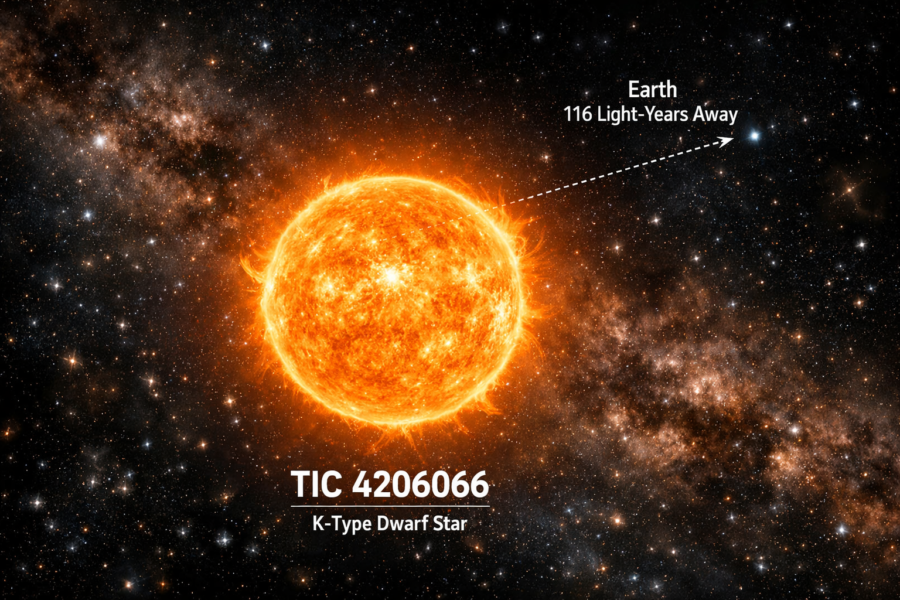
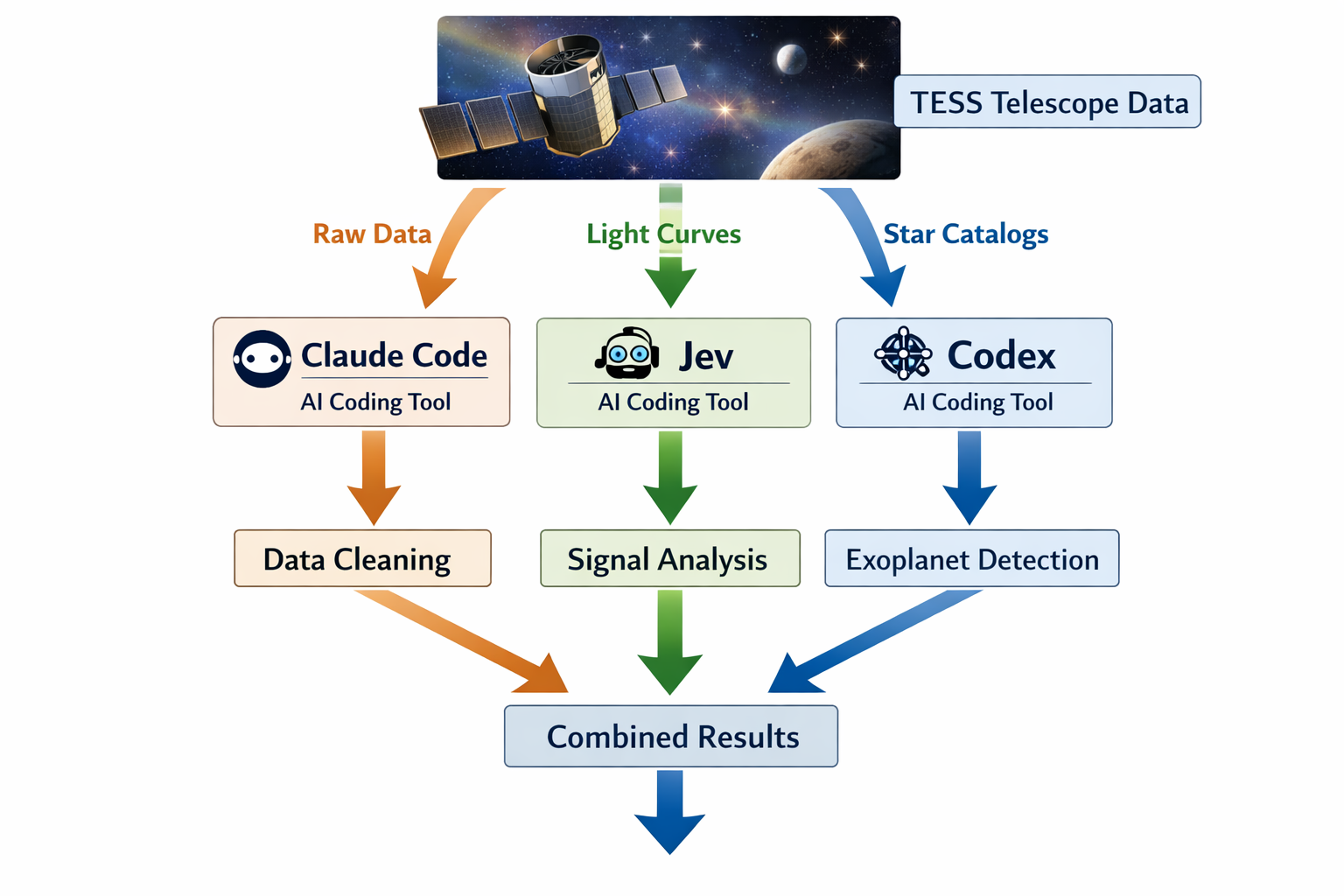
Rabtsevich gave the data to three AI agents: TypeSafe’s Jev, Anthropic’s Claude Code, and OpenAI’s Codex. The signal detected is a small, steady dip in brightness every 3.18 Earth days, which is the kind of drop you would expect if an object were passing in front of the star.
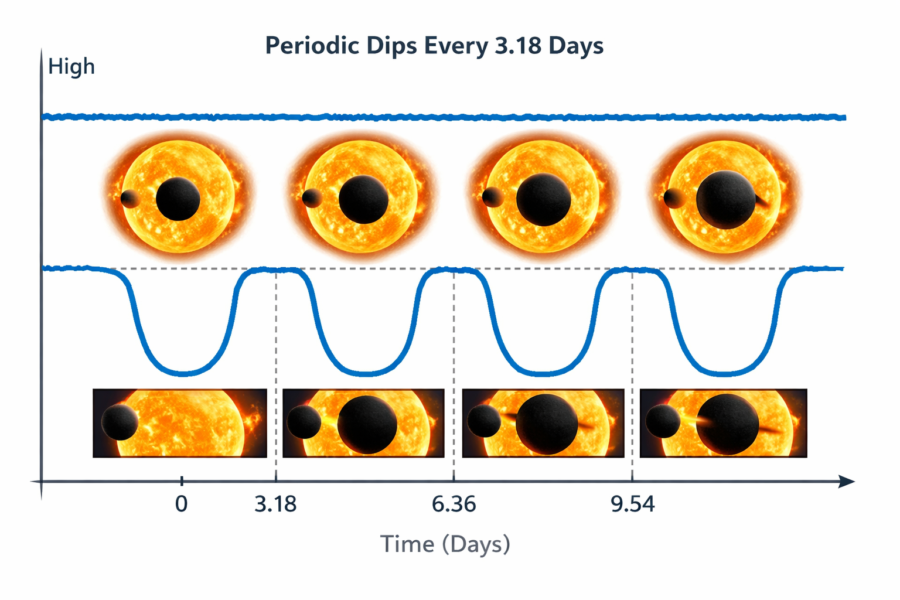
Rabtsevich pulled the star’s TESS observations from 2020 and 2018, and both years showed the same dips at the same frequency. He then used Claude Code to run 74 tests, each one meant to knock down his own hypothesis.
The Candidate Signals
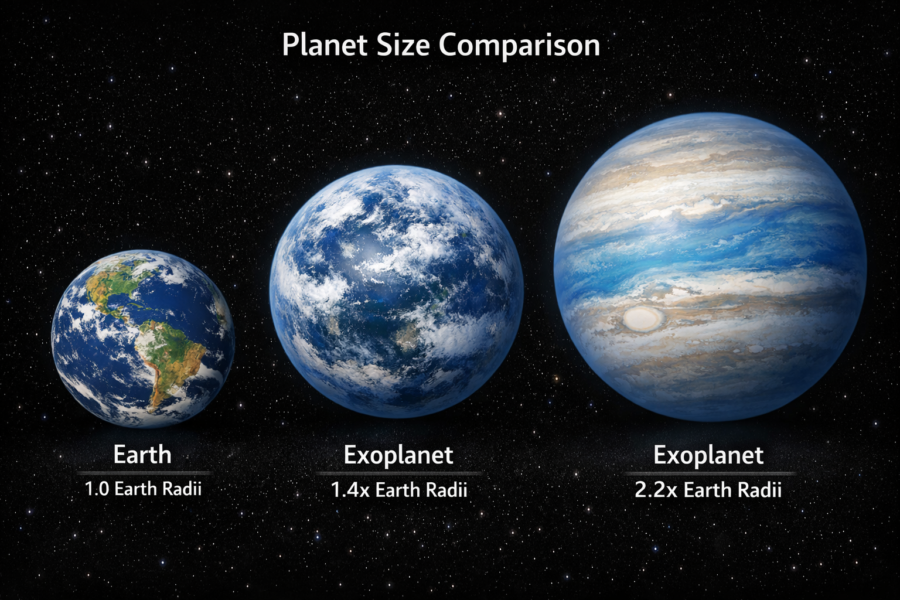
Rabtsevich reports a stronger pattern in TESS Sectors 6, 32, and 98, with a 3.18-day period and brightness dips of about 500 parts per million. If a planet orbiting TIC 4206066 causes those dips, the estimated radius would be 1.4 ± 0.1 Earth radii.
The second signal is weaker and tentative, with a reported period of 11.13 days and an estimated radius of about 2.2 Earth radii. The planned observations forecast nine transits for the stronger signal and three for the weaker one, though a repeat alone would not prove a planet.
The Verification Process
NASA’s TESS has an active Director’s Discretionary Target program, number 100, for TIC 4206066, scheduled to observe the star at a two-minute cadence from October 31 through November 26, 2026. Rabtsevich describes them as candidate signals; his analysis does not claim statistical validation.
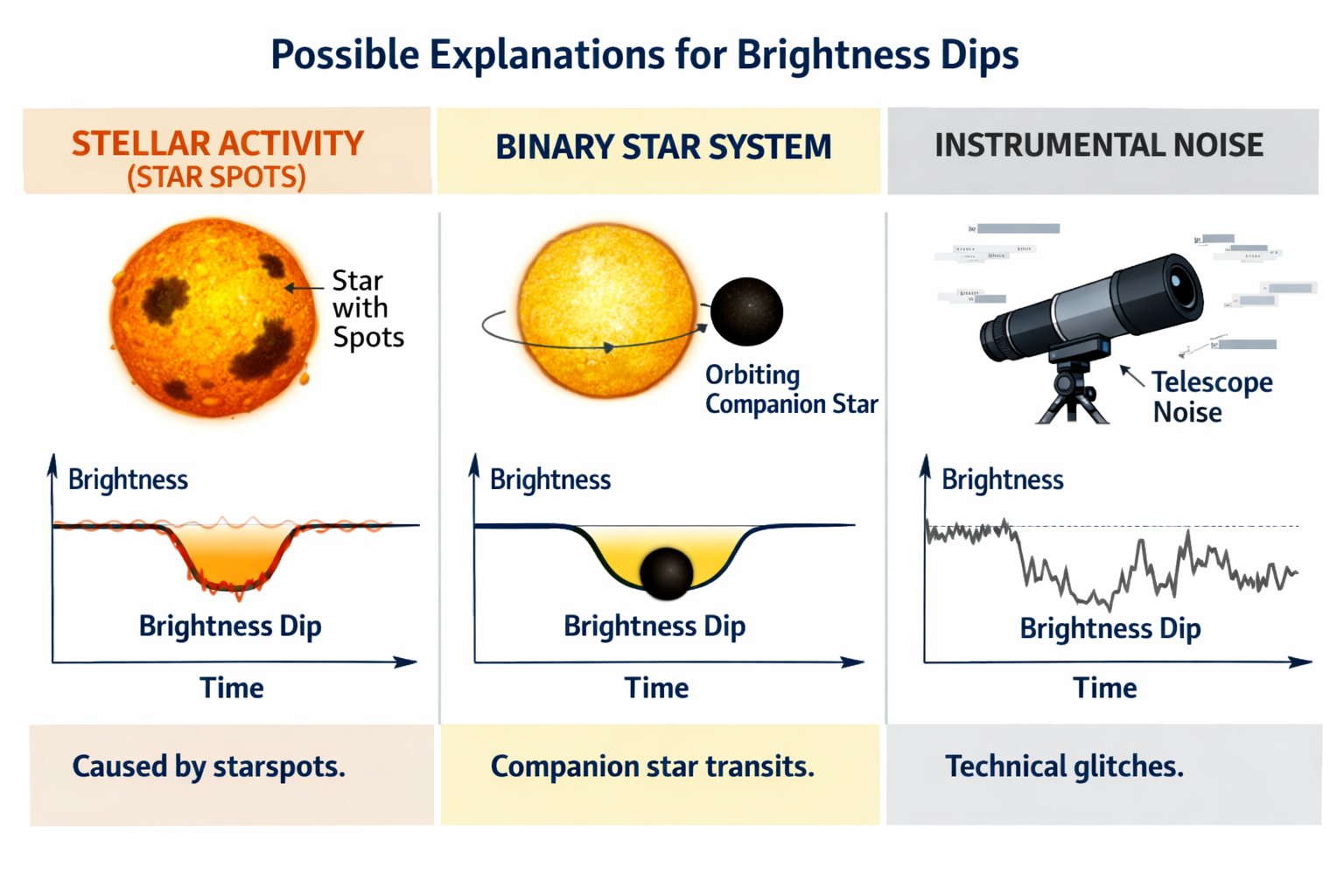
Many other phenomena can be at the origin of the luminous flickering of TIC 4206066. Stellar activity, binary star companions, and instrument artifacts can all produce similar signals, which is why confirmation observations are critical for any exoplanet candidate.
The upcoming TESS observations will provide high-cadence photometry that can either confirm the periodic dimming follows the predicted schedule or rule out the signals as genuine planetary transits. If the dimming events occur at the precisely predicted times in late October and November, the likelihood that the signals represent actual exoplanets will increase substantially.
The Role of AI Coding Agents
Claude Code, Anthropic’s programming tool, processed TESS data, wrote analytical code, and fitted models predicting transits. In one test, Rabtsevich gave the agent two of the TESS datasets and asked it to predict when the dimming would show up in the third.
The claim that he used Claude Code to find a planet candidate that sat in NASA telescope data for about seven years spread quickly on October 7 and 8, 2026. Rabtsevich posted on X (formerly Twitter): “I think I found a planet nobody knew existed. It’s been hiding in NASA telescope data for seven years”.
The use of multiple AI coding assistants to analyze publicly available astronomical data represents a novel approach to exoplanet detection that could democratize scientific discovery. However, the method also raises questions about false positives and the importance of rigorous statistical validation before claiming a discovery.
What Comes Next
The scheduled TESS observations beginning October 31 will provide the crucial test of whether Rabtsevich’s candidates are real. Rabtsevich sent the report to MIT and asked for TESS to observe TIC 4206066 the next time the telescope covers that part of the sky, and MIT approved the request.
If the observations confirm the periodic dimming at the predicted times, the next steps would involve additional follow-up observations to rule out alternative explanations and potentially measure the planet’s mass through radial velocity observations. Only after passing multiple levels of verification could the candidates be elevated from “candidate” status to confirmed exoplanets.
The discovery, if confirmed, would mark a significant milestone in citizen science and demonstrate the potential for AI-assisted analysis of archival astronomical data. It would also join the more than 5,000 confirmed exoplanets discovered since the first detection in the 1990s.
Key Facts
- Independent researcher Pavel Rabtsevich identified two exoplanet candidates around star TIC 4206066 using Claude Code and other AI tools
- The primary candidate shows a 3.18-day orbital period with an estimated radius of 1.4 ± 0.1 Earth radii
- A second, weaker candidate has an 11.13-day period with an estimated radius of about 2.2 Earth radii
- Claude Code ran 74 validation tests on the signals using archival TESS data from 2018, 2020, and more recent observations
- NASA approved Director’s Discretionary Target program 100 to observe TIC 4206066 from October 31 to November 26, 2026
- The candidates are not confirmed planets and require verification to rule out alternative explanations
- The discovery claim gained over 740,000 views on X after being posted on October 7, 2026
Sources
- Ground News: Claude Code Found an Exoplanet Candidate in NASA Archival Data
- NeoTeo: TESS Schedules a Follow-up for Candidate Signals Around TIC 4206066
- EGamers.io: Amateur Uses Claude Code, Codex and NASA Data to Flag a Possible Exoplanet
- ExplainX.ai: Claude Code Planet Candidate TIC 4206066 Explained
Sources
- Claude Code and TESS follow-up for TIC 4206066
- Grâce à Claude Code, cet internaute affirme avoir trouvé « une planète dont personne ne soupçonnait l’existence » : l’enquête dans les archives de la NASA qui a secoué Reddit
- Amateur Uses Claude Code, Codex And NASA Data To Flag A Possible Exoplanet, And TESS Will Test It In November – EGamers.io – P2E NFT Games Portal
- Claude Code Planet Candidate: TIC 4206066 Explained (2026)
- Claude Code i dane TESS: deweloper zgłosił kandydata na egzoplanetę