Anthropic Launches Claude Design, Integrates 3D Tools
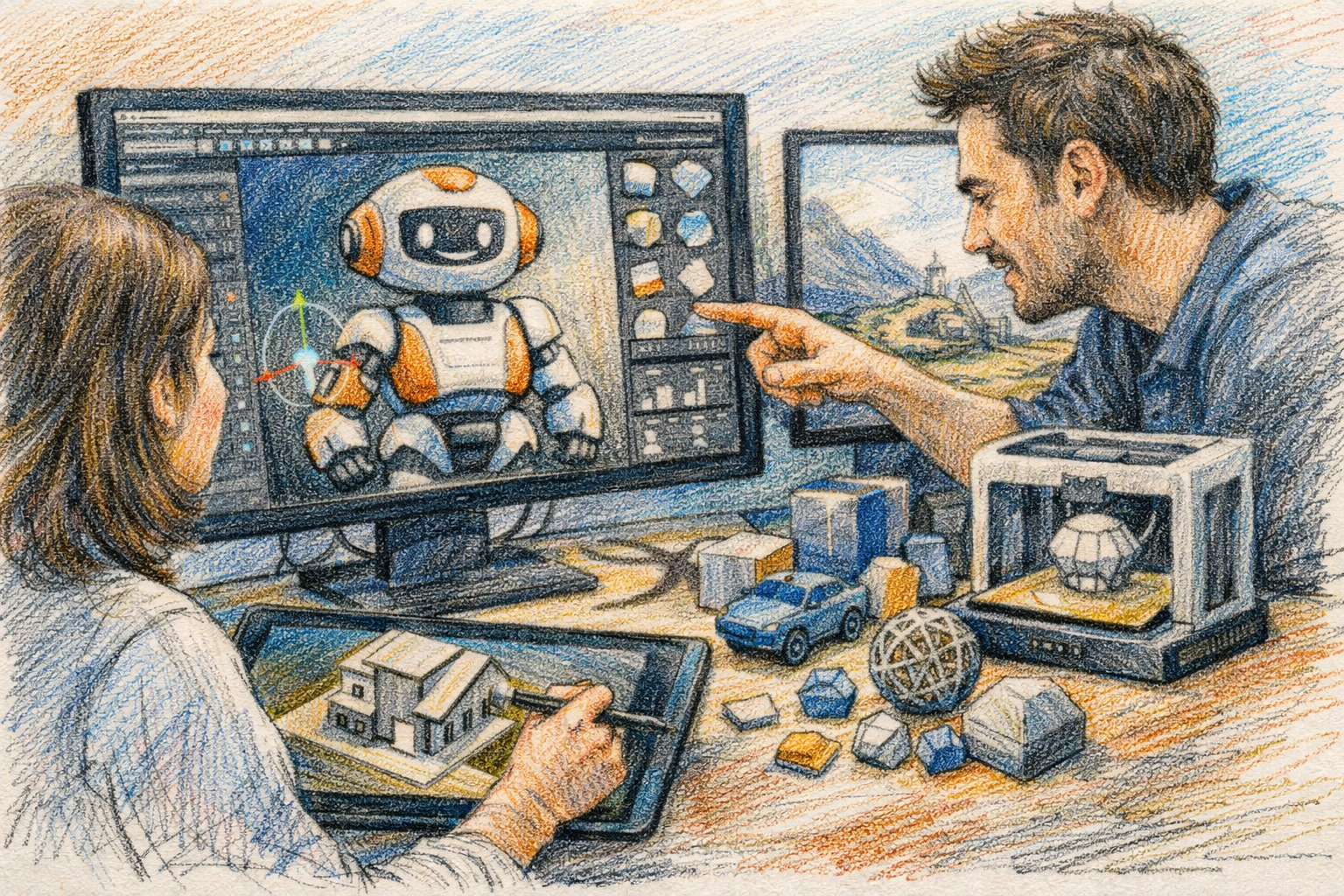
Anthropic has expanded its AI capabilities beyond code generation with a series of new creative tools designed to bridge the gap between concept and production. The company recently introduced Claude Design, a new Anthropic Labs product that lets you collaborate with Claude to create polished visual work like designs, prototypes, slides, one-pagers, and more, while also announcing integrations with professional 3D modeling software including Autodesk Fusion, Blender, and SketchUp.
Claude Design Launches with Immediate Market Impact
Anthropic launched Claude Design on April 17, 2026, rolling out the tool as a research preview to Claude Pro, Max, Team, and Enterprise subscribers. The announcement had swift market consequences, with Figma’s stock falling about 7 percent on the launch day. The timing raised eyebrows across the design industry, as Anthropic CPO Mike Krieger had quietly resigned from Figma’s board three days earlier.
Claude Design is powered by Claude Opus 4.7, Anthropic’s most capable vision model, which the company describes as more tasteful and creative for professional tasks. The tool allows users to generate visual assets through natural language prompts, then refine outputs through conversation, inline comments, direct edits, or custom adjustment sliders.
How Claude Design Works
The platform differentiates itself from competitors through its ability to integrate with existing brand systems. During onboarding, Claude builds a design system for your team by reading your codebase and design files, with every project after that using your colors, typography, and components automatically. This capability addresses a common pain point where AI design tools generate outputs that lack brand consistency.
Users can start projects from text prompts, upload documents in formats like DOCX, PPTX, and XLSX, or point Claude at an existing codebase. The web capture tool grabs elements directly from websites so prototypes look like the real product. Once created, designs can be shared within organizations with view or edit permissions for collaborative work.
Export and Integration Options
Designs can be shared as an internal URL within your organization, saved as a folder, or exported to Canva, PDF, PPTX, or standalone HTML files. The Canva integration is particularly notable, as teams can export presentation decks or prototypes as PDFs, URLs, PPTX files, or send them to Canva where they are fully editable and collaborative.
For development handoff, Claude packages everything into a handoff bundle that can be passed to Claude Code with a single instruction, streamlining the transition from design to implementation. Anthropic has indicated that additional integrations with other tools are planned for the coming weeks.
3D Modeling and Creative Workflow Integrations
Beyond Claude Design, Anthropic announced integrations with professional 3D modeling and creative software. The company is working with Autodesk Fusion, Blender, and SketchUp to enable AI-assisted workflows in 3D modeling environments, though specific details about these integrations remain limited in current announcements.
Community Tools Complement Official Offerings
The announcement of creative tools comes as third-party developers build complementary capabilities. Developer JCodesMore launched ai-website-cloner-template in mid-March 2026, a Claude Code skill with over 13,000 GitHub stars that clones websites using a single /clone-website command, rebuilding them in Next.js 16 with Tailwind CSS. While unofficial, such tools demonstrate the ecosystem developing around Claude’s coding capabilities.
Positioning and Competitive Landscape
Anthropic said its new product is built for people who aren’t starting from a design tool and need to get from an idea to something visual quickly. The target users include founders, product managers, marketers, and anyone without formal design training who needs to create professional visual assets.
The launch highlights Anthropic’s ongoing push into the enterprise and prosumer categories, following the January rollout of Claude Cowork, an agentic assistant built for complex tasks, and agentic plug-ins designed to automate specialized departmental tasks.
Avoiding Generic AI Outputs
As users begin working with Claude Design, concerns about generic “AI slop” outputs have emerged. Guides recommend providing custom design systems with brand-specific typefaces, colors, and spacing through dedicated files pasted into sessions to ensure outputs maintain brand identity rather than defaulting to generic aesthetic choices.
Usage Limits and Availability
Usage of Claude Design is metered and tracked separately from other Claude services, with its own usage tracking, allowances, and weekly limits that sit alongside existing chat or Claude Code limits. Enterprise users receive a one-time credit covering about 20 typical prompts, consumed before additional usage counts toward organizational spend, expiring on July 17.
Key Facts
- Claude Design launched April 17, 2026 as a research preview for Pro, Max, Team, and Enterprise subscribers
- Figma stock dropped 7% on launch day
- Powered by Claude Opus 4.7 vision model
- Automatically reads codebases and design files to extract and apply brand systems
- Exports to Canva, PDF, PPTX, HTML, and hands off to Claude Code
- Separate usage metering from standard Claude chat and code functions
- Enterprise users receive one-time credit for approximately 20 prompts, valid until July 17, 2026
- Integrations announced with Autodesk Fusion, Blender, and SketchUp for 3D workflows
Sources
- https://www.anthropic.com/news/claude-for-creative-work
- https://www.datacamp.com/blog/claude-design
- https://pasqualepillitteri.it/en/news/1528/ai-website-cloner-claude-code-skill-13000-stars-2026
- https://www.mindstudio.ai/blog/claude-design-avoid-ai-slop-design-system