Sustainability Analytics in the CPG Industry: Methods, Challenges, and Outcomes
Sustainability has become a critical focus for industries worldwide, and the CPG industry (Consumer Packaged Goods) is no exception. Consumers are increasingly demanding environmentally friendly products, favoring brands that align with sustainability principles. For businesses, meeting these expectations goes beyond superficial commitments—it requires the integration of data-driven strategies like sustainability analytics to make impactful, measurable changes.
This blog aims to discuss the importance of sustainability analytics in the CPG industry. The blog also gets into the strategies companies employ to integrate these systems and the challenges they encounter. Finally, we look closely at the potential benefits that can transform the industry. In the end, you’ll understand that sustainability analytics is not only a tool but also a necessity for companies that want to thrive in an environmentally friendly market.
Understanding Sustainability Analytics in the CPG Industry
Before going into the methods and applications, let us understand what exactly sustainability analytics is. The use of data analysis to measure, monitor, and improve an organization’s environmental and social impact. In the Consumer Packaged Goods (CPG) industry, sustainability analytics is concerned with carbon footprint mitigation, supply chain optimization, responsible sourcing, and waste management.
Key goals include:
- Figure out areas of high resource consumption or waste
- Streamlining our operations to reduce harm
- Being in line with worldwide and local sustainability norms
The CPG industry largely depends on raw materials, manufacturing, and distribution. Thus, these analytics tackle the environmental cost of production for these industries, while consumers expect them to be transparent and accountable.
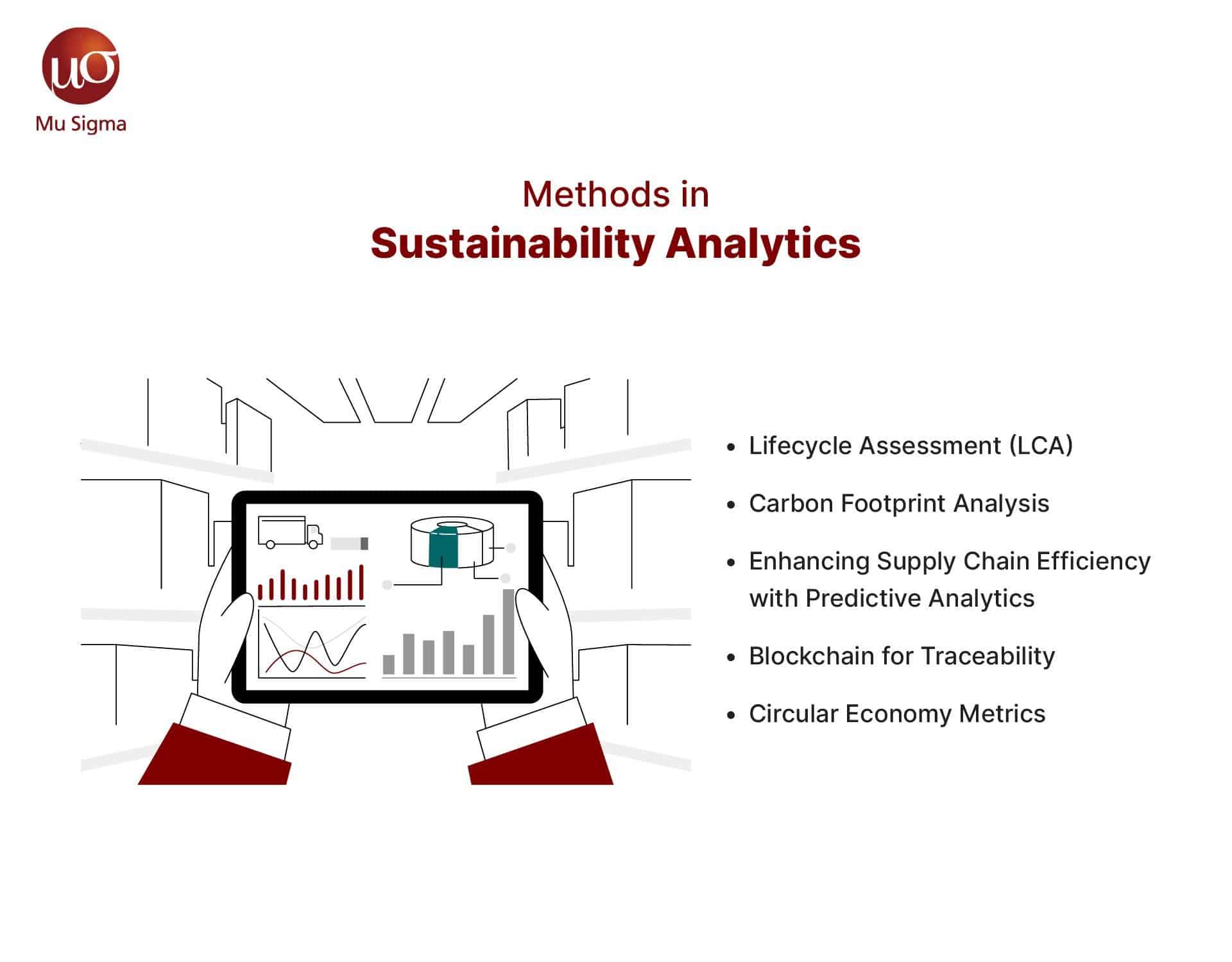
Methods in Sustainability Analytics
The CPG industry utilizes several advanced methods to collect and analyze sustainability data. These methods don’t just ensure compliance; they also create opportunities for innovation.
1. Lifecycle Assessment (LCA)
Life Cycle Assessment measures the environmental effect of a product from raw material extraction and production to distribution, use, and disposal. Important information that comes from LCA.
- Identifying carbon-intensive processes
- Finding chances to use recycled materials or lower waste
2. Carbon Footprint Analysis
Measuring greenhouse gas emissions across the supply chain is critical for reducing environmental impacts. Analysis of carbon footprint assists in determining the emission levels with greater concentration.
- Energy consumption in factories.
- Transportation logistics.
3. Enhancing Supply Chain Efficiency with Predictive Analytics
Using predictive analytics, companies can:
- Expect changes in demand to cut overproduction.
- Optimize transport routes for the least usage of fuel.
For instance, connectivity with IoT devices helps to track energy consumption in warehouses, which helps in the efficient utilization of resources.
4. Blockchain for Traceability
The inclusion of blockchain can enable transparency throughout the supply chain. Traceability makes sure sustainability is a purchase driver.
- Getting raw materials from the right place.
- Confirming fair labor practices.
5. Circular Economy Metrics
A number of CPG organizations are adopting circular models whereby waste is brought back into the cycle. Analytics here measure.
- The percentage of recycled content in products.
- Diversion rates of landfill waste.
These techniques help companies in the CPG industry gain actionable insights to minimize their ecological footprint while building business value.
Challenges in Implementing Sustainability Analytics
Putting sustainability analytics into action in the CPG industry has plenty of challenges despite its potential.
1. Data Collection Complexity
Gathering reliable data around the world still remains one of the most difficult tasks in the supply chain process. Challenges include.
- Data standards in different regions vary
- Suppliers have different tracking systems
For example, a firm sourcing source materials from multiple countries may struggle to combine accurate carbon footprint data due to different regulations and reporting mechanisms.
2. Tech problems
Modern analytical equipment often necessitates a big expenditure on technology and talent. Smaller companies in the CPG industry might have these difficulties.
- The implementation of IoT devices or AI-based analytics platforms is very costly.
- Hard to find skilled people to interpret the data.
3. Regulatory Hurdles
Rules about Sustainability Keep changing, and they differ from region to region. It can be challenging to keep up with these changes and remain compliant, for instance.
The EU’s strict carbon neutrality initiatives could require a different approach than that in North America and Asia.
4. Short-term Profit vs. Long-term Goals
Investing in sustainability is always beneficial for the future but could impact short-term profits. For many organizations, persuading stakeholders regarding these advantages in the longer term is a key hurdle.
5. Consumer Expectations
Modern consumers want transparency, but finding a balance between what they want and what they can get might be difficult. If you don’t report metrics correctly, it can damage the reputation of the brand.
Outcomes of Sustainability Analytics
Organizations that are able to successfully imbibe sustainability analytics in their operations experience tremendous benefits. These benefits include both environmental and financial.
1. Less Negative Effect on Nature
As per a study, entities employing sustainability analytics can cut down on energy consumption by 30-70%. This accelerates savings in costs. Like the world of music.
- Manufacturing uses less energy now.
- Lower pollution by control of delivery.
2. Enhanced Brand Loyalty
More and more shoppers want to buy from brands that share their values. A 2023 survey by Nielsen showed that products labeled as sustainable grew faster than the non-sustainable ones. It is definitely essential for the development of a core business strategy.
3. Regulatory Compliance Made Easier
Advanced analytics make sure that companies comply with regulatory settlements and are not penalized. Dashboards in real-time and predictive models help in tracking compliance metrics.
4. Innovation in Product Design
Data from analytics is used to design eco-friendly products. For example.
- LCA data can help companies switch from plastic wrapping to biodegradable packaging.
- Predictive models show which raw materials are cheap but sustainable at scale.
5. Stronger Investor Confidence
Sustainability-focused companies are increasingly attracting investors who prioritize Environmental, Social, and Governance (ESG) criteria. Initiatives supported by data analysis ensure transparency for investor trust.
Future of Sustainability Analytics in the CPG Industry
With growing technology and consumer demand for products, sustainability analytics will become a more relevant field. Key trends include:
Integration of AI: The role of artificial intelligence in the prediction of sustainability risks and automating decisions will be heightened.
Real-Time Monitoring: IoT gadgets will furnish instantly available information regarding energy consumption, garbage production, and emissions with the goal of allowing prompt remedial action.
Collaborative Efforts: To enhance the development of analytical tools and methods, there will be partnerships between companies and governments/NGOs.
With the adoption of these technologies, the companies in the CPG industry can not only meet sustainability goals but also set industry benchmarks.
Conclusion
As the Consumer Packaged Goods (CPG) Industry evolves, Sustainability Analytics will remain key to driving impactful changes. There are more advantages than disadvantages to text mining analytics, whether it is operational efficiency or brand image enhancement. With investment in smart tools and an innovation mindset, companies will be able to realign their goals with global sustainability and get a competitive edge.
Going on the path to sustainability is difficult yet essential. Through sustainability analytics, the CPG industry has the means it needs to navigate modern complexities and satisfy consumers, environmentally and otherwise.