Small Business Engagement Strategies for 2026

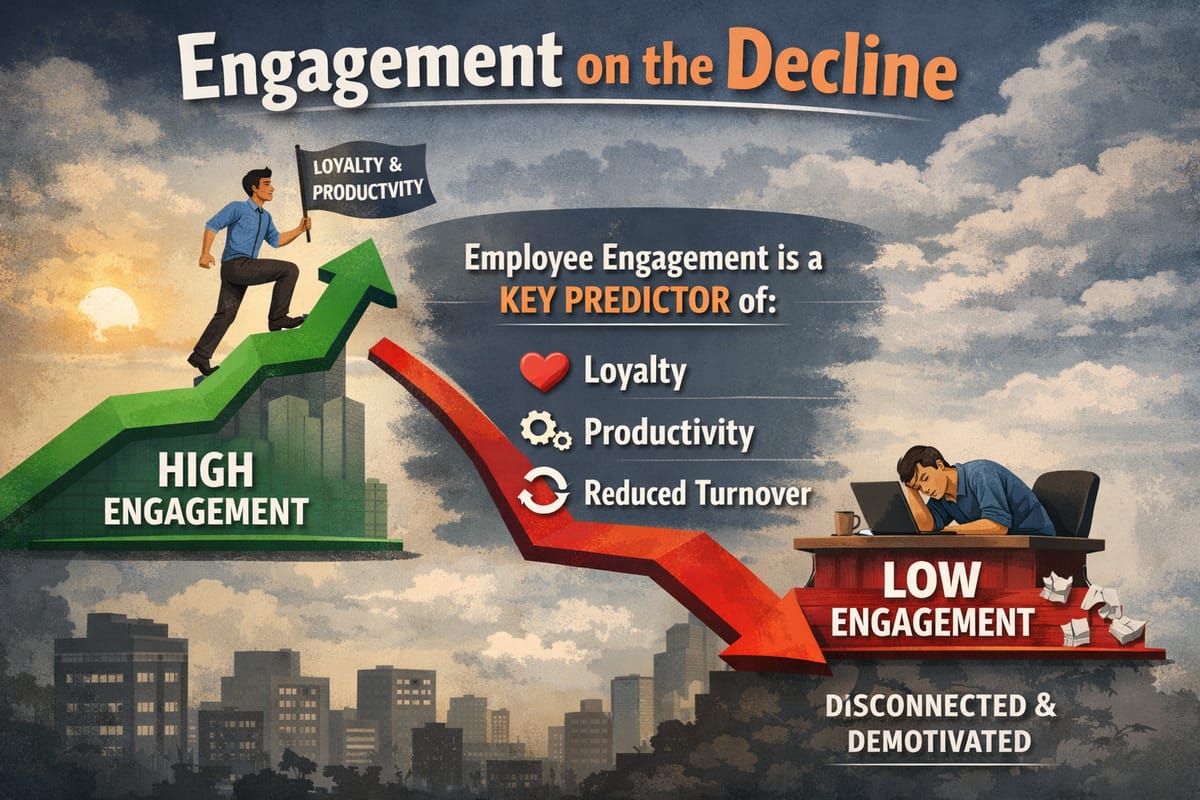
Small business leaders are facing unprecedented pressure to keep their teams engaged in 2026 as new research reveals that maintaining high employee engagement has become a top concern for the majority of hiring managers. In a Robert Half survey, 74% of hiring managers said one of their top concerns is keeping their staff engaged in their work, while 66% of professionals say longer hiring cycles have caused team morale and engagement to decrease. Employee engagement remains one of the strongest predictors of loyalty, productivity and overall performance, and in 2026, engagement is viewed as a core business priority.
Flexibility and AI Adoption Drive New Engagement Models
Forward-thinking small businesses are embracing flexibility as a cornerstone of their engagement strategies in 2026. Flexibility is about giving people some control over how, when and sometimes where they work, including offering remote or hybrid work options, permitting employees to adjust start times so they can avoid a tough commute, letting them shift hours around school pickups or allowing them to rotate projects when workloads allow.
Technology is playing an increasingly important role in supporting employee engagement. In a recent Robert Half survey, 57% of employers reported increased engagement and reduced burnout due to AI use. When employees have access to technology that automates routine tasks, they can focus their energy on what’s more meaningful and impactful.
Mental Health Support Takes Center Stage
Mental health is now an essential element of comprehensive benefits programs, and in 2026, small businesses are weaving emotional wellbeing into their overall people strategy. Organizations that invest in mental wellbeing consistently see stronger morale, lower absenteeism and higher engagement.
Employee wellbeing is tied closely to engagement, and employees who feel physically and mentally fit are more likely to be productive, engaged, and satisfied with their jobs.
Recognition and Clear Communication Remain Critical
Small businesses are finding that effective recognition doesn’t require expensive programs. People want to know their efforts count, but recognition doesn’t have to be formal or expensive. What often sticks with people is specific, timely appreciation: a verbal or written thank-you that calls out exactly what someone did, a quick mention in front of peers or sharing a customer compliment with the whole team.
Confusion kills engagement in a workplace environment, and when employees are unsure what success looks like, either in their specific role or for the organization overall, they tend to focus solely on doing what’s asked of them. Organizations are combating this by connecting daily work to larger business goals and providing specific guidance on what constitutes valuable contributions.
Leadership Development Drives Team Engagement
Effective leadership is essential to a thriving workforce, and by investing in leadership-focused development and initiatives, organizations can drive employee engagement and, in turn, business success. The impact is substantial: managers account for 70% of the variance in team engagement.
Small businesses are implementing comprehensive leadership development programs that cover both hard and soft skills, with emotional intelligence and coaching abilities receiving particular attention.
Structured HR Support Models Simplify Operations
Hybrid and remote work continue to shape how small businesses operate, with teams more distributed across locations, schedules, and work arrangements, making managing people operations increasingly complex. In 2026, small employers are turning to structured HR support models such as Professional Employer Organizations (PEO) and integrated workforce platforms to simplify operations.
These solutions streamline payroll, benefits, compliance, and HR administration in one place, and they also reduce risk and free leaders to focus on growth.
The Business Case for Engagement Investment
Highly engaged business units are 21% more profitable, according to recent data. Engaged employees contribute to a 10% increase in customer ratings. The bottom-line impact extends beyond immediate metrics.
Effective employee engagement strategies can help organizations unlock and realize untapped business potential. The benefits extend beyond metrics like per-person productivity, customer satisfaction, or high employee retention rates. Strong engagement compounds across the organization, manifesting in how work gets done, how teams collaborate, and how your brand is perceived both internally and externally.
Key Facts
- 74% of hiring managers cite keeping staff engaged as a top concern in 2026
- 57% of employers report increased engagement and reduced burnout from AI use
- 66% of professionals say longer hiring cycles have decreased team morale and engagement
- Managers account for 70% of the variance in team engagement
- Highly engaged business units are 21% more profitable
- Engaged employees contribute to a 10% increase in customer ratings
Sources
- https://www.roberthalf.com/us/en/insights/management-tips/small-business-tips-to-boost-employee-engagement
- https://www.onedigital.com/en-US/articles/the-future-of-small-business-benefits-five-trends-shaping-2026/
- https://www.aihr.com/blog/employee-engagement-initiatives/
- https://www.achievers.com/blog/employee-engagement-programs/
Sources
- 7 Tips for Small Businesses to Boost Employee Engagement
- The Future of Small Business Benefits: Five Trends Shaping 2026 | OneDigital
- 11 Employee Engagement Initiatives To Implement in 2026 – AIHR
- How to Build a Great Employee Engagement Strategy in 2026 | Explorance
- 14 employee engagement program examples for 2026 | Achievers