How a VPN for PC Protects Your Privacy and Enhances Online Gaming
Imagine you’re in the middle of an intense online gaming session, only to be hit with a sudden lag or a DDoS attack. Or, picture yourself working from a café, trying to access sensitive company data over public Wi-Fi — with hackers lurking nearby. These scenarios are far too common in today’s connected world. But what if there was an easy way to stay safe from cyber threats and improve your online experiences, whether you’re gaming, working remotely, or just browsing?
A VPN for your PC is your ultimate tool for securing your privacy, boosting your gaming performance, and protecting your online activities. In this article, we’ll walk you through the benefits of using a VPN and how it can make your online experience safer and faster.
What Is a VPN?
A VPN (Virtual Private Network) is a technology that creates a secure, encrypted connection between your PC and the internet. It works by routing your online traffic through a remote server, which can be located anywhere in the world. This process hides your real IP address and encrypts all of your internet data, ensuring that your information remains private and secure.
When you use a VPN, your internet connection is masked, making it appear as though your data is being accessed from the VPN server’s location rather than your actual physical location. This means that websites and online services cannot track your real IP address, providing an added layer of privacy.
VPNs also help you access restricted content by allowing you to connect to servers in different countries. This enables you to bypass regional restrictions on websites, streaming platforms, and even games. Whether you’re accessing a Netflix library from another country or getting around geo-blocked content in a video game, a VPN opens up a world of online freedom.
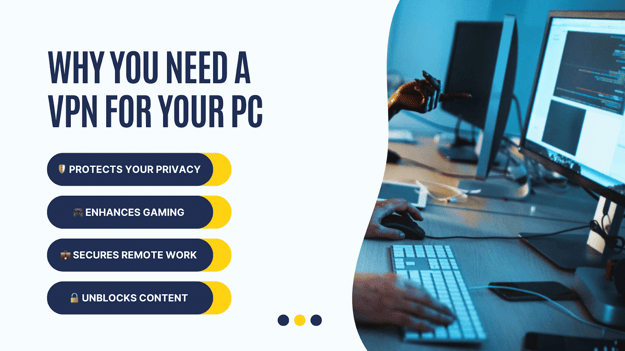
VPN for Privacy: Safeguarding Your Personal Information
One of the most important reasons to use a VPN for your PC is privacy. The internet is full of threats to your personal data, from cybercriminals trying to steal your information to advertisers and websites tracking your every move.
Protection from Hackers
Hackers are always on the lookout for vulnerable targets. When you connect to public Wi-Fi (such as in coffee shops, airports, or libraries), your data is exposed and can easily be intercepted by anyone on the same network. Cybercriminals can use various techniques, like man-in-the-middle attacks, to monitor your online activity and steal sensitive information like credit card numbers, passwords, and personal messages.
By using a VPN, all of your internet traffic is encrypted, making it unreadable to hackers. Even if someone is trying to intercept your data, they would only see an unreadable jumble of characters instead of your sensitive information.
Masking Your IP Address
Your IP address is essentially your online fingerprint, revealing your approximate location and identifying information. Websites, advertisers, and even your Internet Service Provider (ISP) can track your activities based on your IP address. This information can be used to build a profile of you, showing your browsing habits, locations, and interests.
A VPN masks your real IP address by assigning you a temporary one from the VPN server you are connected to. This makes it harder for websites, marketers, or even hackers to track your movements online, giving you greater control over your privacy. You can choose to connect to servers in different countries, further protecting your identity and location.
Avoiding Surveillance and Tracking
Governments and organizations track your online activities for a variety of reasons, whether it’s for advertising purposes or mass surveillance. This can be troubling, especially if you value your privacy. With a VPN, your activities are encrypted and your identity is obscured, making it far more difficult for any external entity to track what you’re doing online.
For those living in countries with strict censorship laws, VPNs are invaluable tools for avoiding surveillance and accessing information freely. VPNs bypass government-imposed censorship by allowing users to connect to servers in more liberal countries, thereby circumventing local internet restrictions.
The Role of VPNs in Enhancing Online Gaming
For gamers, a VPN isn’t just about security — it’s also about improving the overall performance and unlocking new opportunities. Here’s how a VPN can benefit your gaming experience:
Reducing Ping and Lag
One of the main frustrations gamers face is lag. Ping refers to the time it takes for data to travel from your computer to the game server and back, and high ping can lead to significant delays, ruining the gaming experience. If you’re playing a fast-paced game like Fortnite or Call of Duty, high ping can result in poor performance, which is extremely frustrating.
A VPN can help reduce ping by routing your traffic through a server that is geographically closer to the game server, bypassing congested routes on the internet. This means that your data takes a more efficient path, reducing latency and providing a smoother, faster gaming experience.
Bypassing Geo-Restrictions
Many online games are region-locked, meaning that access to certain content, servers, or game releases is restricted to specific countries or regions. For example, a new game might be released in the United States but not in other parts of the world for weeks or months.
A VPN allows gamers to bypass these geo-blocks by connecting to servers in regions where the game or content is available. This not only allows you to access exclusive content but also helps you play in servers where the game might be more stable or have fewer players.
Protection from DDoS Attacks
A common issue for competitive gamers, especially those in tournaments or playing in large-scale multiplayer environments, is the threat of a DDoS (Distributed Denial of Service) attack. DDoS attacks flood your network with excessive traffic, causing your connection to slow down or even disconnect entirely. It’s a tactic often used by malicious players looking to disrupt your game or punish you for beating them.
A VPN protects you from DDoS attacks by masking your real IP address, making it impossible for attackers to target you with these malicious threats. By connecting through a VPN server, your IP address is hidden, and any attempt to flood your connection with traffic will be diverted through the VPN.
Avoiding Server Bans
Some game servers implement bans based on your IP address if they detect suspicious activity or violations of the server rules. If your IP is banned, you won’t be able to play on that server again unless the ban is lifted. A VPN helps you avoid these IP bans by allowing you to change your IP address whenever needed. This is particularly useful if you’re facing false bans or want to experiment with different servers.
Why Remote Workers Should Use a VPN on Their PCs
With the rise of remote work, securing your online activities has become more critical than ever before. As employees work from home or coffee shops, they are accessing sensitive company data and collaborating with colleagues over the internet. This creates numerous security risks if the connection isn’t properly secured.
Secure Access to Company Networks
Many businesses store sensitive data, such as customer information, financial records, and proprietary files, on internal servers or cloud-based systems. When employees connect to the internet through public Wi-Fi or unsecured networks, there’s a risk that hackers could intercept these connections and access confidential company data.
A VPN provides a secure connection to these business networks by encrypting all data being transmitted between your PC and the company’s server. This ensures that all sensitive information remains private and protected from unauthorized access.
Protection on Public Wi-Fi
When you work from a coffee shop or while traveling, you’re likely to connect to public Wi-Fi networks, which are notoriously insecure. These networks are prime targets for cybercriminals, who can easily intercept unencrypted data being transmitted over them. A VPN encrypts your internet traffic, making it unreadable to hackers, even when using unsecured public networks.
By using a VPN, you can ensure that your work-related data, emails, and communications are safe from prying eyes, even when you’re on the go.
Confidentiality for Personal Information
For remote workers who deal with personal data — such as those in healthcare, finance, or legal sectors — confidentiality is of the utmost importance. A VPN encrypts the connection, ensuring that no one can access private client information. This protection is essential for maintaining compliance with data protection regulations like GDPR (General Data Protection Regulation) and HIPAA (Health Insurance Portability and Accountability Act).
How to Choose the Best VPN for Your PC
When it comes to selecting a VPN for your PC, there are several factors to consider to ensure you get the best service for your needs. Here’s what to look for:
- Speed and Performance:
Speed is a critical factor, especially for gaming and remote work. Look for a VPN provider that offers fast servers and minimal impact on your internet speed. VPNs that are optimized for gaming tend to have low latency and high-speed servers. - Encryption and Security Features:
Choose a VPN that uses AES-256 encryption, which is the industry standard for securing online data. Additional security features like DNS leak protection, kill switch, and double VPN (for extra layers of encryption) are also important for ensuring maximum privacy. - Server Locations:
A VPN with a wide range of server locations gives you flexibility. If you want to access content from specific regions or play games on servers in different parts of the world, check whether the VPN has servers in the countries you need. - Device Compatibility:
Make sure the VPN works across different devices, including your PC, smartphone, and tablet. A good VPN will allow you to connect multiple devices under one account, ensuring all your devices are secured. - Customer Support:
24/7 customer support is a must, especially if you encounter issues while gaming or working. A reliable support team can help you troubleshoot any problems quickly. - Cost:
While there are free VPN services, they often come with limitations like slower speeds, fewer server options, and weaker security. Paid VPN services tend to offer better speeds, features, and security.
Final Thoughts
Using a VPN for your PC is one of the best ways to protect your privacy, enhance your gaming experience, and ensure the safety of your online activities. Whether you’re looking to bypass geo-restrictions, protect yourself from hackers, or improve your internet speeds, a VPN is an invaluable tool for anyone who uses the internet regularly. By choosing the right VPN service, you can surf the web with confidence, knowing your data is secure and your online activities are private.
Don’t wait until your privacy is compromised — consider investing in a VPN today for a safer and more enjoyable online experience!