From SEO to GEO: How Google’s AI-Powered Search is Changing the Game for Small Businesses


Introduction
Google’s search results are not what they used to be. If you’ve noticed a conversational answer box at the top of your search page, you’ve seen Google’s new AI-powered Search Generative Experience (SGE) in action. Instead of the familiar list of blue links, users now often get instant AI-generated answers – sometimes without clicking any website at all.
For small business owners and entrepreneurs, this shift can feel daunting.
Less organic traffic, new AI algorithms, and an acronym soup of SGE, SEO, and now GEO (Generative Engine Optimization) are reshaping how customers find you online. The good news? With change comes opportunity. In this article, we’ll break down what Google’s SGE is (including some lesser-known facts and updates), explore the emerging practice of Generative Engine Optimization and how it differs from traditional SEO, and share practical tips – including services from innovators like Digital Frontier Company – to help your business improve visibility and conversions in this brave new search landscape.
Google’s New AI Search (SGE) in a Nutshell
Google’s Search Generative Experience (SGE) is an AI-powered enhancement to search that generates quick, conversational answers right at the top of the results page.
Think of it as Google doing the heavy lifting for the user: rather than listing ten websites, it uses AI to summarize information from across the web into a single overview. Here are a few key features of SGE:
- AI Snapshot: For complex or multi-part questions, SGE creates a synthesized summary (an “AI overview”) pulling information from several sources at once.
- For example, ask Google “what’s the best way to promote a local bakery on social media?” and you might see a concise tip-filled paragraph generated from multiple articles instead of a simple link list. Even broad creative queries like “YouTube ideas to market my bakery” could yield an AI-curated list of suggestions. The same goes for general questions – a search for “what is a podcast” might trigger an instant explanation in the overview, meaning the user gets their answer without needing to click through to any site.
- Conversational Follow-Ups: SGE lets users follow up with additional questions in a dialogue mode while Google remembers the context.
- This means users can refine what they’re asking and Google’s AI will tailor the next answer. For businesses, this could mean a customer’s search journey (their conversion funnel) stays on Google longer, as the user engages in Q&A with the AI. It’s a bit like having a chat with Google – great for user convenience, but it changes how and when users reach your website.
- Vertical AI Experiences: In some commercial searches – think shopping or local services – SGE can provide specialized results. For instance, for product queries Google might show a tailored list with product images, details, and pros/cons in the AI summary.
- Or for a local query like “best Memphis web design company”, the AI might summarize top options and their ratings. The publicity and reputation of your business (like strong reviews or content) become crucial, because the AI may highlight a couple of businesses directly in the answer. If you’re a local entrepreneur, you’ll want to be in that short list.
Lesser-known facts & updates: Initially launched in 2023 as an experimental opt-in, Google’s SGE (often called AI Overviews in search) has quickly expanded. By mid-2024, Google began rolling out AI overviews to all users in the U.S., and it’s now expanding globallysearchengineland.com. Not every query triggers an AI overview – Google uses it for more complex, exploratory searches where an AI summary adds valuelocalclarity.com. Google also says it’s working to keep sending traffic to websites and maintain ads as a “native part” of SGEwordstream.com. (In fact, you will sometimes see source links cited in the AI summary, and ads still appear, albeit below the AI answer.) Still, the early data shows a reality check for businesses: users are getting answers without clicks. According to one analysis, nearly 60% of Google searches already end without a click on any resultdigitalfrontier.app. And with AI answers now on the page, those zero-click searches are only growing. This new normal has big implications for how you approach search marketing.
Why SGE Matters to Your Business: Fewer Clicks, New Opportunities
The rise of SGE means two major shifts for businesses: dwindling traditional SEO traffic and a need to adapt content for AI. In the old world of search engine optimization (SEO), success meant getting your website to rank on page one – ideally in the top few results – so users would click it. But with AI-generated answers often occupying that prime real estate, even a #1 ranking might sit beneath an AI summary that already satisfies the query.
In many cases, Google’s AI overview may pull information from your site and others and show it above the organic results. The user sees your content snippet but doesn’t actually visit your site. It’s the classic “zero-click search” scenario now supercharged by AI.
Small businesses that rely on SEO traffic or the exposure from featured snippets are feeling the pinch: some publishers have reported organic click-through rates dropping by double-digit percentages since SGE-style answers appeared. In fact, Bain & Company data (reported by the Financial Times) shows certain sites losing up to 25% of their organic traffic as users stay within the AI answer
On the flipside, being the source that an AI chooses to quote or cite can become a new form of visibility – a bit like digital word-of-mouth or buzz marketing via the search engine. If the AI prominently mentions your brand or content, you gain authority in the user’s eyes without them even clicking through. It’s a new kind of branding opportunity. For example, imagine a prospective client asks an AI, “Who are the best digital marketing companies for nonprofits?” If the AI overview names your business as one of the top options (with info drawn from say, a list of the best digital marketing companies on some review site or from your own content), that user just “met” your brand. They might follow up by searching your name or clicking the citation. In marketing terms, the AI has introduced you into the conversion funnel at a potentially later stage – the user got their research summary and your brand made the cut as a recommended solution.
There’s even a silver lining data point: not all lost clicks are lost causes. Early adopters of Generative Engine Optimization have observed that even as their direct organic traffic dips, their brand is getting mentioned more in AI answers – which can lead to indirect conversions. One report noted a 40% rise in brand mentions across AI search engines (Google SGE, ChatGPT browsing, etc.) while organic traffic fell 25%, ultimately netting higher assisted conversionsdigitalfrontier.app. In plain English, fewer people clicked their site immediately, but more people later came looking for their brand or product after seeing it referenced by an AI. It’s a contrarian insight: SGE might shrink your click numbers, but it can also build trust and awareness in a way that pays off down the line.
Takeaway: The rules of SEO aren’t dead – but they are evolving. To stay visible, you’ll need to optimize not just for human eyeballs, but for the AI algorithms curating answers. That means shifting from traditional SEO to a new model: Generative Engine Optimization (GEO). Before we dive into GEO, remember that it’s not time to abandon all the basics. Your website still needs fast load times, good UX, and solid technical SEO services to ensure it’s crawlable. Think of GEO as an extra layer on top of classic SEO – one aimed at making sure when Google’s AI summarizes a topic related to your business, your content is the one it trusts and cites.
Generative Engine Optimization (GEO): SEO for the AI Era
So, what exactly is Generative Engine Optimization? Simply put, GEO is the practice of optimizing your content to be the preferred source for answers generated by AI engines. Digital Frontier Company – a forward-thinking small business digital marketing agency – defines GEO as “structuring, chunking, and semantically enriching content so large language models select — and cite — your brand when they craft instant answers.”digitalfrontier.app In other words, it’s about aligning your website’s content with the needs of AI answer engines (like Google’s SGE, Bing’s AI chat, ChatGPT browsing, voice assistants, etc.) so that your business gets mentioned in those no-click answers.
How is GEO different from traditional SEO? Here are a few key differences and alignments:
- From Keywords to Intent & Entities: Old-school SEO often revolved around specific keywords (and yes, some still obsess over keyword density). GEO cares less about exact-match keywords and more about user intent and clear entities. Google’s AI is trained on natural language and looks for content that directly answers questions and provides context. That means a page titled “Guide to Podcast Marketing” that clearly answers “what is a podcast” and provides step-by-step YouTube ideas for promotion might perform better in an AI overview than a generic page stuffed with podcast keywords. GEO encourages writing in a natural, Q&A style that AI can easily digest and deem authoritative.
- Content Structure is King: In GEO, how you organize information is crucial. AI models favor content that is well-structured – think descriptive headings, concise paragraphs, bullet-point lists, and FAQ sections – because it’s easier for them to parse and pull into answers. This aligns with good human UX too. As one guide put it, structured, skimmable information is more likely to be selected for AI Overviews than long, rambling text. So, breaking your content into clear sections (much like this blog post!) isn’t just reader-friendly, it’s AI-friendly. If you’re planning a website redesign, consider not just the visual appeal but how the content is segmented and tagged under the hood. Modern Memphis web design company templates or any good web design will allow for schema markup (more on that shortly) and clean content structure – leverage that.
- Semantic Enrichment & Markup: GEO often involves adding extra context for the AI through schema markup and metadata (this is where those technical SEO and digital consulting services from experts can help). For example, adding a FAQ Page schema to a Q&A section of your page can literally hand-feed an AI the question-answer pairsdigitalfrontier.app. Including structured data like Local Business schema for location info, Product schema for products, or Article schema for blog posts makes your content more understandable to machines. Generative AI is likely to use such data when deciding what info to trust. Think of schema tags as signposts that say “Hey Google, this text is the answer to this question.” GEO leverages that to increase your chances of being cited in the AI result.
- Focus on Trust and Authority: In the AI-driven search world, who said something can be as important as what is said. Google’s algorithms, including SGE, lean on concepts like E-E-A-T (Experience, Expertise, Authoritativeness, Trustworthiness). GEO means ensuring your content showcases authority – citing credible sources, highlighting the expertise of your authors or team (are you a digital marketing expert writing about marketing? Say so!), and keeping information up-to-date. It’s akin to traditional SEO content strategy but amplified: an AI won’t cite your page unless it deems it one of the most accurate and authoritative on the topic. This is where publicity and real-world reputation can indirectly help; a strong brand presence and positive mentions around the web signal to algorithms that you’re a trusted source. Generating some positive buzz (through PR or buzz marketing campaigns) about your brand or getting authoritative sites to mention you can thus support your GEO efforts, much like it does SEO.
In summary, traditional SEO isn’t being thrown out the window – you still need great content and a technically sound site – but GEO adds a new focus on making your content AI-ready. It’s an evolution: SEO was about appealing to Google’s ranking algorithm, while GEO is about appealing to the AI that uses those ranked pages to formulate answers. Let’s look at some actionable steps to do that.
Practical Tips to Optimize for SGE and GEO Today
You might be wondering, “This sounds great in theory, but what can I do right now for my business website?” Here are some practical, actionable tips to get you started on your GEO journey (many of these you can start doing today, even without a digital marketing expert on hand):
- Answer Real Questions Clearly: Review your content and ensure it directly answers common questions in your niche. If you run a fitness studio, does your site plainly answer things like “How do I start a workout routine?” or “How to choose a personal trainer?” Content that aligns with the actual questions people ask (check the “People Also Ask” box or your Search Console queries for ideas) is more likely to get picked up by AI. Focus on long-tail keywords and niche questions – these face less competition and often indicate clear user intent. For example, a home remodeler might write a blog titled “How to renovate a small kitchen in a budget-friendly way” rather than just “Home Renovation Tips.” The specific, conversational query is exactly what an AI overview loves to answer.
- Format for AI (and Humans): Make your content easy to scan. Use descriptive headings (H2s, H3s), short paragraphs, and bullet points or numbered lists to highlight key info. Consider adding an FAQ section at the end of articles addressing common questions with concise answers. Aim for about a 30-50 word answer for each FAQ question – this length is long enough to be substantive but short enough to be quote-worthy. In fact, a quick win for GEO is to add FAQ schema and ~40-word answers to your top blog posts – marketers have found that chatbots like Google’s SGE will scrape and start citing these within weeksdigitalfrontier.app. It’s a low-hanging fruit that could get your content featured in AI results sooner than you think.
- Leverage Schema Markup: As mentioned, structured data is your friend. Implement schema markup relevant to your business. If you’re a local service, use LocalBusiness schema to feed AI your NAP (Name, Address, Phone) and offerings. If you have product pages, use Product schema for rich details. For content pages or blogs, use Article schema, and definitely use FAQPage schema for Q&A sections. Many website platforms or plugins (like Yoast SEO or schema plugins) make this easier. Schema not only helps with regular SEO (like getting rich snippets) but also makes it simpler for an AI to trust and pick your content for an overview snippet.
- Keep Content Fresh and Factually Rich: Google’s generative search will favor up-to-date information, because an AI answer needs to be accurate as of now. Review your content for outdated info (old statistics, outdated “best of” lists, etc.) and update them. Add current stats or trends (with citations) to signal that your content is fresh – for example, if you’re discussing digital marketing strategies, mention the current year or reference the latest Google update. Also, incorporate clear entities (people, places, things) and relevant facts into your answers. Large Language Models (LLMs) like those powering SGE rely on retrieval-augmented knowledge, meaning they check facts against sources. Content that provides specific, correct facts and identifies key entities will be more favorable than vague fluffdigitalfrontier.app. Pro tip: If you have strong case studies or data, showcase them – being the origin of a data point can make your site the one that gets cited.
- Optimize Your Google Business Profile & Local Citations: If you’re a local business, don’t forget that SGE and other AI will pull info from Google’s own database. Ensure your Google Business Profile is complete and accurate (hours, services, reviews). Consistency is key – your info on Yelp, Facebook, and industry directories should match. AI overviews answering local questions (like “Where’s a good café in downtown?”) might summarize a few businesses based on their ratings and descriptions. As one marketing blog noted, Google’s AI often pulls data from Google Business Profiles and local reviews when summarizing local queries. If your information is well-maintained and you have good reviews (hint: encourage happy customers to leave reviews – it’s classic SEO that still pays off), you increase your chances of being mentioned in an AI-driven local recommendation.
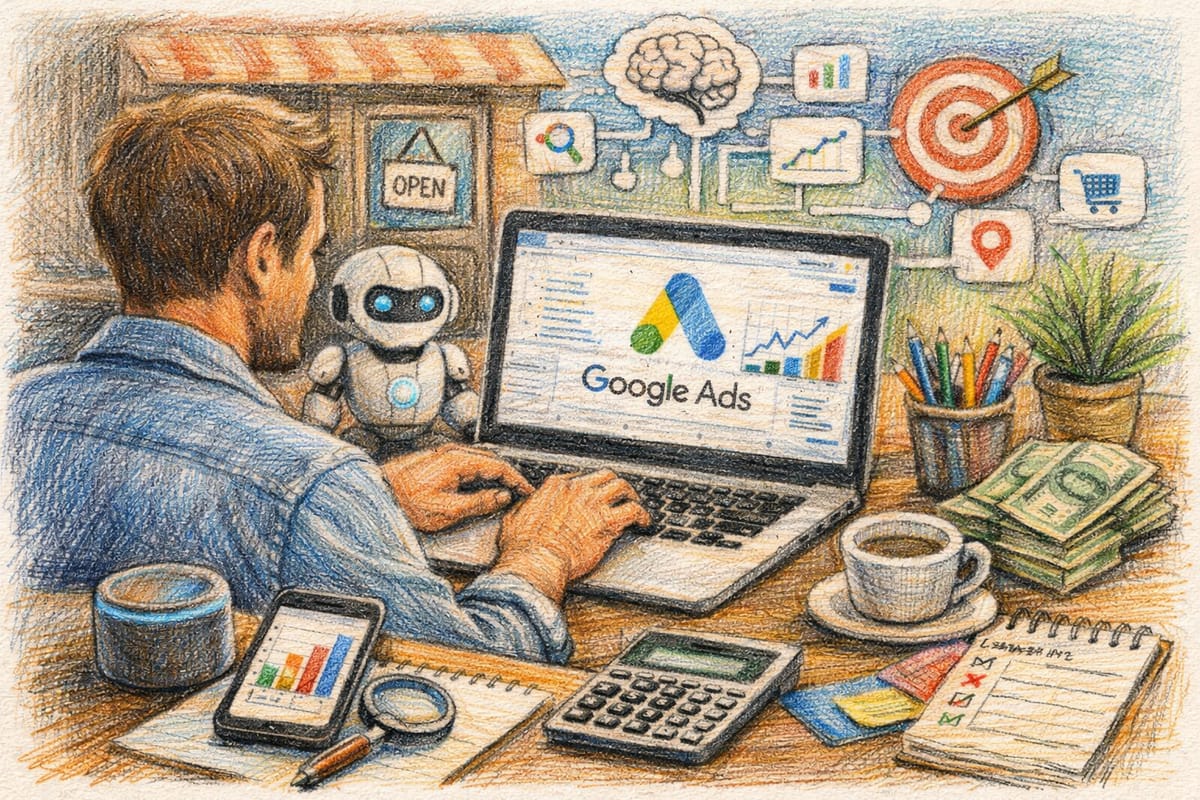
- Monitor and Adapt Your Ads: While this dives a bit beyond SEO/GEO, it’s worth noting – with organic visibility potentially shrinking, many businesses turn to Google Ads to maintain presence. But SGE affects ads too. AI overviews appear at the top, pushing ads further down, and there may be fewer ad slots visible without scrolling. This means pay-per-click gets more competitive. If you run ads, keep an eye on performance. You might need to refine your targeting or ad copy (make it ultra-relevant to the user intent so it’s not skipped) and consider using new formats like Google’s Performance Max campaigns that leverage AI to place ads smartly. The takeaway here is to ensure your conversion funnel is tight – if fewer people see your ad, you want those who do click to land on a fast, convincing landing page that converts. Strong alignment between the query, the ad, and the landing page’s message is more important than ever.
- Get Expert Help if Needed: Let’s face it – not every small business has the time or in-house know-how to implement all of this. It’s okay to get help. This could mean upskilling yourself or your team (there are great online resources on how to get into digital marketing and specifically AI-era optimization) or partnering with experts. A digital marketing expert or digital consulting firm can audit your content for AI-readiness, implement technical changes, and develop a strategy. For example, Digital Frontier Company offers Generative Engine Optimization servicesdigitalfrontier.app that guide businesses through aligning content with AI search. They even have a 5-step GEO framework to help brands “win citations in ChatGPT, Perplexity, and Google AI Overviews”
- . Working with professionals who stay on the cutting edge – whether it’s a local agency or one of the best digital marketing companies known for innovation – can fast-track your success. The key is to ensure whoever you work with understands that GEO is not just a buzzword but a fundamental shift in approach. Make sure they will still cover your technical SEO services (site speed, security, mobile-friendliness, etc.) while also helping you create AI-optimized content. It’s not an either-or; you need both a solid website and smart content to thrive.
Conclusion: Embrace the Future of Search
Google’s AI-powered SGE is rewriting the rules of search, and Generative Engine Optimization is quickly becoming the playbook for those who want to stay ahead. For small business owners and entrepreneurs, the prospect of yet another marketing shift might feel overwhelming – and it’s true, the days of just sprinkling keywords on a page and climbing the ranks are over. But this evolution is also leveling the playing field in many ways. The businesses that succeed will not necessarily be the biggest or the ones with the most ads, but the ones that provide the clearest, most helpful information and adapt quickly. In this AI-driven search landscape, clarity, authenticity, and user-centric content are king.
To recap, focus on answering your customers’ actual questions (better than anyone else out there), structure your content so AI can digest it, and keep an eye on emerging best practices in GEO. Don’t be afraid to try something new – add that FAQ section, experiment with a conversational blog post format, or update an old article with fresh insights. Each step will make your business more “AI-friendly” and future-proof your digital presence. And remember that SEO isn’t dead; it’s just growing up. In fact, many core principles remain the same: know your audience, deliver value, and build trust. Now, you’re doing it with an eye toward how a machine might interpret your site as well.
Small businesses that embrace these changes can actually turn them into a competitive advantage. While others hesitate, you can be the early adopter – the one already capturing those zero-click brand mentions and enjoying the compounded credibility that comes with being an AI-cited source. It’s a new kind of publicity that can translate into real-world leads and sales. So, stay curious and proactive. Whether you team up with a small business digital marketing agency or DIY with the plethora of tools (and maybe a few AI helpers) at your disposal, now is the time to pivot from old-school SEO to GEO. The search landscape is evolving, but one thing remains true: businesses that focus on genuine helpfulness and smart strategy will thrive. In the era of SGE, make it your goal to not just rank on a page, but to become the trusted answer that Google’s AI can’t help but share with the world.
Actionable Takeaway: The intersection of SGE and GEO is where your next digital wins will come from. Start with one or two steps today – update a blog post with an FAQ, chat with your team about new content ideas, or schedule a consultation with a GEO-savvy professional. By taking action now, you’ll position your business to capture customers in this new AI-guided journey, turning searchers into satisfied clients in 2025 and beyond. Good luck, and happy optimizing!
Sources: Recent insights were gathered from Google’s announcements and industry analysis to ensure you have up-to-date guidance. Key references include Google’s own blog updates on SGEwordstream.com, data on zero-click searches and AI’s impact from SparkToro and Financial Timesdigitalfrontier.app, and practical GEO strategies shared by Digital Frontier Companydigitalfrontier.app