Anthropic Launches Claude Design, Figma Shares Fall
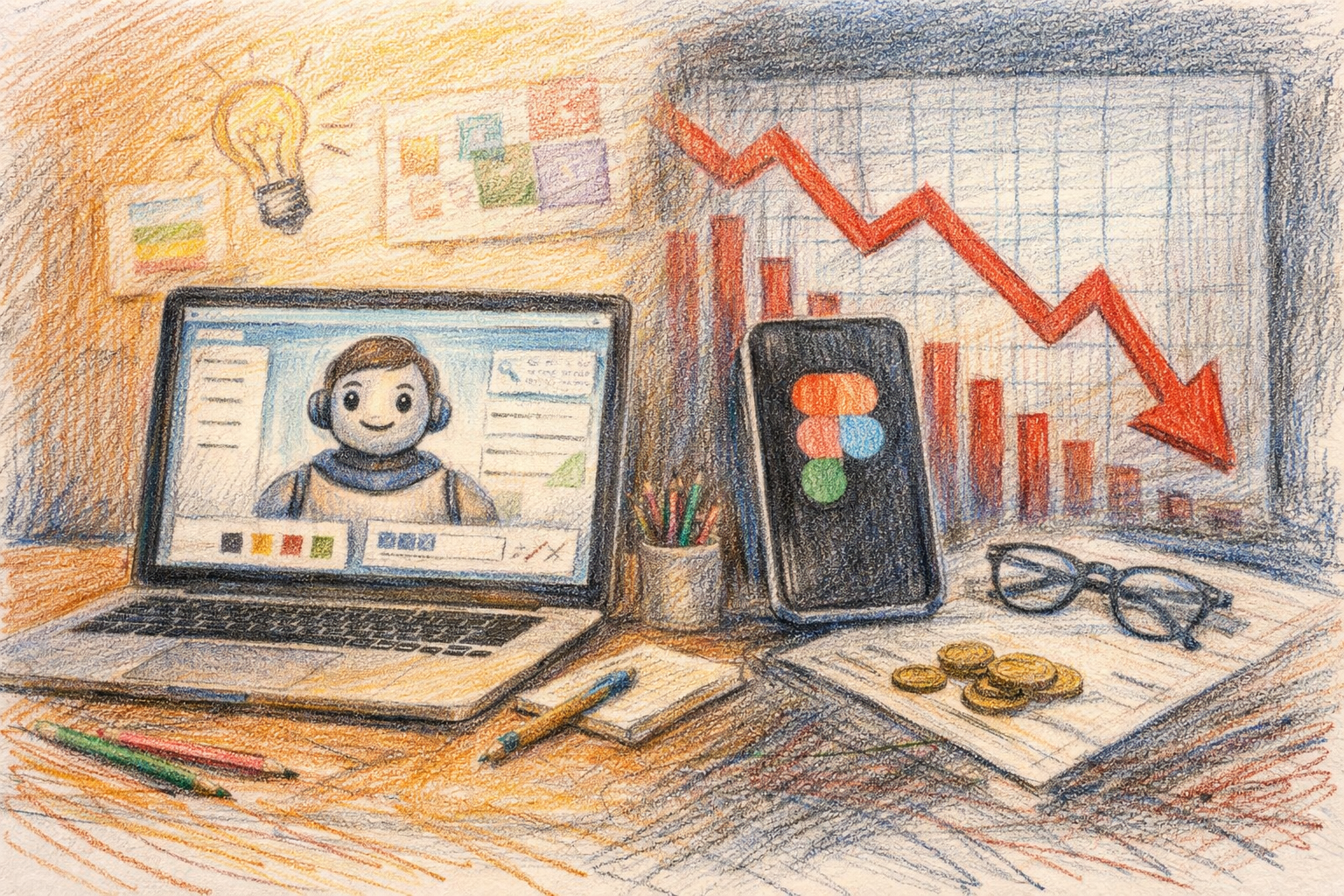
Anthropic launched Claude Design on April 17, 2026, marking a significant expansion into the visual creation space with a new AI-powered tool that enables users to generate designs, prototypes, pitch decks, and slides from simple text prompts. The new Anthropic Labs product is powered by Claude Opus 4.7 and is available in research preview for Claude Pro, Max, Team, and Enterprise subscribers. Shortly after the announcement, design software company Figma’s stock fell about 7 percent, signaling market concern about the competitive threat posed by AI-driven design automation.

What Claude Design Offers
Claude Design gives designers room to explore widely and everyone else a way to produce visual work by allowing users to describe what they need and then refining through conversation, inline comments, direct edits, or custom sliders until it’s right. The tool addresses a longstanding challenge in product development: experienced designers rarely have time to prototype a dozen directions so they limit themselves to a few, while founders, product managers, and marketers with an idea but not a design background find creating and sharing those ideas daunting.
Users can start from a text prompt, upload images and documents including DOCX, PPTX, and XLSX files, point Claude at their codebase, or use the web capture tool to grab elements directly from websites so prototypes look like the real product. The tool’s ability to understand and replicate existing brand standards sets it apart from simple generation tools.
Design System Integration
One of Claude Design’s standout features is its ability to learn and apply company design systems automatically. During onboarding, Claude builds a design system for teams by reading codebases and design files, so every project after that uses colors, typography, and components automatically, with teams able to refine the system over time and maintain more than one.
Claude Design can apply a team’s design system to every project it creates so that results are consistent with the company’s overall visual style by reading a company’s codebase and design files. This capability addresses a common pain point in design workflows where maintaining brand consistency across projects typically requires manual oversight.
Export and Integration Options
Anthropic has positioned Claude Design as complementary to existing tools rather than a direct replacement. Users can export designs as PDFs, URLs, PPTX files, or send them to Canva, where they become fully editable and collaborative. Designs can be shared as internal URLs within organizations, saved as folders, or exported to Canva, PDF, PPTX, or standalone HTML files.
When a design is ready to build, Claude packages everything into a handoff bundle that users can pass to Claude Code with a single instruction, creating a seamless workflow from visual concept to working code. Over the coming weeks, Anthropic will make it easier to build integrations with Claude Design so teams can connect it to more of the tools they already use.
Real-World Use Cases
The tool has been designed with specific workflows in mind. Use cases include realistic prototypes that designers can turn into easily-shareable interactive prototypes without code review, product wireframes and mockups that product managers can sketch out and hand off to Claude Code, design explorations for quickly creating a wide range of directions, and pitch decks and presentations that founders and account executives can create from rough outlines in minutes.
Education company Brilliant reported that pages requiring 20 or more prompts to recreate in competing design tools needed only 2 prompts in Claude Design, then converted static mockups into interactive prototypes they could user-test and share without any code reviews and passed everything to Claude Code for production implementation. Datadog’s product team described compressing what had been a week-long cycle of briefs, mockups, and review rounds into a single Claude Design conversation, with time savings coming not just from speed but from eliminating the handoff friction between brief, design, and review.
Market Impact and Competitive Positioning
The launch immediately reverberated through the design software market. Anthropic Chief Product Officer Mike Krieger stepped down from Figma’s board just days before the launch amid speculation the company was gearing up to launch a design tool. This timing, combined with the stock market reaction, underscores the perceived competitive threat.
However, Anthropic told TechCrunch that Claude Design is intended to complement popular design apps like Canva rather than replace them, with the company saying its new product is built for people who aren’t starting from a design tool and need to get from an idea to something visual quickly.
Availability and Pricing
The new product is powered by Claude Opus 4.7 and is available in research preview for Claude Pro, Max, Team, and Enterprise subscribers. The feature is off by default for Enterprise but can be enabled by admins. Usage of Claude Design is metered and tracked separately from other Claude services, with its own usage tracking, allowances, and weekly limits that sit alongside existing chat or Claude Code limits.
Enterprise usage-based Claude Design users receive a one-time credit covering about 20 typical prompts that is consumed before additional usage counts toward organizational spend and expires on July 17.
Strategic Context
The launch highlights Anthropic’s ongoing push into the enterprise and prosumer categories as competition intensifies around AI workplace tools. In January, Anthropic rolled out Claude Cowork, an agentic assistant built for complex tasks, and a few weeks later brought agentic plug-ins to Cowork designed to automate specialized tasks within a company’s various departments.
The announcement comes days after Bloomberg reported that VCs have been offering the company a preemptive funding round that would value it at $800 billion or more, which would almost match or even surpass rival OpenAI, though Anthropic isn’t interested in the latest offers according to the report.
Key Facts
- Claude Design launched April 17, 2026, as a research preview powered by Claude Opus 4.7
- Available to Claude Pro, Max, Team, and Enterprise subscribers with gradual rollout
- Figma stock dropped approximately 7% following the announcement
- Anthropic CPO Mike Krieger left Figma’s board days before launch
- Usage tracked separately from Claude chat and Code with distinct weekly limits
- Enterprise customers receive one-time credit for approximately 20 prompts expiring July 17, 2026
- Supports export to Canva, PDF, PPTX, HTML, and handoff bundles to Claude Code
- Brilliant reported reducing design time from 20+ prompts to just 2 prompts
- Datadog compressed week-long design cycles into single conversations
Sources
- Introducing Claude Design by Anthropic Labs – Anthropic
- Anthropic launches Claude Design, a new product for creating quick visuals – TechCrunch
- Anthropic debuts Claude Design – The Register
- Anthropic Launches Claude Design, Figma Stock Immediately Nosedives – Gizmodo
Sources
- Introducing Claude Design by Anthropic Labs
- Anthropic debuts Claude Design, because who needs designers? • The Register
- Anthropic launches Claude Design, a new product for creating quick visuals | TechCrunch
- Anthropic launches Claude Design following Opus 4.7 model upgrade – 9to5Mac
- Claude Design: Complete Guide for Non-Designers (2026)
- Anthropic Launches Claude Design, Figma Stock Immediately Nosedives