Truck Accident in Chicago: How Urban Freight Crashes Differ and How to Protect Your Claim
 8 min read
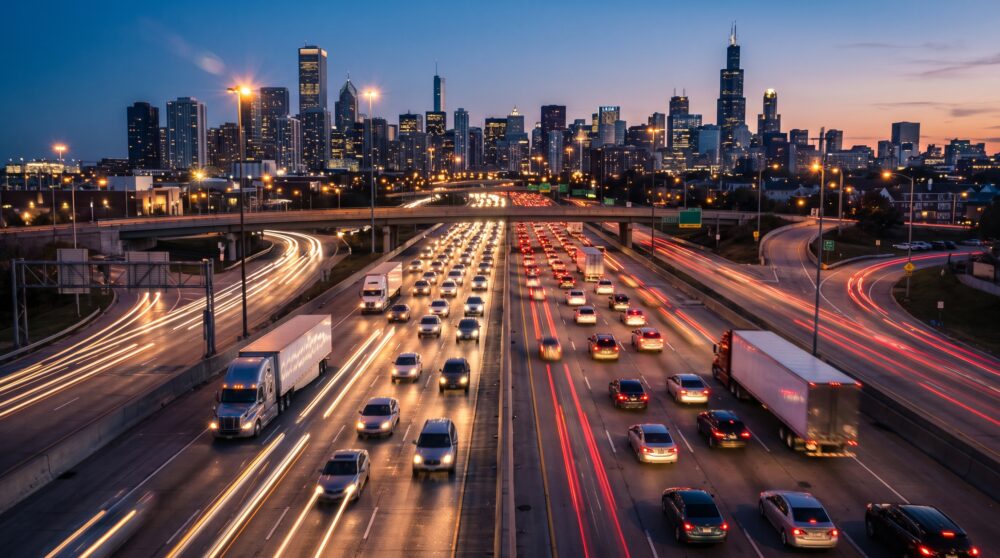
Chicago is the freight crossroads of North America. More rail freight moves through the Chicago region than anywhere else on the continent, all six of North America’s Class I railroads converge here, and the intermodal yards on the city’s South and Southwest Sides feed a constant stream of container trucks onto local streets. On top of that, the city’s expressways — the Dan Ryan, the Stevenson, the Kennedy, the Eisenhower and the Bishop Ford — carry national through-freight directly into one of the densest urban environments in the country.
That combination creates a truck accident risk that is very different from the open-interstate crashes most people picture. In Chicago, 80,000-pound tractor-trailers share narrow lanes with commuters, CTA buses, cyclists, rideshare drivers and pedestrians. Delivery box trucks double-park on side streets. Semis make tight turns at intersections built a century ago. When something goes wrong, the results are severe — and the legal claims that follow are among the most complex in personal injury law.
This guide explains what makes Chicago truck accidents distinctive and what victims need to do to protect their rights.
Why Urban Truck Crashes Are Their Own Category
Highway truck accidents tend to involve speed: rear-end collisions, jackknifes and rollovers at 55 to 70 miles per hour. City truck accidents more often involve visibility, geometry and congestion. The trucks are moving slower, but they are operating within inches of other road users, and the victims are frequently pedestrians, cyclists and occupants of small passenger vehicles with no protection from a vehicle 20 to 30 times their weight.
Several crash patterns are especially common in Chicago:
Wide right-turn accidents. A tractor-trailer making a right turn at a city intersection must swing left first to clear the corner. Drivers who enter the gap on the right — or cyclists in bike lanes — can be crushed as the trailer tracks inward.
Underride collisions. When a passenger vehicle slides under the rear or side of a trailer, the trailer bed strikes at windshield level. These crashes are frequently fatal, and rear underride guard condition is often a key liability issue.
Blind spot lane changes. On the Dan Ryan’s express and local lanes and the Kennedy’s reversible lanes, constant merging puts passenger vehicles in a truck’s large blind zones on both sides and behind the trailer.
Viaduct and bridge strikes. Chicago has hundreds of low railroad viaducts. Trucks routed onto the wrong street strike these structures, shedding loads and debris onto the road.
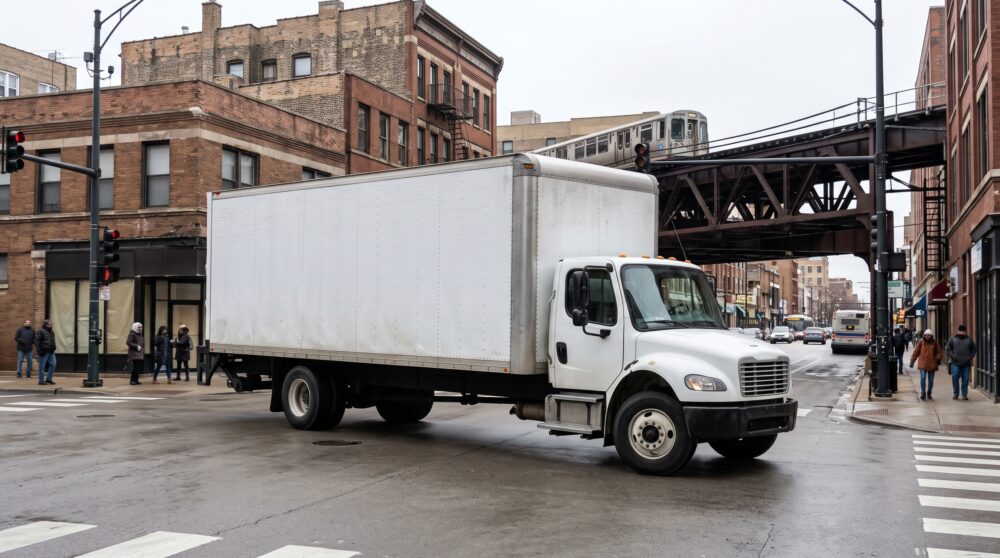
Delivery truck hazards. Last-mile delivery has multiplied the number of box trucks and vans on residential and commercial streets. Double-parking, sudden door openings, reversing in alleys and rushed driving under delivery quotas all create risk.
Congestion rear-ends. Stop-and-go traffic on the Stevenson and the Eisenhower is a recurring setting for trucks failing to stop in time — a loaded truck needs far more distance to stop than a car.
Federal Rules That Shape Every Truck Case
Interstate commercial carriers operate under Federal Motor Carrier Safety Administration (FMCSA) regulations, and violations are central to proving liability.
Hours of service rules limit property-carrying drivers to 11 hours of driving within a 14-hour on-duty window after 10 consecutive hours off, require a 30-minute break after eight cumulative hours of driving, and cap weekly on-duty time. Chicago’s congestion makes these limits harder to keep — a driver who spent three hours crawling through the city may push on rather than lose a delivery window.
Driver qualification rules require proper commercial licensing, medical certification, and drug and alcohol testing. Maintenance and inspection rules govern brakes, tires, lights and coupling devices. Cargo securement rules dictate how loads must be tied down.
Federal law also sets minimum liability insurance for interstate carriers — generally $750,000 for most general freight and higher for hazardous materials. That coverage, along with the carrier’s own excess policies, is often what makes full recovery possible in serious cases.
Who Can Be Held Liable in a Chicago Truck Accident?
The city’s freight system involves many hands, and each one can carry responsibility.
The truck driver for unsafe driving, fatigue, distraction, impairment or illegal turns.
The motor carrier under the doctrine of respondeat superior, and directly for negligent hiring, poor training, inadequate supervision or pressuring drivers to violate hours-of-service limits.
The shipper or loader — including intermodal yards and warehouses — when overloaded or poorly secured cargo contributed to the crash.
Freight brokers when they selected a carrier with a known poor safety record.
Last-mile delivery networks whose contracting arrangements and delivery quotas can create liability beyond the individual driver.
Manufacturers and maintenance providers when defective brakes, tires, underride guards or other components played a role.
Government entities in limited cases involving dangerous road design, missing signage at low viaducts or failed traffic signals — claims that come with shorter notice requirements.
Evidence You Can’t Get Back
Truck accident evidence is perishable, and in a city like Chicago, so is much of the video that can prove what happened.
Electronic logging device (ELD) data shows actual driving and rest time. Engine control module (ECM) data records speed, braking and throttle in the seconds before impact. Dashcam and driver-facing camera footage is now common in commercial fleets. Traffic, CTA, business and doorbell camera footage across Chicago’s dense camera network can show the crash from multiple angles — but it is often overwritten within days. Dispatch records, delivery logs and route data reveal schedule pressure.
An attorney’s first job is to send preservation demands to the carrier, its insurer and third parties before this evidence is lost.
Illinois Law and Your Truck Accident Claim
Illinois law governs the personal injury claim itself.
The statute of limitations is generally two years from the date of the crash for personal injury and two years from the date of death for wrongful death claims. Claims against public entities can require much faster action.
Illinois follows modified comparative fault with a 51% bar — you recover damages reduced by your share of fault as long as you are not more than 50% responsible. In urban crashes, carriers frequently argue that the cyclist rode into a blind spot or the driver tried to squeeze past a turning truck. Video, ECM data and reconstruction evidence are how those arguments are answered.
Illinois places no caps on compensatory damages in truck accident cases. Victims can pursue medical expenses, lost income, reduced future earning capacity, pain and suffering, disfigurement and loss of normal life. Since 2021, Illinois also adds 6% annual prejudgment interest on personal injury damages from the date the lawsuit is filed — a factor that encourages defendants to make realistic offers sooner. And since 2023, punitive damages are available in most wrongful death actions where the conduct was willful and wanton.
When Your Livelihood Depends on the Road
For Chicago’s small business owners, contractors, rideshare drivers and delivery workers, a truck crash often wrecks more than a vehicle. It can take away the tool you earn a living with and the physical ability to do the work. Lost contracts, missed shifts, and the cost of renting a replacement vehicle or hiring help are all part of a properly documented claim — but only if they are recorded with invoices, bank statements, tax returns and client communications from the start.
When to Hire a Truck Accident Lawyer in Chicago
Trucking companies and their insurers send rapid response teams to serious crashes, sometimes within hours. Their investigators begin shaping the story before the injured person has left the hospital. Matching that response requires a lawyer who knows how to obtain FMCSA records, ELD and ECM data, fleet camera footage and carrier safety histories — and who can stand up to the large defense firms that represent national carriers.
If you or a family member were hurt in a crash involving a semi, a delivery truck or another commercial vehicle, talking with an experienced Truck Accident Lawyer in Chicago as early as possible is the best way to protect the evidence and the full value of your claim.
Look for a firm with specific trucking litigation experience, familiarity with FMCSA regulations, the resources to retain reconstruction experts, and a willingness to take a case to trial in Cook County if the carrier won’t offer fair compensation.
The City Moves on Freight — Know Your Rights When It Goes Wrong
Chicago’s economy depends on trucks, and they will always be part of daily life on its streets and expressways. When a commercial vehicle causes a serious crash, the stakes, the parties and the evidence are all larger than in an ordinary accident.
Get medical care first. Photograph the scene and the truck, including the carrier’s name and USDOT number. Do not give recorded statements to the trucking company’s insurer. And get experienced legal help before the evidence that proves your case is gone.