SEO vs Digital Marketing: What’s the Difference?
Use digital marketing for SEO and beyond: learn where organic search fits, when to add other channels, and how to choose a plan for your business.
 8 min read
SEO helps customers find your business through unpaid search results. Digital marketing covers that work plus channels such as paid ads, email, and social media. If customers search for a solution you provide, SEO deserves attention. If you need to reach people before they search, reconnect with visitors, or promote a deadline-driven offer, plan for other channels too.
Your choice depends on where customers discover you, how soon you need results, and what happens after someone visits your site.
SEO and digital marketing: the distinction
Search engine optimization (SEO) improves your website and content so search engines can understand them and relevant customers can find you in unpaid results. That includes clear product or service descriptions, answers to customer questions, and navigation people can use. Local businesses also need accurate, useful information where nearby customers search.
Google’s SEO Starter Guide describes the task:
“SEO – short for search engine optimization – is about helping search engines understand your content” – Google Search Central
Digital marketing means promoting a business through digital channels. Search engine optimization is one part of it; search ads, social campaigns, email newsletters, online video, and website improvements can play a part too. Choose channels according to the business goal instead of launching them all at once.
Question | SEO | Digital marketing as a whole |
|---|---|---|
What does it cover? | Visibility in unpaid search results and the experience of visitors arriving from search | The mix of online channels used to attract, convert, and retain customers |
How do you reach people? | Match useful pages to searches people make | Reach searchers and other audiences through channels such as ads, email, and social |
When can it help? | When people are actively looking for an answer, product, or provider | At multiple stages, including discovery, consideration, purchase, and repeat business |
What do you invest? | Time and resources for site improvements, content, and ongoing upkeep | Budget and effort distributed across chosen channels; some involve media spend |
How do you judge it? | Relevant search visibility, qualified visits, and actions from organic visitors | Leads, sales, retention, and the contribution of each channel to the goal |
You do not pay for each click from unpaid results, but useful content, site work, and maintenance take resources. A broader plan need not include paid ads either: email and social can have a role without a large media budget.
Is paid search the same as SEO?
No. A paid search ad appears in response to a search, while SEO concerns unpaid results. Both are forms of search marketing, and both may bring visitors to your site. Buying an ad does not improve your organic position: Google says advertising participation does not affect inclusion or ranking in its search results. Account for ad spend and SEO work separately, even when they support the same goal.
Where SEO and other channels work together
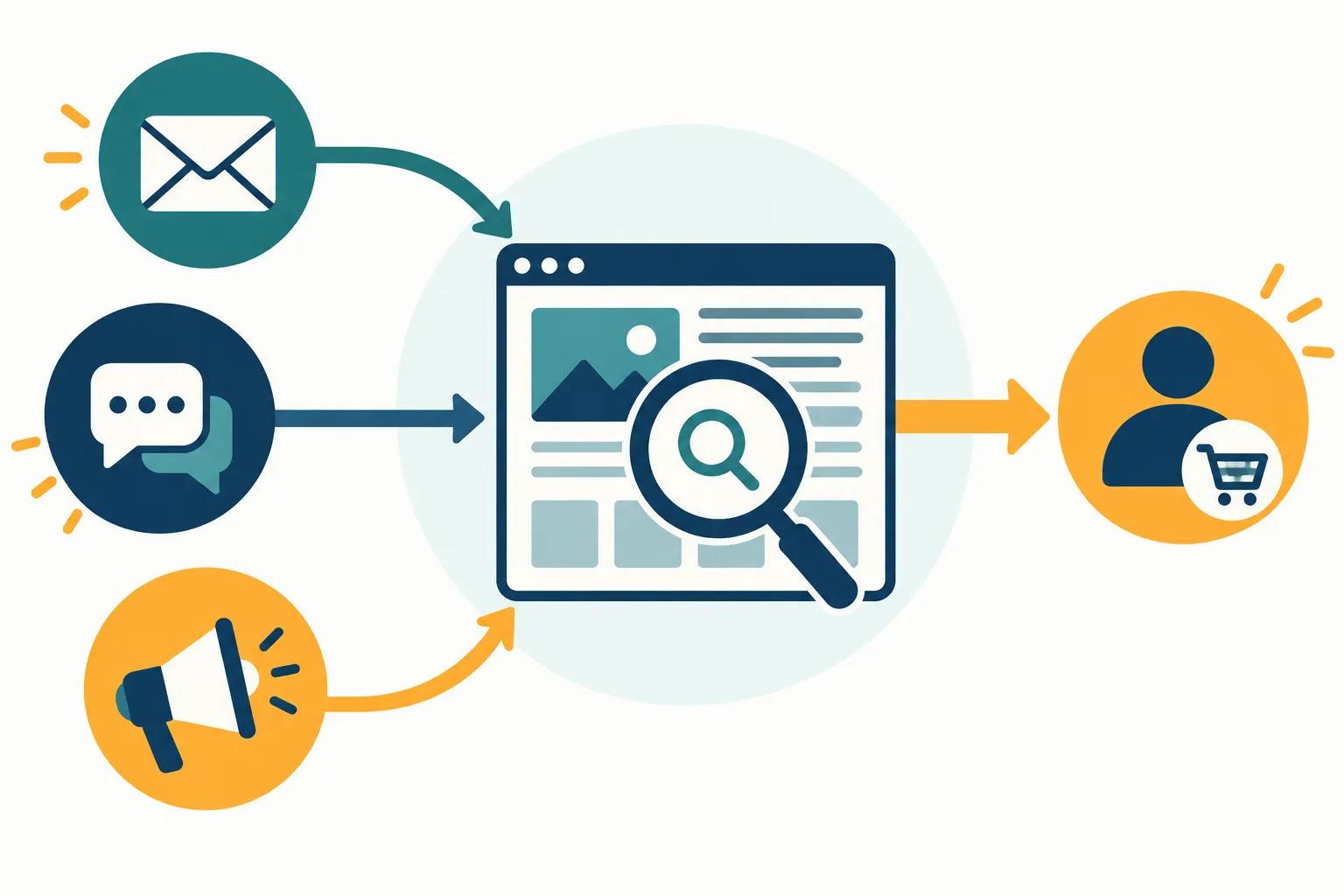
Someone may reach your service page through search, an email, or an ad. Each visitor needs enough information to decide whether to contact you, though their questions may differ.
Consider a local repair business. A customer searching for an urgent repair knows what they need, so a clear service page and useful local information can help them find the business. A search ad offers another route to the page when the business needs immediate visibility. Previous customers may instead respond to an email about maintenance before anything breaks.
Here is where the work overlaps:
An answer to a customer question can bring relevant search visits and give sales staff something useful to share. Write for the question first, then make the page easy to scan.
Search ads and SEO can both reach people who express intent through a query. Ads buy placement under the platform’s rules; SEO works on unpaid visibility. Compare the leads and sales from each, not just clicks.
A social post can introduce an idea to someone who has not searched for it. Link to a helpful website page when they want details.
Search may bring the first visit, and an email can bring back a subscriber. Give each a distinct job rather than sending the same generic message everywhere. See why email still matters in digital marketing for more on follow-up.
Before you add another traffic source, make sure visitors can tell what you offer, who you serve, and what to do next. That page has to work for people arriving through SEO as well as through your other marketing channels.
If campaigns are already running but the outcome is weak, common reasons digital marketing campaigns underperform can help you diagnose the problem before adding spend.
Which should your business invest in first?
Start with the purchase. Ask what triggers it, whether buyers search for it, how long they take to decide, and whether your site makes the next step clear.
Your situation | Sensible first move | Why |
|---|---|---|
Customers search for your product or service, but your pages do not answer their questions | Prioritize SEO basics and useful service or product pages | You are missing demand that already exists |
You have a dated promotion or need to test an offer soon | Pair a clear landing page with a suitable paid or owned channel | Organic visibility is not a reliable deadline-driven launch plan |
People buy repeatedly or take time to decide | Build an email follow-up path alongside discoverable content | One visit may not be enough to make a decision |
Few people know the category or problem exists | Invest in audience education through appropriate channels, then support it with search content | Search alone cannot create all of the initial awareness |
You get visits but few inquiries or purchases | Improve the offer, page, and next step before buying more reach | More visitors will encounter the same obstacle |
If you run a small business with limited capacity, start narrow. Explain your offer on your website and measure meaningful actions there. Focus on one acquisition channel that matches how customers look for the solution. Add another once you can see what the first contributes and have time to maintain both.
SEO need not come first. If your audience finds new products through a community or an existing customer list, work there. If buyers search for a provider like you, make it easier for them to find your site. Let their behavior shape the mix of digital marketing and search engine optimization. To keep learning the SEO side, start with these best SEO blogs for small business owners.
A simple way to allocate effort
Pick an outcome the business cares about, such as inquiries, appointments, or purchases. “More traffic†is too broad to guide your choice.
Note what buyers do before they contact you. They might search for a solution, respond to an offer, ask peers, or return to a familiar business.
Make the relevant page answer their immediate questions and give them a clear next step.
Prioritize SEO when buyers search for what you offer. Where the gap is awareness, urgency, or follow-up, choose a channel suited to that task.
Look at inquiries or sales from the channel and whether they come from the right customers. Use that evidence to decide where to keep investing.
A practical starting plan
If SEO looks like the best entry point, begin with the pages that describe what you sell. Give each page a descriptive title, organize it for scanning, and make sure a visitor can use it on a phone. Answer the questions buyers bring to you instead of repeating a search phrase. If you serve a local area, make your location and contact details clear.
If you need a broader plan, give each channel a purpose. Your search page could answer a buyer’s question, a paid campaign could promote a time-sensitive offer, and email could follow up with subscribers. Launch only the channels that fill a gap in the customer’s journey.
Measure the same business outcome across channels where possible. A surge of visitors who never contact you is less useful than a smaller group of qualified prospects. Look at what visitors do after the click as well as where they came from, then adjust your online marketing and SEO spending accordingly.
The bottom line
SEO helps people discover you when they search; digital marketing also reaches and serves them through other online channels. Prioritize SEO when buyers search for what you offer and your site does not serve them well yet. Add channels when you need awareness, quicker reach, or follow-up. Whichever route you take, explain your offer and give visitors a useful next step.
For business owners weighing that choice alongside other growth decisions, MikeGingerich.com has practical reading on SEO, advertising, technology, and growth. Explore the relevant topic, then put effort into the channels your customers use.
FAQ
How can SEO be used in digital marketing?
SEO helps people find useful pages through unpaid search results. Within a digital marketing plan, those pages can support discovery, answer buyer questions, and provide a destination for visitors arriving from other channels too.
Is SEO still worth it in 2026?
SEO can be worth the investment when people search for what you sell and your site can help them take the next step. Judge it by qualified inquiries or sales, not a promise of instant traffic; use other channels as well if you need faster reach or ongoing follow-up.
Can a beginner do SEO?
Yes. A beginner can start by writing clear service pages, organizing the site logically, and answering common customer questions. Start with the pages that matter to your business, then assess whether more technical work needs specialist help.