Open Design: Open-Source Multi-Agent Rival to Claude
 4 min read
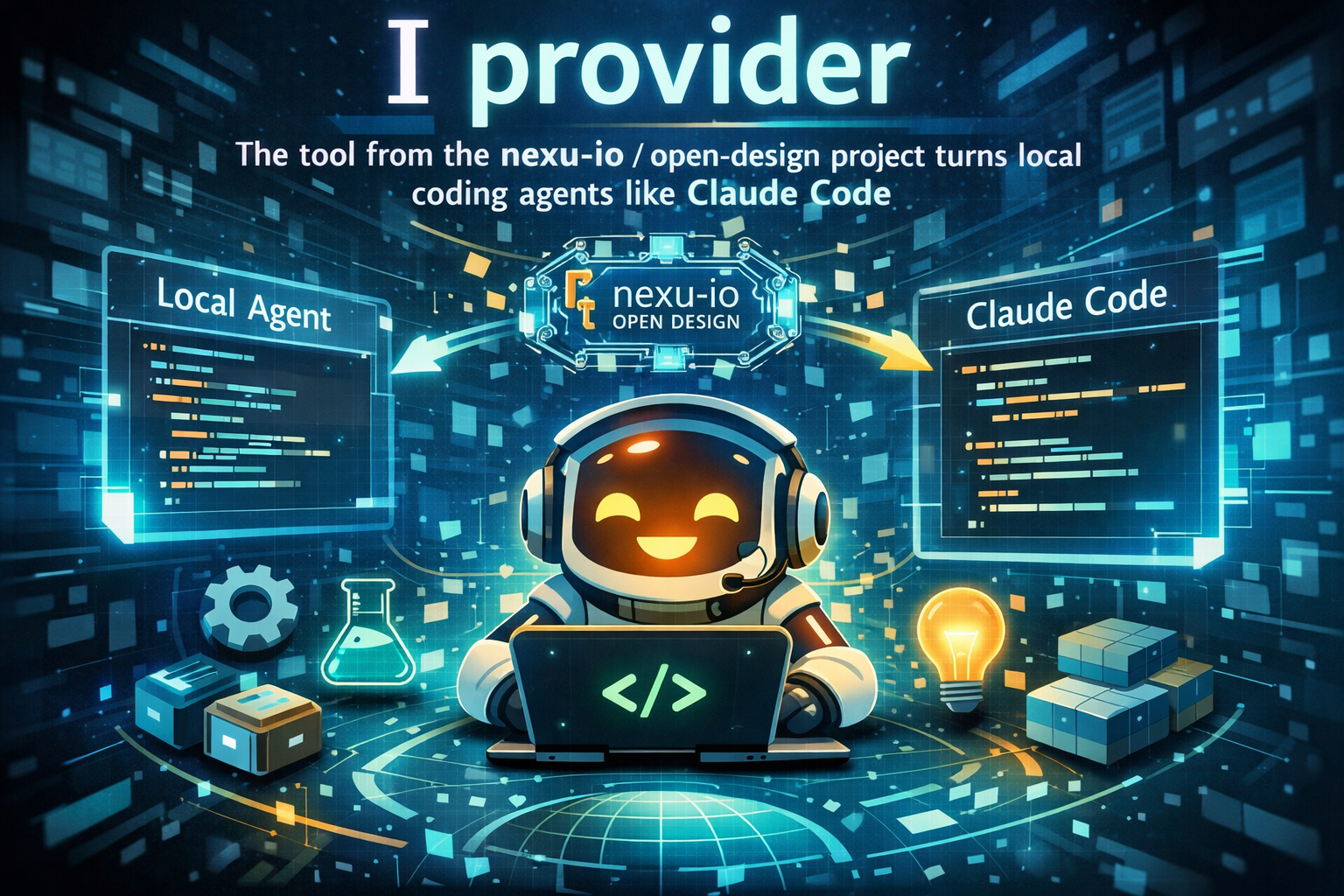
A new open-source AI design tool called Open Design is positioning itself as a flexible alternative to Anthropic’s Claude Design, offering developers the ability to generate websites, prototypes, and presentations using multiple coding agents rather than being locked to a single AI provider. The tool from the nexu-io/open-design project turns local coding agents like Claude Code, Codex, Cursor, Gemini CLI, OpenCode, or Qwen into a design engine driven by composable skills.
Multi-Agent Architecture Sets Open Design Apart
Open Design is the open-source alternative that doesn’t ship an agent. The claude, codex, cursor-agent, copilot, hermes, or kimi already on your PATH are the design engine. Swap with one click. This architecture represents a significant departure from proprietary design tools that tie users to specific AI models and subscription plans.
The platform ships 259+ skills, 142+ design systems, and auto-detects 16 AI coding CLI tools on your PATH with zero configuration. These skills cover a wide range of design outputs including web prototypes, dashboards, mobile apps, presentation decks, and email templates, all stored as plain Markdown files that developers can edit and version control.
Local-First Approach Addresses Data Residency Concerns
Local files, Figma exports, and code repos are directly readable, and the agent has full terminal-execution power. The agent reads all context, produces real runnable files, and previews and edits them live in a sandbox. Unlike cloud-only alternatives, Open Design has no server of its own. The daemon talks to your provider directly. Generated artifacts land as files in your project directory, not in any vendor cloud.
This local-first architecture matters for organizations with strict data-handling requirements. The distinction matters for enterprise and developer users that open-source advocates argue are most poorly served by cloud-only AI tools. The 2026 State of Open Source Report found that 55 percent of organizations now cite avoiding vendor lock-in as a driver of open-source adoption, a 68 percent increase year-over-year.
Design Systems and Brand Consistency Built In
Every render reads the active DESIGN.md, a 9-section schema covering palette, type, spacing, motion, voice, and anti-patterns. 150 systems ship with the repo including Linear, Stripe, Vercel, Airbnb, Apple, Tesla, Notion, Anthropic, Cursor, Supabase, and Figma. These design systems allow teams to maintain visual consistency across projects without manually specifying brand guidelines in every prompt.
Skills and DESIGN.md systems are agent-agnostic. The same SKILL.md file renders against Claude Code, Codex, Cursor, Gemini CLI, GitHub Copilot, Grok, Hermes, Qwen, or any other supported adapter. Switching agents is a config change in the daemon, not a redesign.
Rapid Community Adoption and Growth
Anthropic released Claude Design in April 2026. By June, a community project had built an open-source version of it with 310 contributors and 57,400 GitHub stars. 57K stars in eight weeks on a design tool is a real signal. The project’s rapid growth reflects broader industry trends toward open-source alternatives that offer flexibility and cost control.
In April 2026, Anthropic released Claude Design, the first time an LLM stopped writing prose and started delivering design artifacts directly. It went viral. But it stayed closed-source, paid-only, cloud-only, locked to Anthropic’s model, Anthropic’s skills, Anthropic’s surface.
Installation and Integration Options
The code is Apache-2.0. You can fork the repo, edit skills, add your own DESIGN.md systems, or run the daemon on your own machines. The platform is available as native desktop applications for macOS and Windows, with Linux support through AppImage packages.
You can use Open Design without ever opening the GUI by calling it as a skill, plugin, or MCP server inside Claude Code, Codex, Cursor, Copilot, OpenClaw, Antigravity, Hermes, Kimi, and more. This flexibility allows developers to integrate the tool into existing workflows without adopting an entirely new interface.
Cost Considerations and Model Flexibility
Only your prompt and skill context goes to whichever provider you bring keys for (BYOK). The product is free and Apache-2.0. There is no Open Design subscription. Users pay only for the API calls to their chosen AI provider, making cost management more transparent and controllable than bundled subscription services.
The problem is cost. Claude Design is tied to Anthropic’s ecosystem, and using premium models at every stage of a design project can quickly become expensive. For my use case, it made more sense to generate most of the work using cheaper models and then use Claude only when I needed help refining or polishing the final output.
Key Facts
- 310 contributors and 57,400 GitHub stars accumulated by June 2026
- 259+ skills and 142+ design systems included with the platform
- 21 coding-agent CLIs auto-detected on your PATH
- Apache-2.0 license allows forking and self-hosting
- Version 0.9.0 released June 2, 2026
Sources
- The FREE Open-Source Claude Design Alternative
- Open Design Official Website
- Open Design GitHub Repository
- Open Design Analysis by Augment Code