2026 Guide: Build Brand Identity for Small Businesses
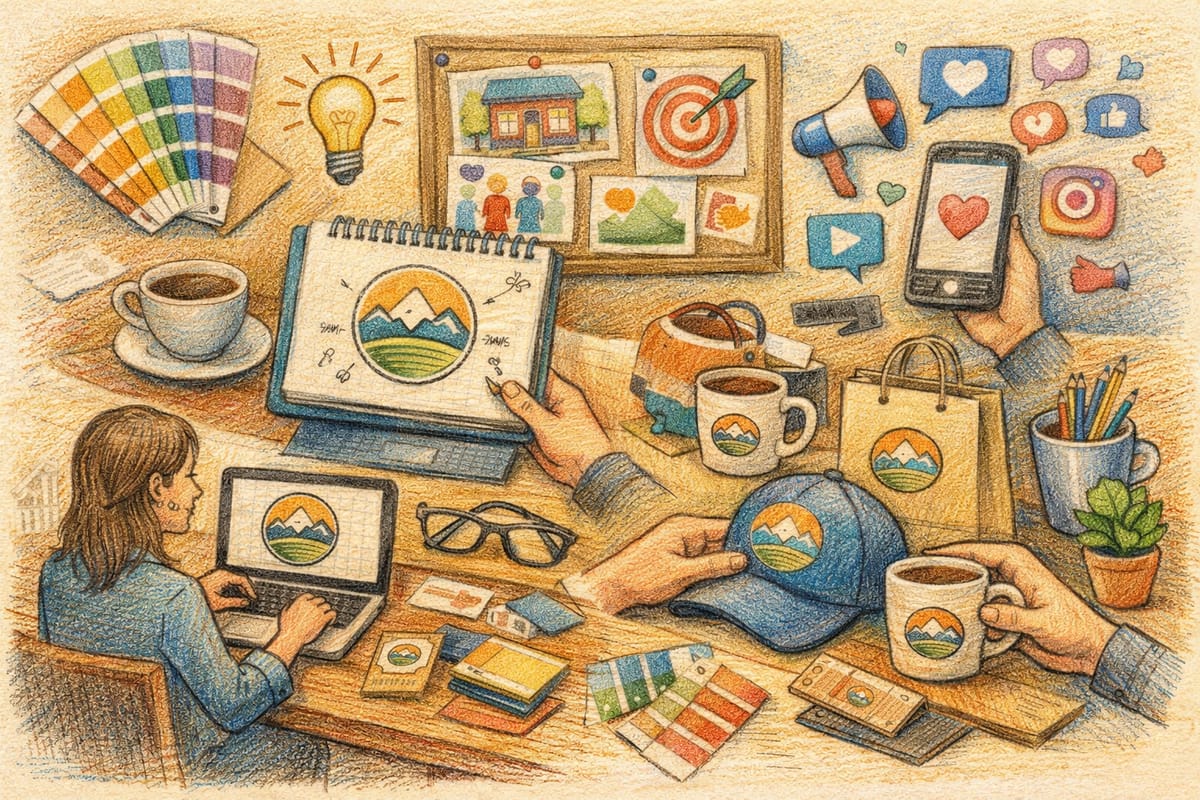
Building a powerful brand identity has become essential for small businesses in 2026, as experts emphasize that consistency across multiple platforms matters more than ever because customers interact with brands across diverse digital channels. Recent industry guides published in early 2026 reveal that a small business with a thoughtful, consistent brand identity will outperform a larger competitor with inconsistent branding every time, making strategic brand development a critical investment rather than an optional marketing expense.
Understanding Brand Identity Beyond Visual Design
Brand identity encompasses far more than a logo or color scheme. Brand identity is the complete visual and emotional representation of your business, including your logo, colors, typography, messaging, tone of voice, website experience, and customer perception. Unlike basic marketing tactics, branding shapes how people remember and trust you.
While most articles mention five elements of brand identity, smart businesses build with seven. The complete framework includes a logo system with responsive variations, a comprehensive color palette with exact specifications, typography with clear hierarchy rules, photography and imagery guidelines, voice and tone standards, messaging architecture, and brand values. In 2026, variable fonts are gaining traction because they adapt responsively across digital platforms.
Strategic Foundation Before Visual Elements
Before designing visuals, you must define your strategy to ensure clarity and consistency across marketing channels. This foundational work involves identifying your target audience with precision, defining your mission and vision, establishing core brand values, and determining your unique positioning in the market.
Small businesses should ask critical questions during this phase: What problem does your business solve? Who are your ideal customers? What makes your approach different from competitors? What emotions do you want customers to associate with your brand? Your brand strategy is your blueprint for building a recognizable and consistent brand, defining your mission, vision, and values.
Creating Visual Consistency Across All Touchpoints
Consistency strengthens recognition, meaning your website, social media posts, advertisements, and printed materials must align visually. Research demonstrates the financial impact of this approach. Consistent branding can significantly impact revenue, with brands presenting a consistent visual identity across all platforms experiencing an average revenue increase of 33% compared to inconsistent brands.
The logo remains the foundation of visual identity. Your logo is the foundation of visual identity and must be professional, scalable, and versatile. In 2026, logos face unique challenges. Logos are now judged at favicon size, that little icon on your browser’s tab, requiring extreme simplicity and clarity.
Adapting to 2026 Branding Trends
Visual identity in 2026 places a strong emphasis on minimalism and simplicity, with brands opting for cleaner, more straightforward designs in logos and packaging. This trend responds to shorter attention spans and the need for instant brand recognition across digital platforms.
Another key trend in 2026 is the focus on storytelling and emotional branding, with authenticity becoming a central tenet of brand strategy as consumers favor brands that are transparent and genuine in their communication. Modern customers, particularly younger generations, demand purpose-driven brands with demonstrable values.
Logos must work everywhere, requiring a modular approach called Liquid Identity that includes primary wordmarks for desktop, compact icons for mobile devices, and simplified shapes for small print applications. This flexibility ensures brand recognition regardless of how customers encounter your business.
Low-Cost Implementation Strategies
Small businesses working with limited budgets can still build effective brand identities. In 2026, many customers discover small businesses first through mobile search, map apps, or social media platforms, and if these touchpoints don’t reflect your current branding, you’re creating confusion before someone even contacts you.
Free and affordable tools have democratized brand design. Options include using platforms like Canva for initial logo concepts, hiring freelancers through gig sites for professional refinement, and creating brand guidelines documents using templates. A complete brand identity with logo, colors, typography, and guidelines typically starts at ₹30,000-40,000 (approximately $350-470 USD) when working with professional designers.
Focus implementation on customer-facing touchpoints with the highest impact: your website homepage, social media profile images and cover photos, email signatures, business cards, and packaging or product presentation. Branding isn’t a one-time project you finish and forget, and your brand should be reviewed at least twice a year using simple, accessible metrics.
Measuring Brand Identity Effectiveness
Small businesses don’t need complex dashboards and can track a few key indicators in a spreadsheet and review them quarterly. Essential metrics include brand recognition (how many people recognize your logo or name), customer sentiment (feedback and review themes), social media engagement rates, website traffic and bounce rates, and customer retention and referral rates.
Schedule a lightweight brand review day once per quarter to look at the data, review customer feedback, and identify one or two adjustments to messaging or visuals based on what you learn. This iterative approach allows small businesses to refine their brand identity without major redesigns.
Common Pitfalls to Avoid
Several mistakes consistently undermine small business branding efforts. Inconsistency across platforms creates confusion and erodes trust. Following every trend without strategic consideration dilutes brand identity. Neglecting the mobile experience ignores how most customers first encounter brands. Failing to define a clear target audience leads to generic messaging that resonates with no one.
In a noisy, short-form-video-packed world where many brands chase every microsecond on social media, the winners are those that know exactly what must stay uninterrupted and stationary and what can flex with the times. Core elements like your business name, primary logo concept, and fundamental brand values should remain stable, while color palette extensions, seasonal imagery, and messaging tactics can adapt to trends.
Long-Term Brand Development
In 2026, customers research businesses online first, making a strong brand essential to build trust, improve visibility, and increase long-term loyalty. The investment in brand identity pays compounding returns as recognition strengthens and customer relationships deepen.
A strong brand identity is an investment that pays dividends for years, building recognition, trust, and emotional connections with customers. Small businesses that commit to strategic brand development position themselves for sustainable growth regardless of market competition or economic conditions.
Branding is an ongoing practice, not a project with a finish line, and showing up consistently in 2026 and beyond means listening to customer feedback and making thoughtful adjustments while maintaining core brand integrity.
Key Facts
- Brands presenting consistent visual identity across all platforms experienced an average revenue increase of 33% compared to inconsistent brands
- Among the top 100 brands, 95% use only one or two colors in their logo
- Brands with consistent color palettes see revenue grow by up to 23%
- Your brand should be reviewed at least twice a year using simple, accessible metrics
- Variable fonts are gaining traction in 2026 because they adapt responsively across digital platforms
- A complete brand identity typically takes 2-8 weeks, with discovery and strategy requiring 1-2 weeks, design concepts 1-2 weeks, and revisions 1-2 weeks
Sources
- https://www.markterior.com/how-to-build-powerful-brand-identity-small-business-2026/
- https://letsbackflip.com/branding-for-small-businesses-a-practical-guide-for-2026/
- https://www.connectmediaagency.com/27-strong-brand-identity-examples-that-actually-work-in-2025/
- https://www.wearetenet.com/blog/visual-branding
Sources
- How to Build a Powerful Brand Identity in 2026 (Guide)
- 27 Strong Brand Identity Examples That Drive Real Business Growth [2026]
- How to Build a Strong Brand Identity That Stands Out in 2026
- A Complete Visual Branding Guide for 2026
- 10 Branding Trends for 2026 That Will Redefine Brand Identity
- Branding Trends 2026: What Will Drive Business Success
- Branding for Small Businesses: A Practical Guide for 2026
- Brand Identity Guide 2026: Create a Memorable, Professional Brand | Chivalae
- Top 10 Branding & Brand Identity Trends 2026