Small Businesses Embrace AI Email Marketing in 2026
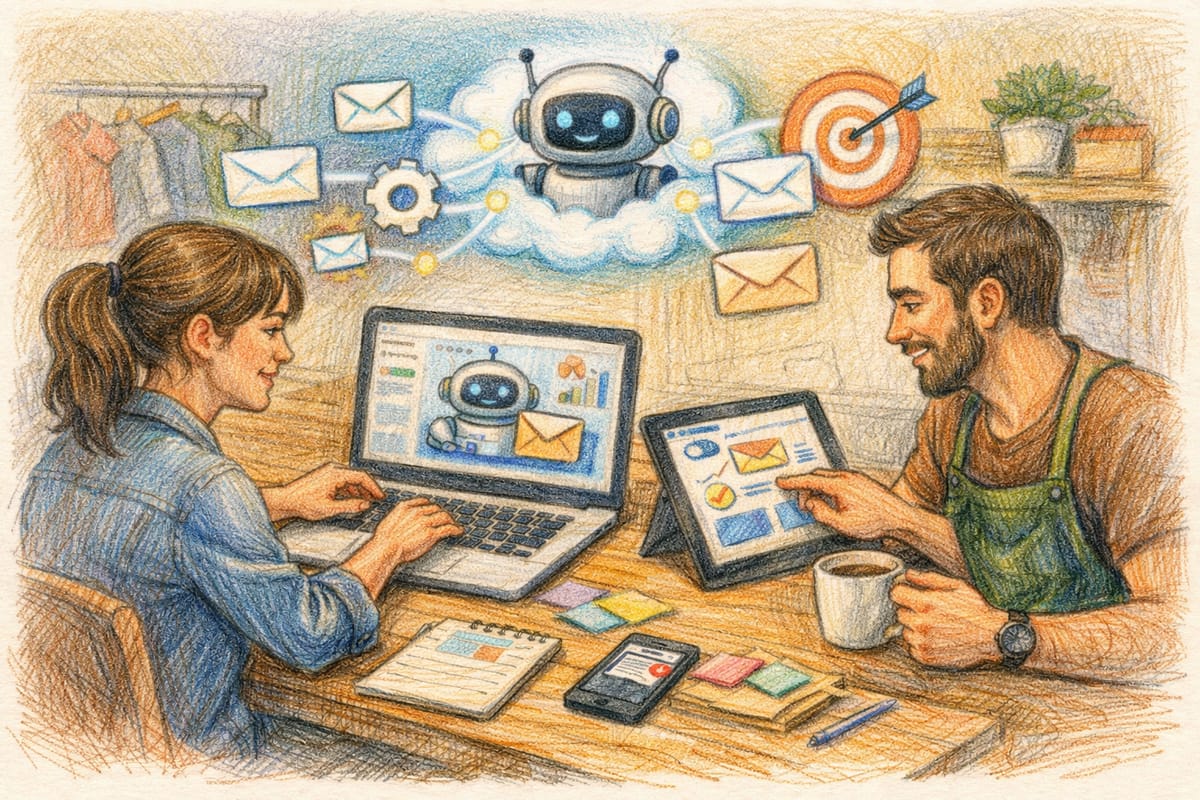
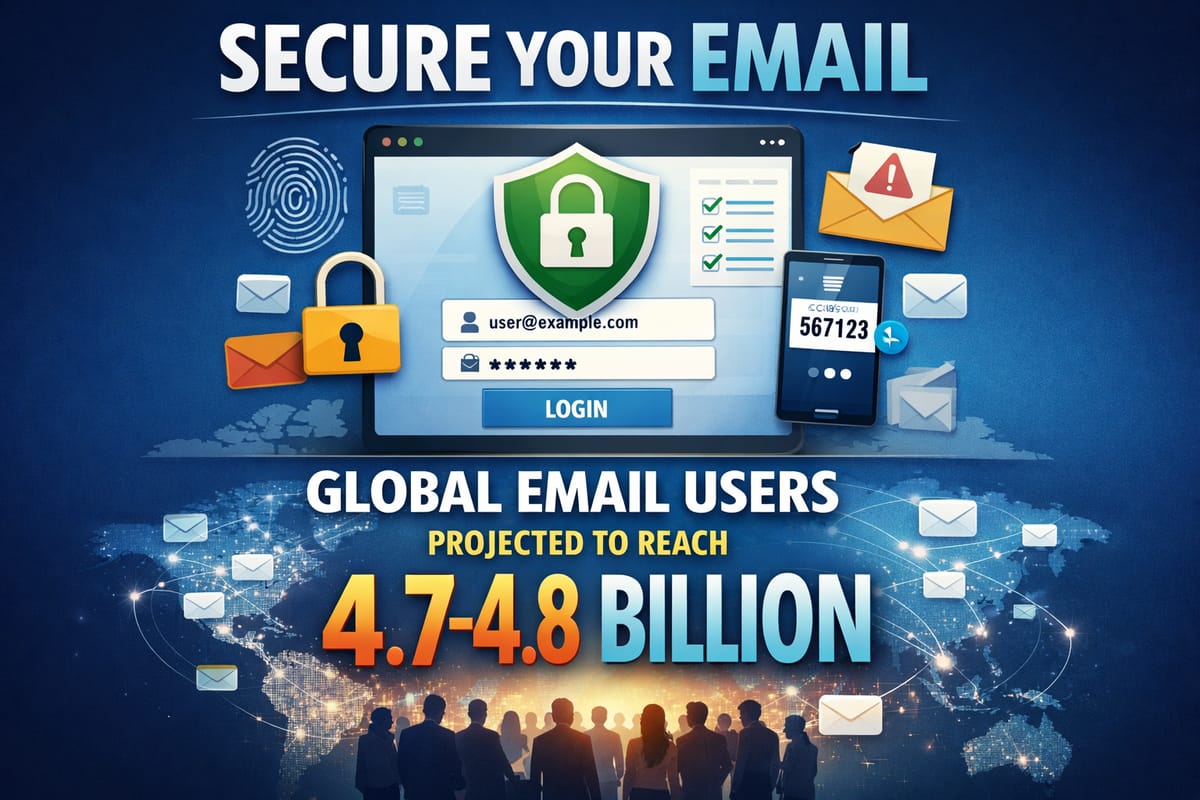
Small businesses are embracing a fundamental shift in email marketing strategy as 2026 progresses, moving away from mass campaigns toward intelligent, automated systems powered by artificial intelligence and behavioral data. Email remains a powerhouse with $40–$45 ROI per $1 spent, but success in 2026 depends on AI driven personalization, zero party data collection, and bulletproof deliverability through proper authentication requirements. Global email users are projected to reach 4.7–4.8 billion by the end of 2026, with the number of emails sent daily expected to hit around 392 billion.
AI Transforms Campaign Management
Daily work has shifted from manually building one-off email campaigns to managing always-on journeys, monitoring AI-driven experiments, and refining data collection and consent flows, with most marketers spending more time on strategy, storytelling, and offer construction while platforms handle send-time optimization, segmentation, and testing in the background.
Brands using AI-powered optimization achieve higher engagement, stronger retention, and faster ROI growth, all because their campaigns evolve automatically. Small businesses can now leverage sophisticated tools previously accessible only to large enterprises, with platforms like Mailchimp and Sendinblue renowned for providing robust solutions tailored for small business needs.
Mailjet recently rolled out its new open-source MCP Server, a bridge that lets conversational-AI tools connect directly and securely to Mailjet’s API, meaning marketers and senders no longer need to manually export dashboards or write SQL/data-analysis scripts to get insights.
Measurement Priorities Evolve
Open rates served as the north star metric for decades, but in 2026, they’ve become one of the least reliable indicators of email success due to Apple Mail Privacy Protection and similar features in other clients that pre-load images and inflate open counts. Smart email marketers have shifted focus to metrics that actually reflect engagement and business impact.
Relevance becomes the new deliverability, as messages that aren’t behaviorally targeted, timely, or genuinely useful will increasingly get filtered into secondary tabs or quietly ignored, shifting strategy from “send to many” to “send to the right person at the right moment” where engagement depth matters more than raw volume.
Personalization and Segmentation Drive Results
Personalization is key to effective email marketing, as segmenting audiences based on demographics, behavior, or previous interactions allows businesses to deliver relevant and timely messages, which not only increases engagement but also builds stronger customer relationships. Techniques such as dynamic content, personalized subject lines, and tailored offers can significantly enhance campaign effectiveness.
Generic emails do not perform well anymore, as subscribers expect messages that reflect their interests, behavior and relationship with your brand. Results should guide strategy, with analysis of which campaigns, segments, and content drive the most revenue, then doing more of what works.
Automated Systems Replace One-Off Campaigns
One of the biggest shifts in email marketing over the last few years is a move away from constant campaign creation, with the strongest email programs in 2026 built as systems that run continuously, not as isolated sends that require constant manual effort.
For small businesses and creators, email remains one of the lowest-cost, highest-ROI marketing channels at any list size, with a new brand with under 1,000 email subscribers able to generate meaningful revenue by focusing on three things: a simple welcome email series, a weekly value-focused newsletter that builds relationship building with your audience, and one or two key promotional automations.
Accessibility and Design Standards Tighten
An accessible 2026 email might look simple to the eye: a single column, body text at 16px or larger, clear H1 and H2 headings, ample white space, and one prominent primary call-to-action button above the fold, with no tiny text, no image-only content, and no cluttered multi-column layouts that break on small screens.
2026 design trends ensure strong contrast, meaningful alt-text, clear structure, and reliable dark-mode support, in part due to the European Accessibility Act (EAA), a key regulation aimed at making digital experiences more inclusive by requiring businesses to remove accessibility barriers that came into effect in June 2025.
Omnichannel Integration Becomes Essential
In 2026, email will increasingly be just one part of a larger, omnichannel marketing strategy, not operating in a silo, but as a central node in a web of channels including SMS, chat/messaging, in-app notifications, and more. Modern consumers reward brands that recognize them across every touchpoint, with engagement rates and customer lifetime value rising when messages align, but frustration building fast when they don’t.
Building Quality Email Lists
A quality email list is the most valuable marketing asset, with growing the list requiring multiple touchpoints. Strategies include website forms on high-traffic pages, checkout additions inviting customers to subscribe during purchase, social promotion sharing sign-up links across channels, in-person collection at events and in-store, and partner collaborations cross-promoting with complementary businesses.
Subscriber expectations have never been higher, with people wanting clarity, speed and immediate value, making reducing friction at the very start of the relationship one of the most important email marketing strategies in 2026.
Key Facts
- Email marketing delivers $40–$45 ROI per $1 spent in 2026
- Global email users expected to reach 4.7–4.8 billion by end of 2026, with 392 billion emails sent daily
- Open rates have become one of the least reliable success indicators due to Apple Mail Privacy Protection inflating counts
- European Accessibility Act came into effect June 2025, requiring businesses to remove digital accessibility barriers
- Small businesses should send 4-8 emails monthly to maintain engagement without overwhelming subscribers
- Nearly 60% of UK marketers identify email as their single biggest source of ROI
Sources
- https://verticalresponse.com/blog/email-marketing-in-2026-trends-tactics-and-what-to-do-now/
- https://www.mailjet.com/blog/email-best-practices/email-marketing-trends-2026/
- https://emarsys.com/learn/blog/email-marketing-strategies/
- https://monday.com/blog/monday-campaigns/email-campaigns-for-small-business/
Sources
- Top Strategies for Email Marketing in 2026: Boost Your Success Now
- Email Marketing Trends 2026: Here’s What to Keep an Eye on
- 4 Email Marketing Strategies Every Marketer Should Know (2026 Edition) | SAP Engagement Cloud
- Effective Marketing Email Strategies for Small Business in 2026 | Unstoppable Domains
- Email Marketing Strategies for 2026 – SMTP2GO
- Email Campaigns for Small Business: Guide and Strategies (2026)
- The Ultimate 2026 Guide to Small Business Email Marketing – Miles Marketing