
Cash Flow Problems: Find the Cause Before the Fix
Diagnose cash flow issues for small businesses with a receipts-and-payments timeline, then choose the right fix for invoices, inventory, seasons or growth.
 8 min read
Cash flow issues for small businesses often come down to timing. You make the sale, but the customer pays after payroll, rent or suppliers come due. If sales look healthy and you still struggle to pay bills, put every expected receipt and payment on a calendar before cutting costs or borrowing. Find the first date your balance falls short.
Why profitable businesses face cash flow issues
Profit measures revenue less expenses for a period; your bank balance reflects payments that have cleared. You may record revenue from an invoice weeks before the customer pays. Stock purchases, loan principal payments and tax set-asides also reduce available cash, even when this month’s profit report does not show a matching expense.
Today’s bank balance may include money you need for Friday’s payroll or next week’s taxes. You can make a profit on paper and still run out of cash while waiting for customers to pay.
Build a receipts-and-payments timeline
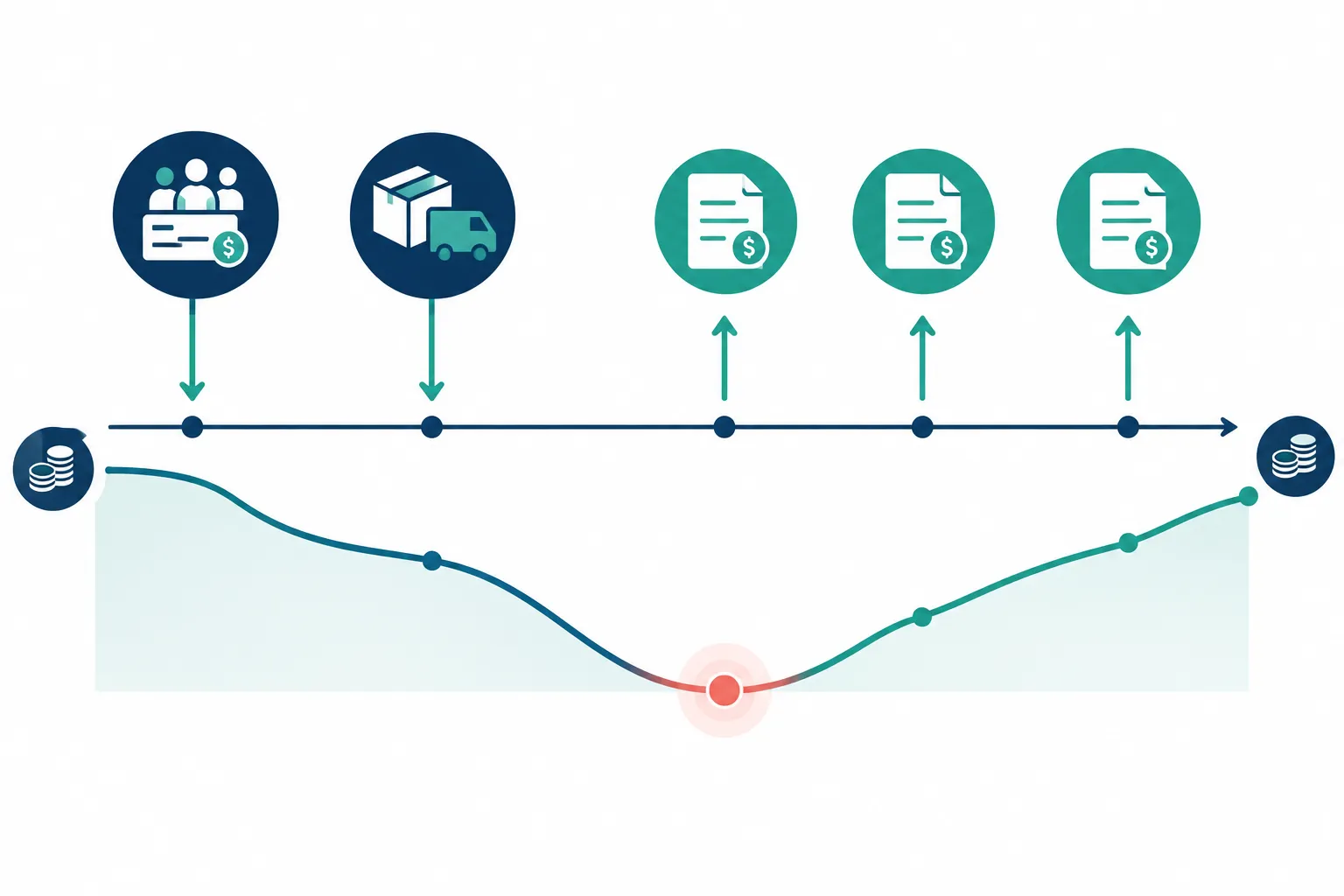
Use a spreadsheet or paper. Start with your cleared bank balance. Add the receipts you expect and the payments you owe on their dates over the next several weeks, recalculating the balance after each entry. Put customer payments on the date you expect to collect, which may be later than the invoice due date. If a large payment is uncertain, run a second version with a later collection date.
|
Date |
Cash movement |
Money in |
Money out |
Projected balance |
|---|---|---|---|---|
|
Start |
Cleared bank balance |
$5,000 |
||
|
9th |
Customer payment expected |
$2,000 |
$7,000 |
|
|
12th |
Payroll |
$6,000 |
$1,000 |
|
|
16th |
Supplier invoice due |
$4,000 |
-$3,000 |
|
|
23rd |
Another customer pays |
$9,000 |
$6,000 |
Illustrative figures, not a forecast for your business. This business ends the period with more cash than it started with, but falls $3,000 short when the supplier invoice comes due on the 16th. If the customer cannot pay $9,000 on the 23rd, the shortage will last longer.
Include customer receipts, payroll, rent, supplier payments, loan payments, taxes, owner draws and planned equipment or inventory purchases. Mark which payments you have committed to and which you can postpone. Leave disputed invoices out of dependable receipts. Write down the first negative balance and the lowest balance, as well as the month-end total.
Read the pattern, not just the low point
-
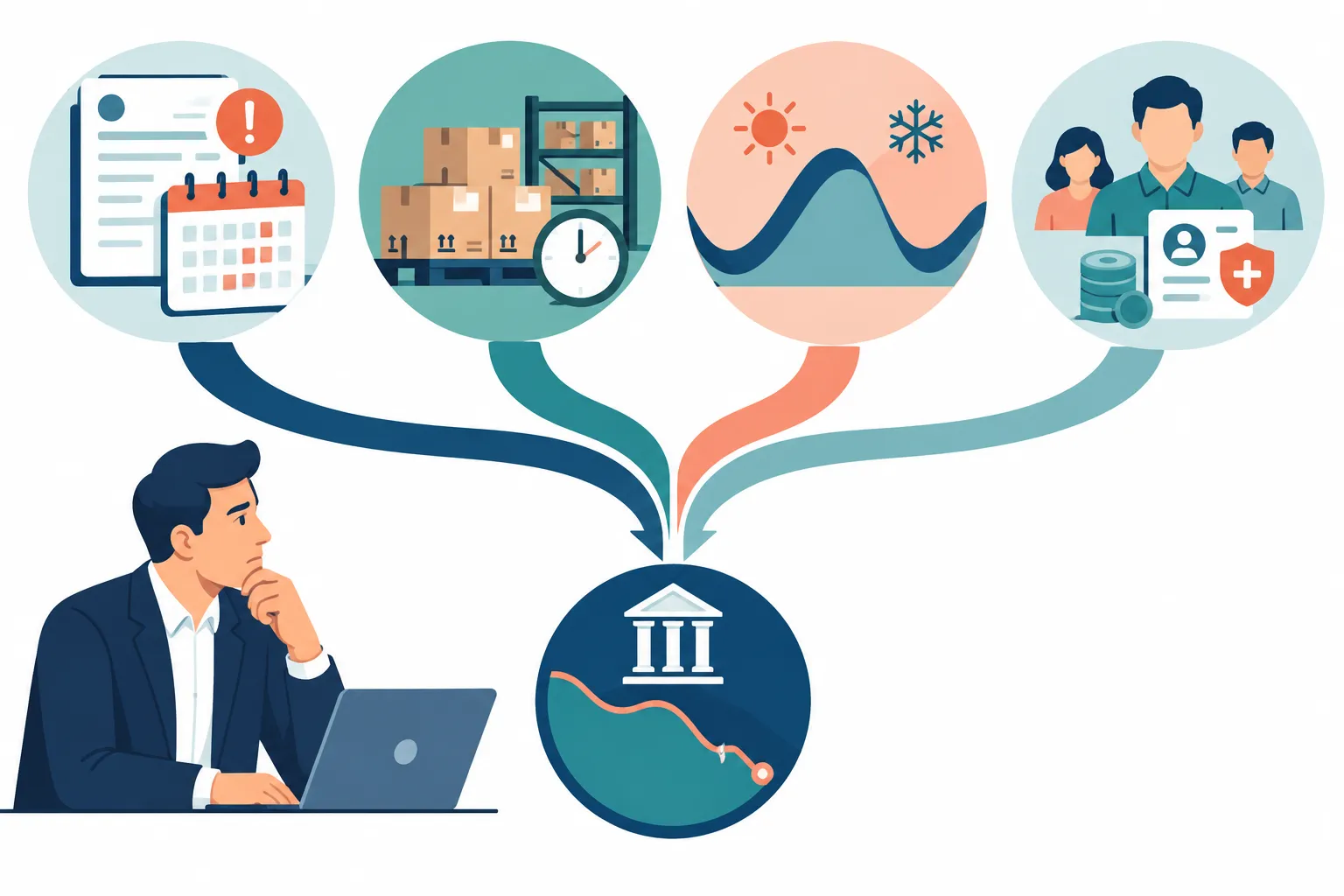
A short dip before a dependable receipt points to collection timing or payment terms.
-
A long trough despite steady sales calls for a look at stock, pricing, fixed costs and debt service.
-
A dip at the same time each year suggests seasonal revenue is out of step with year-round obligations.
-
A dip after hiring or larger orders may reflect the upfront cost of growth.
Match the cause to the first response
|
What the timeline shows |
Likely cause |
First response |
|---|---|---|
|
Invoices sit unpaid beyond the dates used in your forecast |
Slow collections |
Send invoices promptly, follow up on overdue accounts and offer a simple payment method; consider deposits on new work |
|
Cash leaves for products well before sales turn into receipts |
Too much or slow-moving inventory |
Reduce reorders of slow sellers and review order quantities before buying again |
|
The same lean period returns while rent and wages continue |
Seasonal gap |
Set aside part of peak-season receipts for the lean period and plan purchases around the annual cycle |
|
Payroll, materials or marketing rise ahead of customer receipts |
Growth costs |
Stage the spending, seek deposits where suitable and forecast the cash needed to deliver each new sale |
|
The balance declines week after week, even when customers pay |
Margin or expense problem |
Revisit prices, direct costs and recurring commitments rather than treating the gap as a temporary delay |
Late invoices: change the collection date
Start with overdue invoices large enough to change the low point. Send a reminder that states the amount, includes a payment link and asks for a payment date. Bill as soon as you complete the agreed work. On future projects, ask for a deposit or bill at milestones. Keep a promised payment out of your cleared balance until it arrives.
Inventory: release cash without creating a stockout
Compare the cost of each product with how fast it sells. Slow-moving stock ties up money you might need for a supplier bill. Cut or delay the next order for those products, but keep enough of your fast sellers to meet known demand. If you need new supplier terms, ask for dates you can meet instead of paying late without warning.
Seasons and growth: plan the gap before it arrives
For a seasonal business, lay last year’s busy and quiet periods next to this year’s fixed payments. Shift optional purchases away from the low season and save some peak-season receipts. Before adding an off-season offering, include its setup costs in the timeline.
With growth, you may pay new employees, place larger orders or fund a campaign before the related customers pay. Put each expansion cost and expected collection date in the forecast. Stage purchases or bill in milestones so you still have cash to fulfill the new orders.
If you’re weighing expansion beyond its cash costs, Where to Find Small Business Growth Advice offers broader resources. On this timeline, the dates that matter are when you pay for expansion and when customers pay you back.
Fixed costs, pricing and owner draws: test whether timing is really the problem
If your balance shrinks even after customers pay, faster collections will only buy time. Compare cash from sales with the direct cost of fulfilling them and the regular bills you need to pay. Look at prices, subscriptions, debt repayments and owner draws separately. You may need to change what you charge or spend to stop the recurring shortfall.
Should you use financing to bridge the gap?
Borrowing can cover a defined, temporary gap if you have a credible receipt to repay it and can afford the financing cost. Borrowing against products that lose money or a repeated deficit adds another payment to a strained calendar. Set the total borrowing cost and repayment dates beside your conservative cash scenario before you commit.
If you owe overdue taxes, have missed debt payments or may miss payroll, speak promptly with a qualified accountant or an appropriate debt or legal professional. Hoped-for sales are a poor basis for an informal tax or wage payment plan.
Keep the forecast useful after the immediate squeeze
Each week, enter the payments that cleared, move delayed invoices to their new expected dates and add spending you’ve committed to. Compare this week’s lowest projected balance with last week’s. If the low point moves earlier or drops further, act before the bill arrives. As receipts recover, set some cash aside for a late invoice or quiet month.
“The median small business holds 27 cash buffer days in reserve.” – JPMorgan Chase Institute, Cash is King
The Institute based that finding on transactions observed in 2015. It provides context, not a reserve target: your low seasons and payment commitments determine how much you need.
A separate JPMorgan Chase Institute analysis of small business cash flow found that half of small businesses had fewer than 15 cash buffer days. Use your own payment calendar to decide where a buffer will help most.
Conclusion
Find the date your cash balance bottoms out, then trace the payments and receipts that put it there. Chase late invoices, rein in slow-moving stock, or plan for the upfront costs of a busy season or growth. MikeGingerich.com has practical business, finance and growth resources to help you work through those decisions. Start with the next several weeks of receipts and payments and fix the cause behind the shortfall.
FAQ
What does “lack of cash flow” mean?
It means cash available when payments are due is insufficient to cover them. The problem can come from late customer receipts, early supplier payments or an ongoing gap between what comes in and what goes out.
Can a company be profitable but have negative cash flow?
Yes. Sales can be recorded before customers pay, while payroll, inventory purchases or loan principal payments consume cash now. A dated receipts-and-payments forecast shows when that difference becomes a shortfall.
How to fix a negative cash flow?
Find the first date your projected balance goes negative and identify which receipts and payments create the gap. Follow up on overdue invoices for a collection delay, adjust ordering for an inventory gap, or address pricing and recurring costs if the shortfall persists after customers pay.
What’s more important, cash flow or profit?
Both matter for different reasons. Profit helps show whether the business model earns more than it costs; cash flow shows whether money is available on the day bills must be paid. A profitable business still needs enough cash to survive the wait for payment.
